The post-election rally masks a sharp split in the AI trade. Who stands to win?
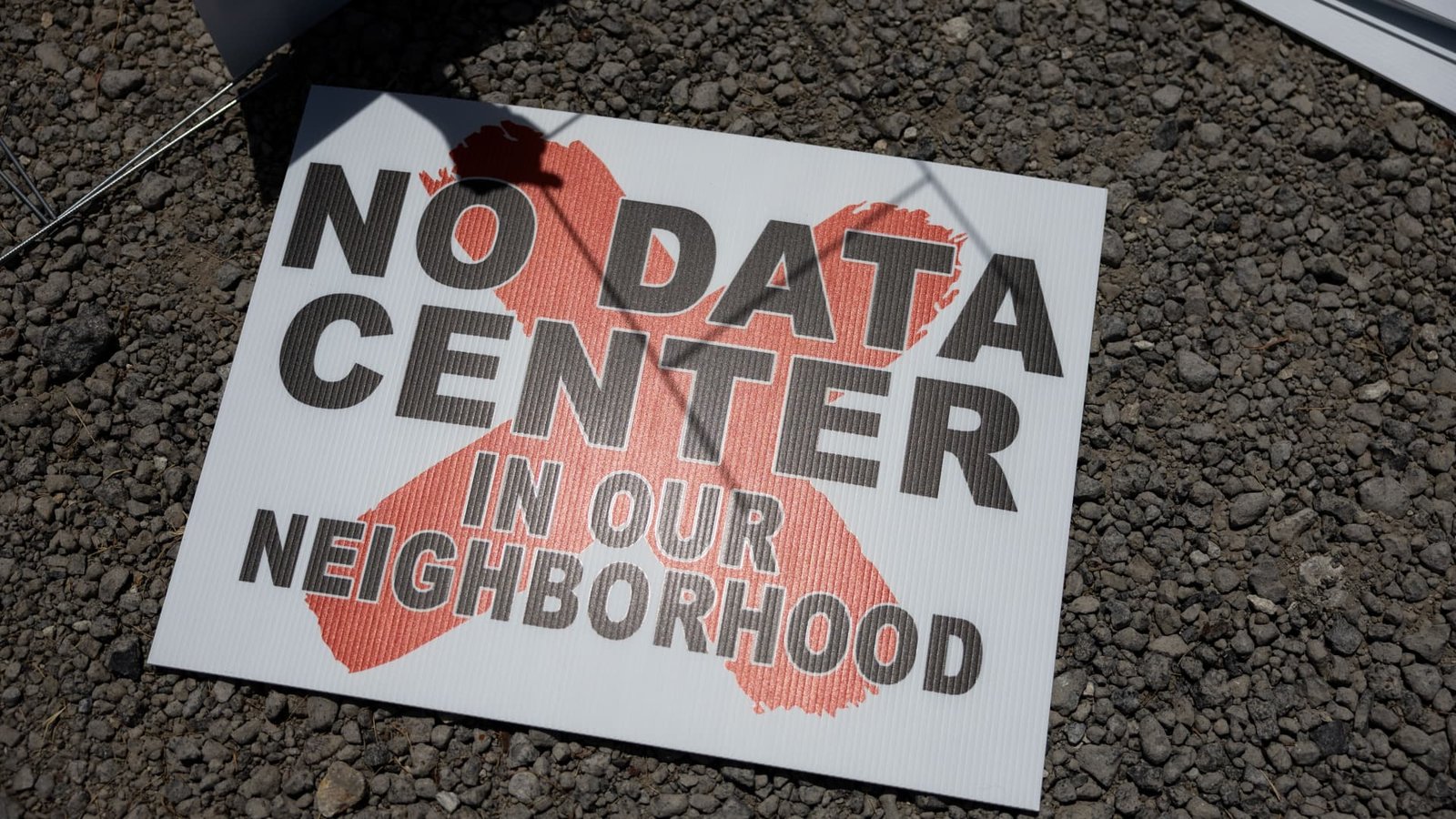
Wall Street rallied Wednesday after Democrats scored major victories in the midterm elections. But the broad rally hid a split in the AI trade, as investors weighed whether the results would put the brakes on the historic data center buildout. Democrats who support restrictions on data center development captured key governorships in Texas and Ohio, both major destinations for investment in the sector. Texas alone represents about 25% of data center construction, according to Bernstein analysts. Voters also passed ballot measures restricting data center projects in localities across the country. Democrats also took control of both chambers of Congress. A potential slowdown in the AI buildout showed up in Wednesday’s market in a “remarkable” way, Jim Cramer pointed out during the Morning Meeting. Some of the biggest gainers were cloud-computing giants spending fortunes to build new data centers and eating into their cash flows to do so. Amazon was up 7%. Microsoft rallied more than 6%. And Google’s parent, Alphabet , was up almost 4%. Jim dubbed this group “the incumbents” because they already have large data center footprints and strong customer demand for their available computing capacity. The demand for AI compute isn’t going away, but perhaps their future spending will moderate, allowing their cash flows to rebound. The market believes “that’s going to rein in the incredible expense that we’ve seen Amazon have and Microsoft have, and Meta have and Alphabet have,” he said. That is “regarded as a positive because now there’s spending discipline, even though it’s being disciplined by the people.” At the other end of the AI trade are so-called neoclouds such as CoreWeave , Iren and Nebius . These smaller upstart computing providers are more speculative bets on the AI boom, with weaker balance sheets than the incumbent megacaps. CoreWeave, in particular, has become the poster child of investor worries about the increased reliance on debt to build more data centers. Shares of CoreWeave tumbled almost 10%. Iren tanked 11%, and Nebius slid about 6.5%. Their declines on Wednesday add to already steep drawdowns from their year-to-date highs. Jim pushed back on the idea that the midterms spell “the end of the data center.” Speaking on CNBC Wednesday, he said the results would make financing harder, much as it was for natural gas pipelines under former President Joe Biden. That could leave the neoclouds with less access to funding. CoreWeave, Iren and Nebius are “the ones that aren’t going to get the marginal capital,” he said. Stocks of AI infrastructure suppliers are also getting whacked because a slowdown could mean fewer orders. Club names Eaton and GE Vernova are down 9% and 10%, respectively. Eaton’s post-earnings pop on Tuesday has been erased, despite the electrical equipment maker reporting a strong quarter and signaling resilient demand. GE Vernova reported robust third-quarter results last week, with a growing backlog of its gas turbines to meet the AI-fueled rise in electricity demand. As with the neoclouds, Eaton and GE Vernova entered Wednesday down sharply from their year-to-date highs as investors priced in political risk and other concerns about the sustainability of the data center buildout. But the action Wednesday suggests the midterm results were not fully priced in. Of course, markets tend to make snap judgments , and they’re not always proven right over the long run. “We expect clear near-term winners and losers across our coverage as investors reassess policy exposure,” BMO Capital Markets analysts who cover energy infrastructure stocks, including GE Vernova, wrote to clients Wednesday. “Ultimately, existing backlogs and projects should still convert given underlying demand growth,” they added. Semiconductor stocks were also under pressure Wednesday. Marvell fell 8%, and Arm dropped 5%. Within our portfolio, Micron dropped 5.5%, while Intel declined 3%. Nvidia , the world’s most valuable chipmaker, lost 1%. Club name Qnity Electronics , a key supplier of materials used to manufacture chips, was slightly lower despite reporting a beat-and-raise quarter earlier Wednesday. Jim recommended buying Qnity during Wednesday’s Morning Meeting, underscoring our view that the data center trade hasn’t been completely eradicated by the election results. Apple , which has been squeezed by the AI-driven spike in DRAM memory costs and forced to raise prices on some of its products, jumped 6%. The conclusion: If memory price increases begin to taper off, the iPhone maker could see some relief. Investors who sold the stock due to margin-pressure concerns “would be, what I call, wrong,” Jim said. The bottom line: Investors are making divergent bets on AI stocks Wednesday, and the market could be overreacting in both directions. Short-term swings are par for the course. The data center buildout will likely continue, but it may just look different going forward. (See here for a full list of the stocks in Jim Cramer’s Charitable Trust.) As a subscriber to the CNBC Investing Club with Jim Cramer, you will receive a trade alert before Jim makes a trade. Jim waits 45 minutes after sending a trade alert before buying or selling a stock in his charitable trust’s portfolio. If Jim has talked about a stock on CNBC TV, he waits 72 hours after issuing the trade alert before executing the trade. THE ABOVE INVESTING CLUB INFORMATION IS SUBJECT TO OUR TERMS AND CONDITIONS AND PRIVACY POLICY , TOGETHER WITH OUR DISCLAIMER . NO FIDUCIARY OBLIGATION OR DUTY EXISTS, OR IS CREATED, BY VIRTUE OF YOUR RECEIPT OF ANY INFORMATION PROVIDED IN CONNECTION WITH THE INVESTING CLUB. NO SPECIFIC OUTCOME OR PROFIT IS GUARANTEED.