This report is from this week’s The Tech Download newsletter. Like what you see? You can subscribehere.
The Democrats’ stunning rout of the Republicans during the midterms this week wasn’t just a stinging rebuke of President Donald Trump, but also a potential roadblock to huge plans to build artificial intelligence data centers across the country.
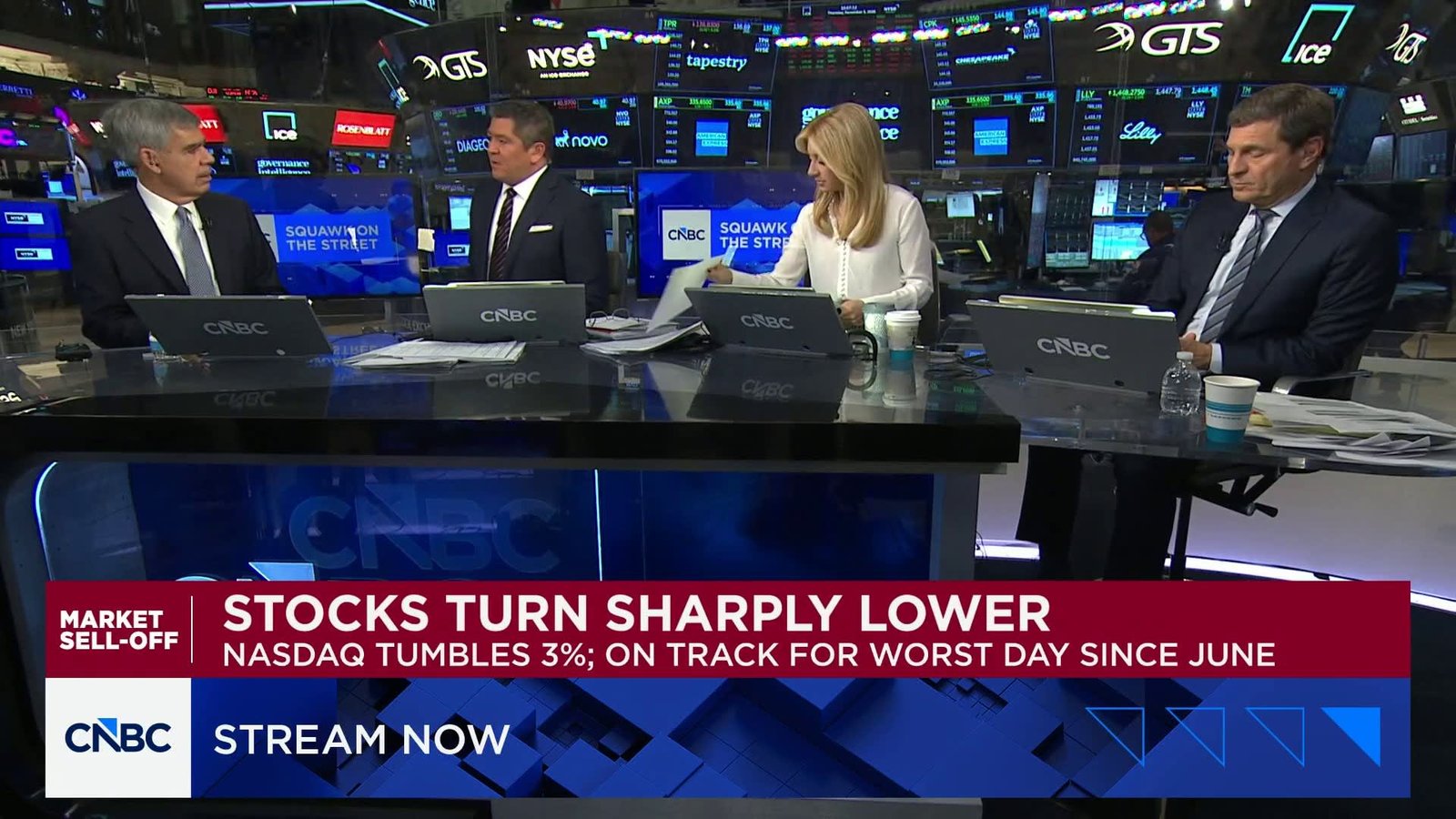
Since the landmark results came in, tech and AI stocks have been jolted by market volatility.
The most valuable tech companies in the U.S. and Europe were hit with a massive sell-off on Thursday as investors got nervous.
Nvidia lost 9.3%, with AMD shedding 17.3%, Microsoft 3.6%, Micron 17.5%, Broadcom 10.4%, Tesla 10.8% and SpaceX 9.1%.
Neoclouds, which rely on their ability to serve AI computing power and are involved in massive data center projects, were also hit particularly hard. Nebius dropped 15%, Iren fell 17% and CoreWeave 10% on Thursday.
By Friday morning, U.S. tech stocks were showing signs of recovery, but the market blip is a warning of potentially rougher roads ahead for the AI boom in America.
“The tumble in tech stocks that took hold in the immediate aftermath of the US midterm elections resumed as investors contemplated what a Democrat-controlled Congress may mean for tech regulation and the overall AI boom,” wrote Kyle Rodda, senior financial market analyst at Capital.com in a note on Thursday after the bell.
AI hurdles and moratoriums
There were dozens of local ballot measures in 10 states up for a vote on Tuesday that would place restrictions on the construction of data centers in different ways, CNBC reported on Wednesday.
“The regulatory and political risks arise at a time when the proverbial AI trade was already on shakier foundations,” said Rodda.
Earnings season had been an “overall disappointment” for the markets, he added, with Magnificent Seven results so far “undershooting growth expectations and flashing warning signs that the pace of AI spending is slowing down.”
Now, Rodda wrote, the risk that the investment boom could be slowed further “by measures as potentially disruptive as moratoriums on new data center construction, investors are rushing to the exits on so-called AI trades.”
Opposition to data centers in the U.S. is a long-standing issue.

Between January 2024 and May 2026, at least 46 AI data center projects across 20 U.S. states, representing more than $170 billion in announced investment, were blocked, withdrawn or stalled following community opposition, according to research carried out by think tank International Data Center Authority, or IDCA.
The midterms will weigh on investors’ minds, Dan Ives, partner at Yorkville Ives & Co., said in a note on Wednesday morning.
“For tech investors the big focus is will these mid-term elections slow the pace of the planned 800 to 1,000 datacenters across the US fueling the AI Revolution…the answer in our view is a clear YES,” he wrote.
Democrats taking control, particularly over the Senate, will create some major hurdles for AI over the next two years, Ives added.
Shaky AI
The figures floating around on the scale of projected AI infrastructure spending are eye-watering.
Goldman Sachs estimates that AI-related capital spending could total about $7.6 trillion from 2026 through 2031, across computing, data centers and power.
But, heading into the election, AI stocks were already looking shaky on Wall Street.
Chipmakers, neoclouds and other data center-related companies sold off in October on concerns about rising interest rates and overspending. Many hyperscalers have turned cash flow negative as they spend hundreds of billions of dollars on AI infrastructure.
“AI pushback is bipartisan but local, making the buildout pricier rather than stalling it,” said Dominique Toublan, head of U.S. credit strategy at Barclays Investment Bank, in a note from Wednesday.
“The AI race shifts from a prisoner’s dilemma to a war of attrition: scarce power favors the biggest balance sheets.”
By Thursday morning, after speaking to investors over the past 24 hours, Ives said it was a confusing time for Wall Street tech backers trying to “discern the poker game in the Beltway and how this will truly impact the AI Revolution buildout.”
The impact could be significant.
“Putting all the pieces together we believe Big Tech capex growth rate now peaks in 2027 vs our previous view that would not happen until 2028/2029,” he said.
News edit
One more thing
The U.S. Capitol is seen in Washington on Nov. 4, 2026, a day after midterm elections in which Democrats secured control of both the House of Representatives and the Senate, shifting the balance of power in Congress for the final two years of President Donald Trump’s term.
Mehmet Eser | Anadolu | Getty Images
Elsewhere in midterm-land, it’s not just data centers in the crosshairs.
Democrats’ sweep of Congress likely resets the political calculus for crypto, my colleague Tanaya Macheel writes.
The result? It could usher in a more adversarial approach in Washington and push industry-friendly legislation like the Clarity Act to the back burner, she says.
About The Author