
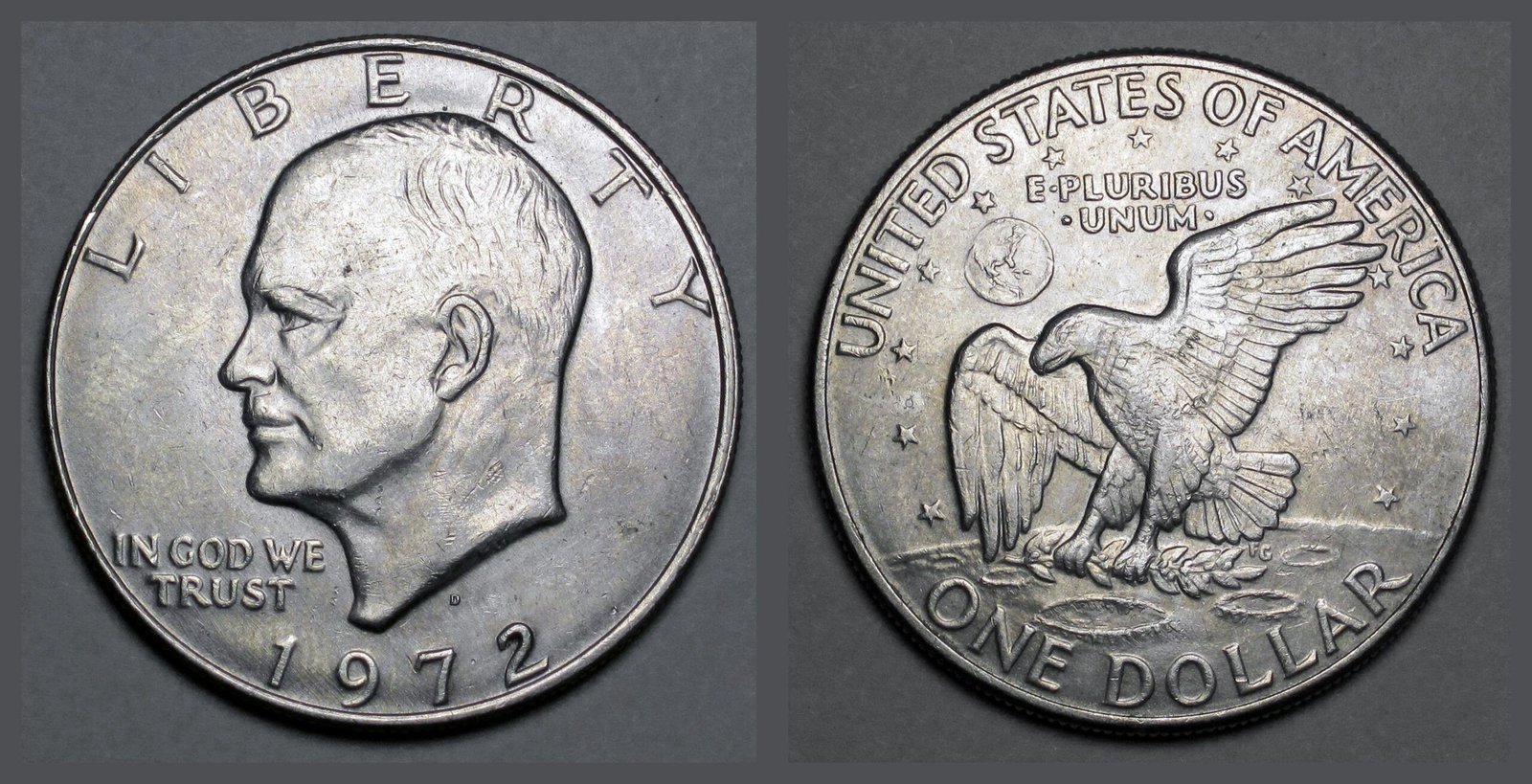
On June 20, 1945, a Mint engraver named Frank Gasparro stood at the curb on Fifth Avenue, one of an estimated four million New Yorkers welcoming General Dwight D. Eisenhower home from the war. He caught only a glimpse, then went back to the Philadelphia Mint and drew the general’s profile. A quarter century later, that drawing became a coin.
Eisenhower dollar value starts with an honest number: one dollar. Philadelphia and Denver struck about 687 million of these big copper-nickel coins from 1971 to 1978, and a circulated one is worth face value. This guide explains which Ikes contain silver, which varieties and top-grade coins bring real money, and how to check yours.
Key Takeaways
- Circulated Ikes are copper-nickel and worth face value, $1; Philadelphia and Denver struck about 687 million.
- Silver Ikes are the S-mint collector coins of 1971 to 1976: 40% silver, about $16 of metal (November 2026).
- No mint mark means Philadelphia, which adds no premium.
- Grade drives value: a 1974-D lists at $30 in MS-65 and $1,500 in MS-67 (PCGS).
- Check any 1972 Philadelphia dollar for the Type 2 reverse, listed at $1,200 in MS-65.
The Ike Dollar: Background and History
A Dollar for Ike and the Moon
Silver dollars had all but vanished from circulation by the mid-1960s. One last attempt to revive them collapsed in 1965. Denver struck more than 316,000 Peace dollars dated 1964 that May, and the government melted every one, a story told in the 1964 Peace dollar that never was. The Coinage Act of 1965 then barred new silver dollars for five years.
Two events reshaped the question before that ban ran out in July 1970. Eisenhower died on March 28, 1969, and that July Apollo 11 landed on the Moon. On October 29, 1969, Representative Bob Casey of Texas proposed a dollar honoring both. Casino owners, who had relied on dollar-size tokens since the silver dollars disappeared, lobbied for a real coin.
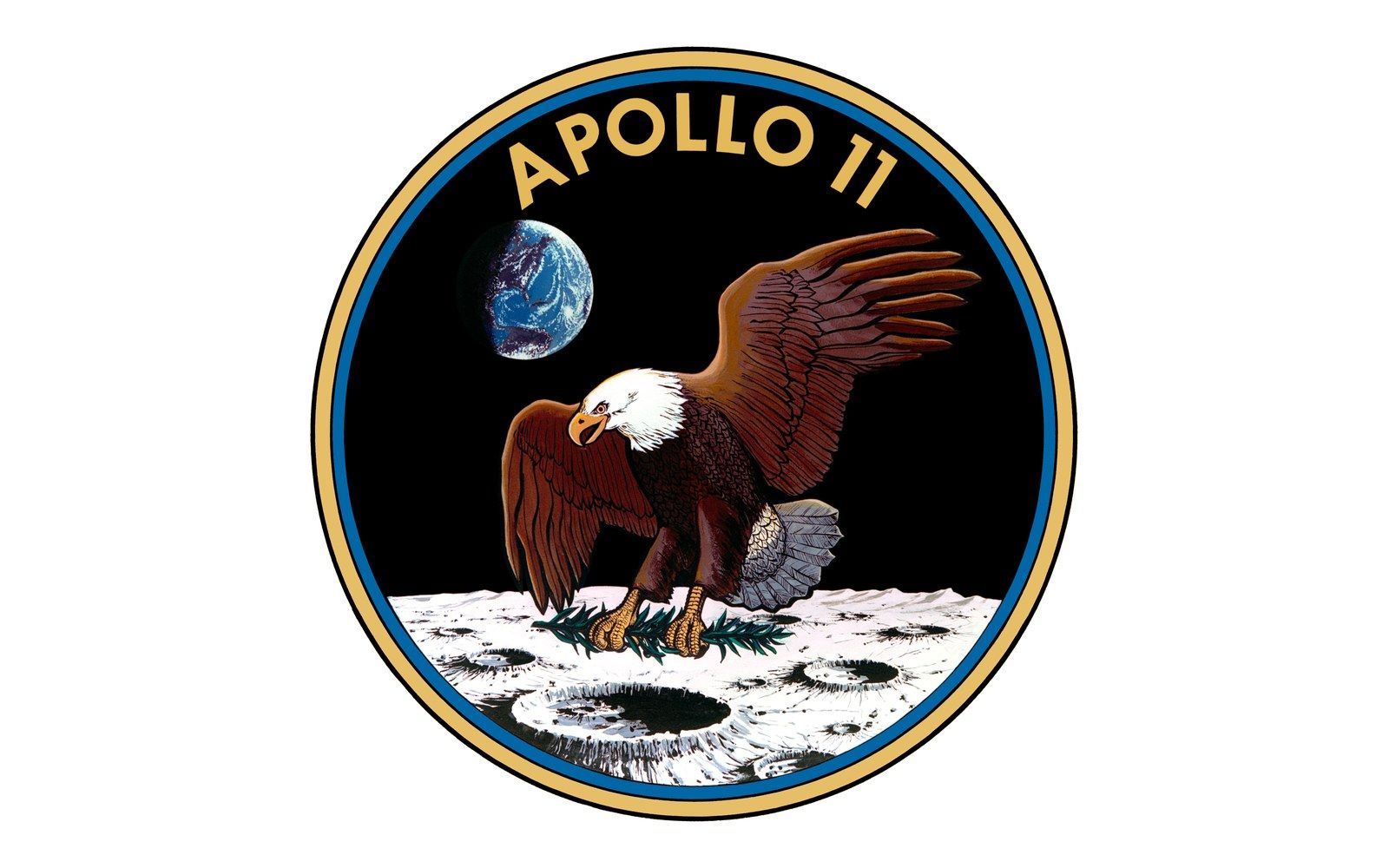
The sticking point was silver. The compromise, signed by President Nixon on December 31, 1970, as Public Law 91-607, made the circulating dollar copper-nickel clad and allowed up to 150 million collector coins in 40% silver. The law even dictated the reverse: “a design which is emblematic of the symbolic eagle of Apollo 11 landing on the moon.”
Gasparro’s Profile and a “Peaceful Eagle”
Gasparro, by then the Mint’s chief engraver, began the portrait in the spring of 1969. According to the Mint’s own account, he studied his 1945 sketch and some 30 other pictures before settling on a bare-headed profile facing left.
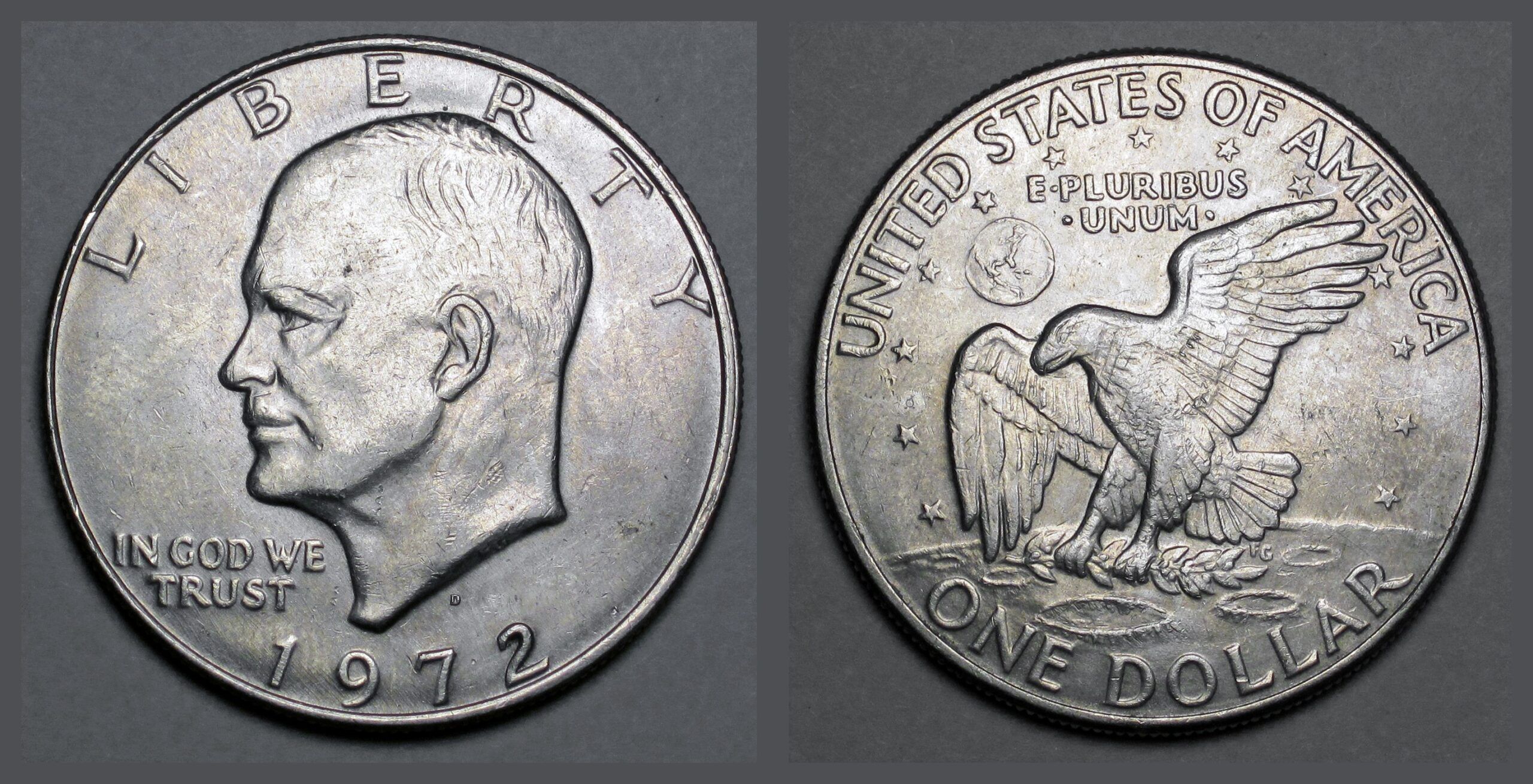
For the reverse he adapted the Apollo 11 mission insignia: an eagle landing on the cratered Moon with an olive branch in its talons, the Earth behind it. Congress found the pairing fitting because the space program began under Eisenhower, who signed the act creating NASA in 1958.
Mint Director Mary Brooks asked Gasparro for “a peaceful eagle.” He described the finished bird as “a pleasant looking eagle.”
Blue Ikes, Brown Ikes, and a Dollar Few Would Spend
The first Ikes struck in quantity were silver ones for collectors, begun at San Francisco on March 31, 1971. Orders opened July 1 at $3 for an uncirculated coin and $10 for a proof, and on July 27 President Nixon presented the first proof to Mamie Eisenhower at the White House.
The uncirculated coins came in a blue envelope and the proofs in a brown, wood-grain box, which is why collectors still call them Blue Ikes and Brown Ikes. Proofs began shipping on October 14, 1971, Eisenhower’s birthday, and the copper-nickel coins reached the public on November 1.
Then the public largely ignored them. The coins were heavy, the dollar bill was easier, and outside casinos and parts of the West the Ike barely circulated. In 1973 the Mint struck Philadelphia and Denver dollars only for its $6 Uncirculated Sets, about 2 million of each.
Historical context America in 1971
- The federal minimum wage was $1.60 an hour, so a $10 proof Ike cost more than six hours’ pay.
- Silver averaged about $1.55 an ounce in New York, so the $3 Blue Ike held about 49 cents of the metal.
- A first-class stamp rose from 6 to 8 cents on May 16, 1971.
- On August 15, President Nixon closed the “gold window,” ending the dollar’s convertibility into gold, and froze wages and prices for 90 days.
- On July 31, Apollo 15 astronauts David Scott and James Irwin took the first drive in NASA’s Lunar Roving Vehicle on the Moon.
The Liberty Bell and the Moon
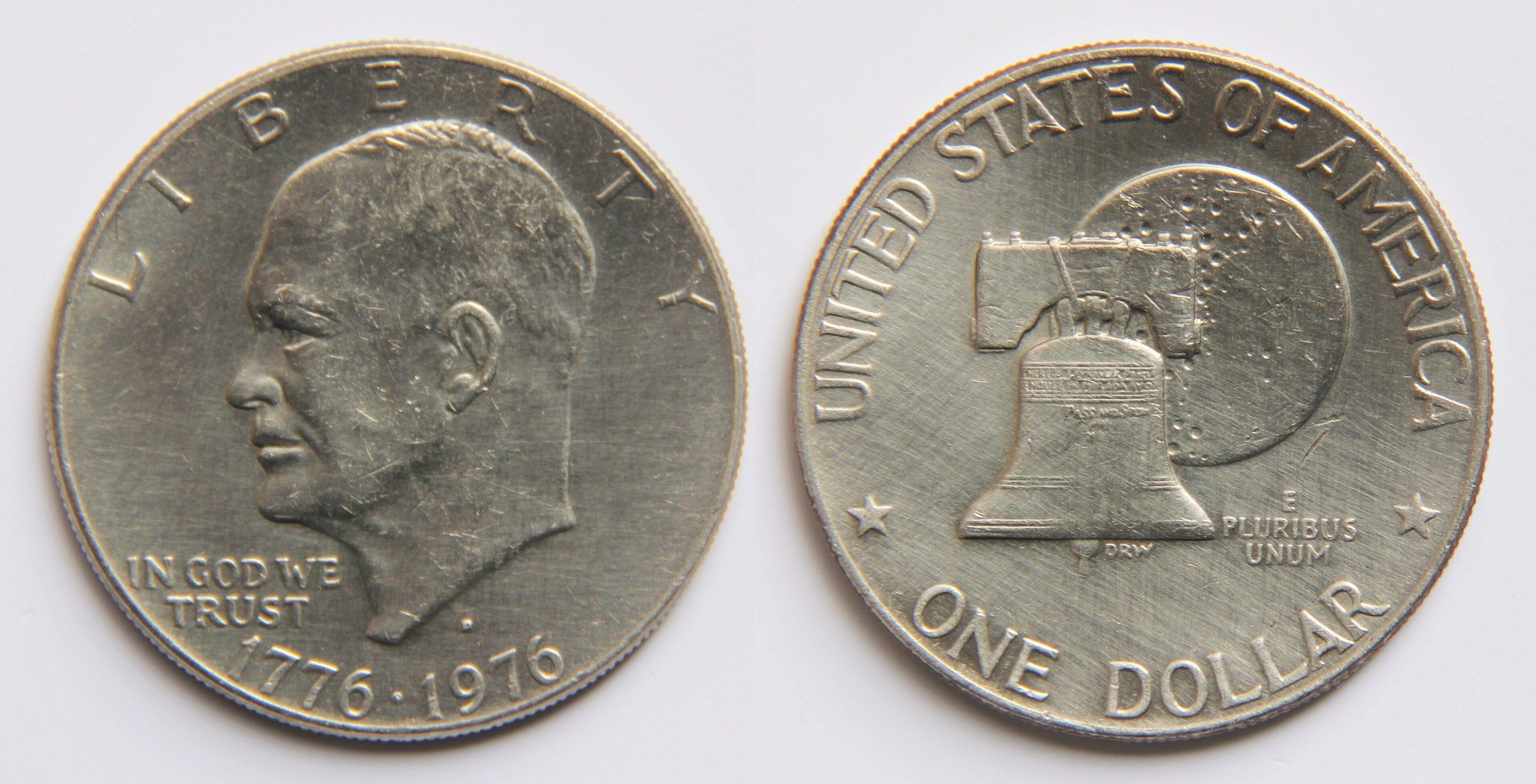
For the nation’s 200th birthday the Treasury held an open design competition, and about 900 entries came in. On March 6, 1974, it chose a design by Dennis R. Williams, a student at the Columbus College of Art and Design: the Liberty Bell superimposed on the Moon.
To clear the way for dual-dated coins, the Mint kept striking 1974 dollars into 1975, so no Ike carries a 1975 date. The 1776-1976 dollars reached circulation on October 13, 1975. The first reverses used thick block lettering (Type 1); before the year was out, the Mint switched to thinner letters with serifs (Type 2).
The regular design returned for 1977 and 1978, in copper-nickel only. In 1979 the smaller Susan B. Anthony dollar replaced the Ike, and Gasparro’s Apollo eagle moved to the new coin’s reverse.
What Determines Eisenhower Dollar Value Today?
Start with the honest baseline: a circulated copper-nickel Ike is worth one dollar, and an uncirculated common date brings about $20 to $35.
Value comes from silver content, exceptional condition, and a short list of varieties and errors.
Copper-Nickel or Silver: The First Question
| Coin | Struck at | Composition | Weight | Silver | Worth at least |
|---|---|---|---|---|---|
| Circulation dollars, 1971-1978 | Philadelphia (no mint mark), Denver (D) | Copper-nickel clad over pure copper | 22.68 g | None | Face value, $1 |
| Collector dollars, 1971-1974 and 1776-1976, uncirculated and proof | San Francisco (S) | 40% silver-clad | 24.59 g | 0.3162 troy oz | About $16 in silver |
| Proof-set dollars, 1973-1978 | San Francisco (S) | Copper-nickel clad | 22.68 g | None | About $10-$30 certified |
Circulation Ikes are copper-nickel whatever their date, apart from a few Denver errors described below. The silver coins are the S-mint collector issues, struck in the same 40% alloy as the 1965-1970 Kennedy halves. From 1973 on, San Francisco also struck copper-nickel proofs for the annual proof sets, so an S mint mark calls for a second check of the edge or the weight.
The silver Ikes trade close to their metal. PCGS lists certified MS-65 examples at $34 and Deep Cameo proofs in PR-69 at $38 to $46. Real premiums wait at the top of the scale, where a 1971-S in MS-68 lists at $6,500.
Condition: Where Ordinary Ikes Turn Valuable
The large copper-nickel blanks marked easily, and many coins left the presses weakly struck, especially at Philadelphia. That is why grade, more than date, drives Ike prices.
A 1974-D shows the pattern. PCGS lists it at $20 in MS-63, $30 in MS-65 and $80 in MS-66, then $1,500 in MS-67 and $6,500 in MS-67+.
Philadelphia coins climb sooner. The 1971 lists at $450 in MS-66 and $13,500 in MS-67, a grade PCGS has given to only four coins. The 1972 Type 1 reaches $3,250 in MS-66, and the 1974 lists at $18,500 in MS-67.
At these levels, professional grading is what sets the price.
The 1973 Dollars: Low Mintage, Modest Prices
Because the 1973 Philadelphia and Denver dollars were made only for Uncirculated Sets, their mintages of 2,000,056 and 2,000,000 look tiny next to the 92,548,511 Denver struck in 1972.
The coins were sold only in those sets, so nearly all of them went straight to collectors, and these low-mintage dates are easy to find uncirculated: the 1973 lists at only $45 in MS-65 and the 1973-D at $35 (PCGS). As with every other date, the premiums start at MS-66.
Varieties and Errors Worth Knowing
1972 Type 2. Philadelphia used three different reverses in 1972. The Type 2 was struck with a reverse die made for proofs: on its Earth, the islands below Florida appear only as faint incuse lines instead of raised shapes, and the eagle’s breast feathers are smooth. It is the key to the series, listed by PCGS at $160 in MS-63, $1,200 in MS-65 and $9,500 in MS-66. Type 1 coins show three raised islands to the right of Florida; Type 3 coins show them directly below.
1971-D “Friendly Eagle” (FS-901). Some 1971-D dollars, probably among the first struck, came from a reverse whose eagle lacks the heavy brow line, giving it a gentler look. Heritage has sold PCGS-graded examples for about $55 to $75 in MS-64 and $130 to $200 in MS-65; the finest, an MS-67+, brought $7,800 in May 2024.
Silver on a Denver coin. A few Denver dollars dated 1974, 1776-1976 and 1977 were struck by mistake on 40% silver blanks meant for San Francisco. PCGS counts roughly 10 to 15 of the 1977-D. A Denver Ike that weighs about 24.6 grams, with no copper stripe on its edge, deserves an expert look.
1971-S proofs with the flat reverse. A few 1971-S silver proofs were struck with the low-relief reverse used for circulation coins. PCGS lists them at $22,500 in PR-67 Deep Cameo, against $32 for an ordinary 1971-S proof in the same grade.
The prototype in a tube. In February 2008, collector Lee Lydston was looking through tubes of S-mint silver Ikes at a dealer’s table at the Long Beach Expo when one 1971-S struck him as wrong. PCGS now describes it as one of three known prototypes struck for Gasparro, cataloged as Judd-2147. It sold for $264,000 at Heritage in January 2022 and returned to auction in October 2026.
Notable Auction Records
The top results belong to a prototype and to business strikes in grades few Ikes ever reach.
| Coin and Grade | Price Realized | Auction House | Sale Date |
|---|---|---|---|
| 1971-S Prototype (Judd-2147), SP-67 (PCGS) | $264,000 | Heritage Auctions | January 2022 |
| 1971, MS-67 (PCGS) | $19,186.88 | GreatCollections | June 2021 |
| 1972 Type 2, MS-66 (PCGS) | $14,400 | Heritage Auctions | August 2022 |
| 1972-D, MS-67+ (PCGS) | $13,200 | Heritage Auctions | July 2023 |
| 1973-D, MS-67 (PCGS) | $12,925 | Heritage Auctions | June 2013 |
How to Check Your Eisenhower Dollar
Five Checks for Any Ike
- The date. Ikes run from 1971 to 1978 with no 1975; the Bicentennial coins read 1776-1976.
- The mint mark. Look below Eisenhower’s neck, just above the date. A D means Denver and an S means San Francisco; Philadelphia coins have no mark.
- The edge. A copper stripe running around the edge means copper-nickel clad. A silver Ike shows no copper.
- The weight. A silver-clad Ike weighs 24.59 grams and a copper-nickel one 22.68 grams, a gap any scale that reads tenths of a gram can catch.
- The finish. Mirror-like fields with frosted devices mean a proof, made for collectors. An uncirculated silver Ike looks like an ordinary new coin; the Mint said plainly it gave them no special finish.
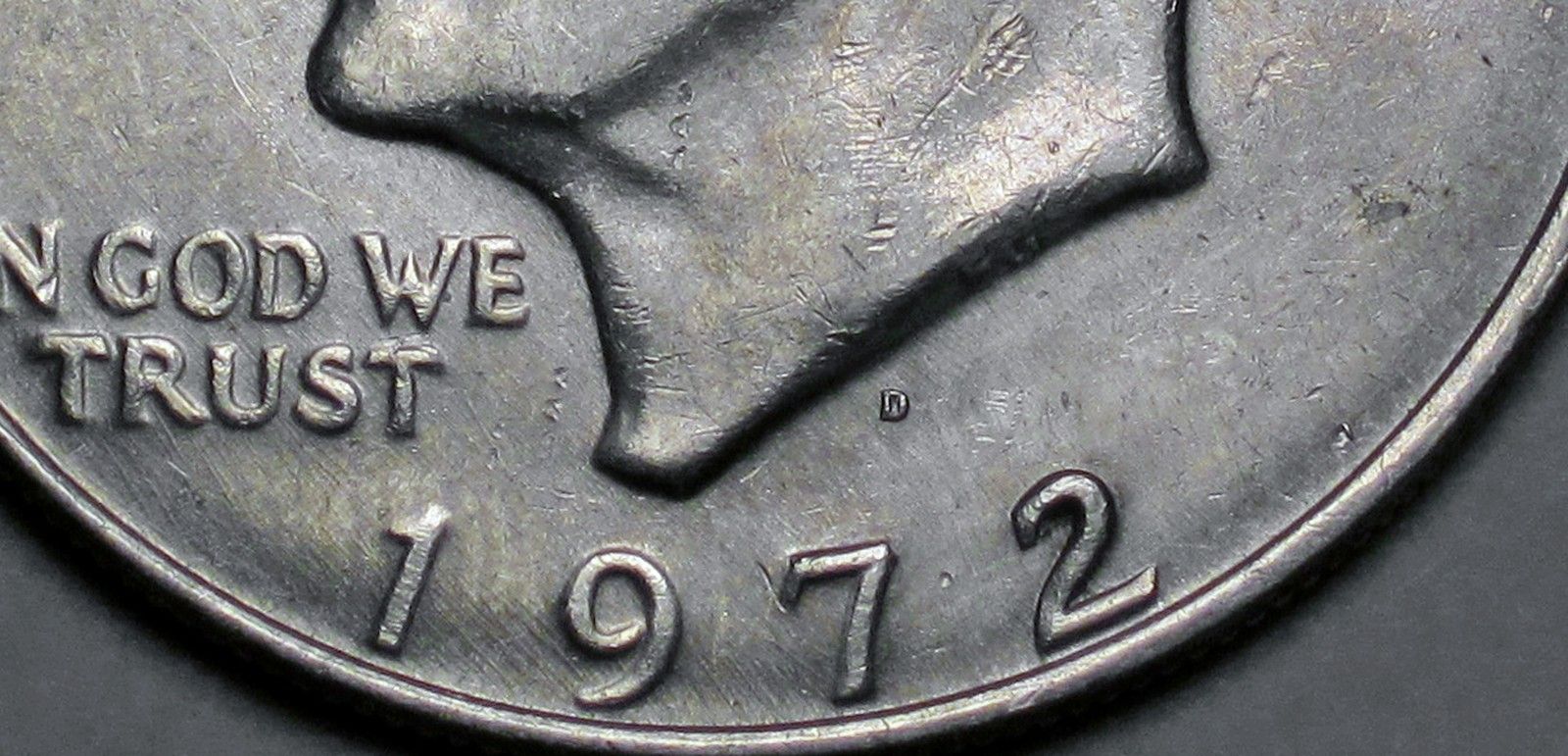
Every Ike measures 38.1 millimeters across, with a reeded edge. Gasparro’s FG initials sit on the base of the bust and below the eagle’s tail feathers.
Look-Alikes and Misdescribed Ikes
The common traps in this series are coins described as something they aren’t:
- “Silver dollar” listings. Sellers often call any Ike a silver dollar. A coin with no mint mark or a D is almost certainly copper-nickel, whatever the listing says.
- Bicentennial “rarities.” About 220 million copper-nickel 1776-1976 dollars were struck for circulation. A circulated one is worth $1.
- Painted and plated coins. Colorized or gold-plated Ikes are aftermarket novelties, worth no more than the coin underneath.
- The other Eisenhower dollar. The golden 2015 coin with Eisenhower’s portrait is a smaller Presidential dollar, a separate series covered in which Presidential dollars are rare.
When Professional Appraisal Makes Sense
For a circulated copper-nickel Ike, a grading fee costs more than the coin is worth. Certification earns its cost in four cases:
- A 1972 Philadelphia dollar with the Type 2 reverse
- An uncirculated coin with full luster and a clean cheek that might reach MS-66 or better
- A Denver dollar that weighs like a silver one
- A 1971-S proof with a flat reverse, or a high-grade 1971-D Friendly Eagle
Professional services like PCGS or NGC provide authentication and a grade the market trusts. If you’ve inherited rolls or a bag of Ikes and aren’t sure which deserve a second look, Blanchard’s numismatists can evaluate coins like these.
What Collectors and Investors Watch
The Ike sits in two markets. The silver collector coins trade on their metal plus a modest premium, so their prices follow silver in both directions. Top-grade business strikes and varieties trade on certified populations, where one grade point can mean thousands of dollars.
The tradeoffs are real: grading fees that exceed the value of most Ikes, dealer premiums over melt on the silver coins, and a top-grade market that shifts as the grading services certify more coins.
Misdescribed “silver dollars” are common enough online that buying certified coins from an established dealer is the practical safeguard. Blanchard offers certified rare coins graded by PCGS and NGC, the standard any reputable dealer should meet.
Frequently Asked Questions
1. Are Eisenhower dollars silver?
Most are not. Every Ike made for circulation, with no mint mark or a D, was struck in copper-nickel clad, apart from a few Denver errors on silver blanks. The silver Ikes are the collector coins marked S and struck from 1971 to 1976: 40% silver, or about 0.316 ounces. No Eisenhower dollar was ever struck in 90% silver.
2. How much is a 1776-1976 Eisenhower dollar worth?
A circulated 1776-1976 dollar is worth face value, $1; about 220 million were struck for circulation. Uncirculated Type 2 coins run about $12 to $30 in MS-63 to MS-65 (PCGS). The 40% silver version with an S mint mark holds about $16 of silver, and copper-nickel coins in MS-67 list in the thousands.
3. Is a 1971 or 1972 Eisenhower dollar worth anything?
A circulated 1971 or 1972 copper-nickel dollar is worth $1. Uncirculated examples bring about $20 to $30 in MS-63 to MS-64, and the Philadelphia coins jump in top grades: the 1971 lists at $450 in MS-66. A 1971-S or 1972-S is 40% silver, and a 1972 with the Type 2 reverse lists at $160 even in MS-63.
4. Where is the mint mark on an Eisenhower dollar, and what if it has none?
The mint mark is on the obverse, below Eisenhower’s neck and above the date: a D for Denver or an S for San Francisco. An Ike with no mint mark was struck in Philadelphia, which is normal and adds no premium.
5. What is a 1972 Type 2 Eisenhower dollar?
It is a 1972 Philadelphia dollar struck with a reverse die made for proofs. On the Earth, the islands below Florida appear only as faint incuse lines instead of raised shapes. It is the key variety of the series, listed by PCGS at $1,200 in MS-65.
6. Is there a 1975 Eisenhower dollar?
No. Dollars struck in 1975 carry either the 1974 date or the Bicentennial dual date 1776-1976, so no genuine Ike is dated 1975. The golden 2015 coin with Eisenhower’s portrait belongs to the separate Presidential dollar series.
Conclusion
Eisenhower dollar value follows a clear order. Copper-nickel circulation coins sit at face value and S-mint silver coins near their metal. Above them come the exceptions: the 1972 Type 2, a handful of errors and prototypes, and business strikes in MS-66 and MS-67.
Checking takes a minute: read the date and mint mark, look at the edge, and weigh the coin if you can. Most Ikes will prove to be big dollars with a good story, and the rare exception is worth the minute it takes to find.
Ready to own the silver dollars that came before the Ike? Explore Blanchard’s selection of U.S. silver dollars, from Morgan to Peace.
Want to read more? Subscribe to the Blanchard Newsletter and get our tales from the vault, our favorite stories from around the world and the latest tangible assets news delivered to your inbox weekly.
About The Author
