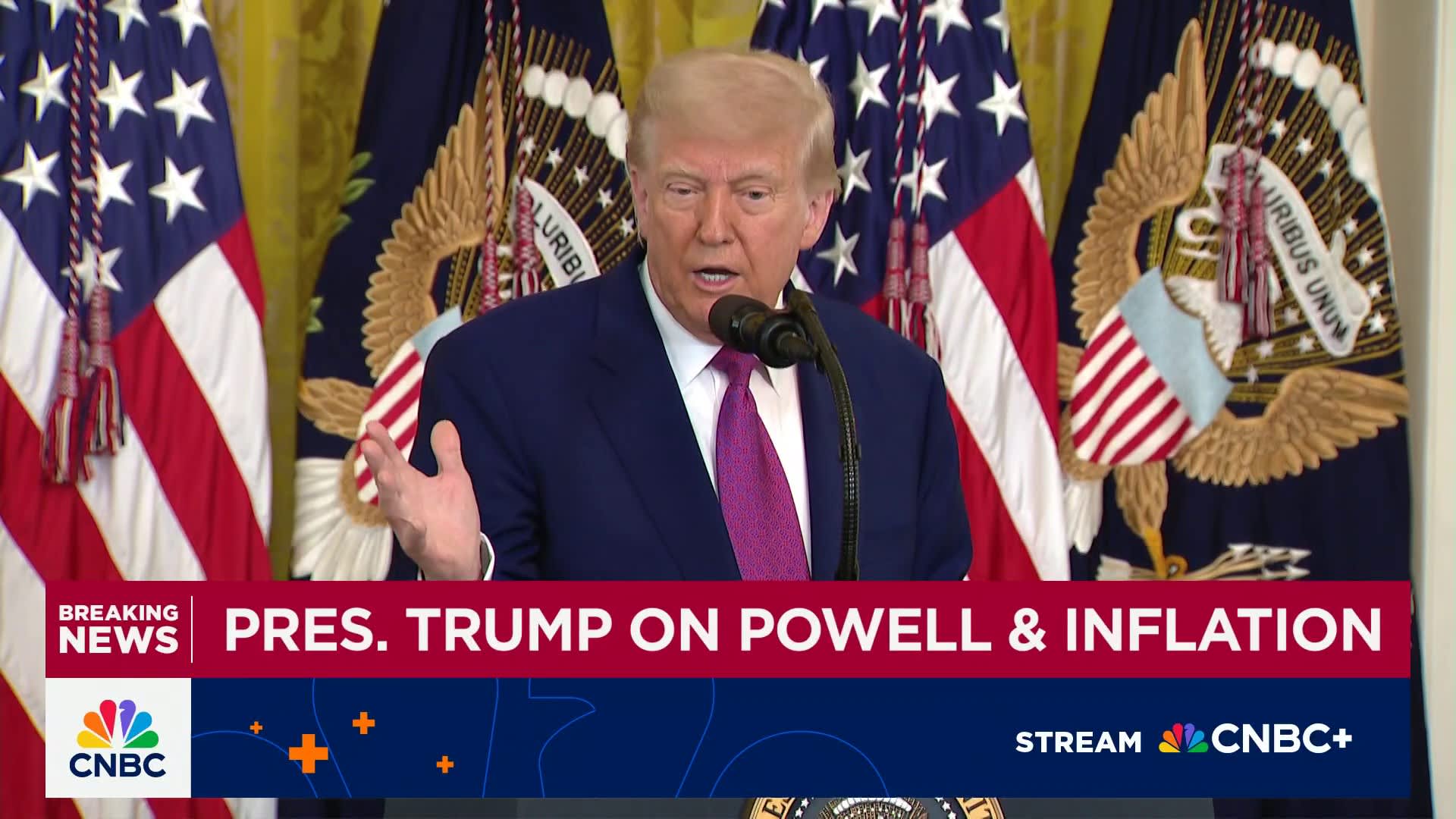

Ahead of next week’s Federal Reserve meeting, tensions are escalating between the White House and the central bank, with consumers seemingly caught in the crossfire.
On Thursday, PresidentDonald TrumpcalledFedChairJerome Powella “numbskull” for not lowering interest rates already.
Trump has previously said the central bank should cut interest rates by a full percentage point. “Go for a full point, Rocket Fuel!” Trump wrote in aTruth Socialpost on Friday.
Vice President JD Vanceechoed the president’s message in asocial media postWednesday on X, after a key inflation reading came in slightly better than expected.
“The president has been saying this for a while, but it’s even more clear: the refusal by the Fed to cut rates is monetary malpractice,” Vance wrote.
The president has argued that maintaining a fed funds rate that is too high makes it harder for businesses and consumers to borrow and puts the U.S. at an economic disadvantage to countries with lower rates. The Fed’s benchmark sets what banks charge each other for overnight lending, but also has a trickle-down effect on almost all of theborrowing and savings ratesAmericans see every day.
Still, so far, Trump’s comments have had no impact and experts say the Fed is likely to hold its benchmarksteady again when it meets next week — even as the political pressureto slashrates ramps up significantly.
More from Personal Finance:
Here’s the inflation breakdown for May 2025
What’s happening with unemployed Americans — in five charts
The economic cost of Trump, Harvard battle over student visas
Since December, the federal funds rate has been in a target range of between 4.25%-4.5% and futures market pricing is implyingvirtually no chance of an interest rate cutat next week’s meeting, according to the CME Group’sFedWatchgauge.
In prepared remarks last month, Powellsaid that the federal funds rate is likely to stay higher as the economy changes and policy is in flux.He has also said repeatedly that politics will not play a role in the Fed’s policy decisions.
But Trump, who nominatedPowell to head of the nation’s central bank in 2018, haspublicly berated the Fed’s decision-making.
‘The idea of lower interest rates is often romanticized’
U.S. Federal Reserve Chair Jerome Powell and U.S. President Donald Trump.
Craig Hudson | Evelyn Hockstein | Reuters
As it stands, market pricing indicates the Fed is unlikely to consider further interest rate cuts until at least September. Once the fed funds rate comes down, consumers could see their borrowing costsstart to fall as well, which some may consider a welcome change.
“The idea of lower interest rates is often romanticized from the borrowers’ perspective,” said Greg McBride, chief financial analyst at Bankrate.
“The reason for lower rates is what really matters,” McBride said. “We want the fed to be cutting rates because inflationary pressures are receding.”
For now, “inflation is still higher than desired,” he added.
The risk is that reducing rates too soon could halt or reverse progress on tamping down inflation, according to Mark Higgins, senior vice president at Index Fund Advisorsand author of “Investing in U.S. Financial History: Understanding the Past to Forecast the Future.”
“Now you have a situation where Trump is willing to pressure the Fed to lower rates while they have less flexibility to do that,” he said. “They have to keep rates higher for longer to extinguish inflation.”
Despite the softer-than-expected inflation data, central bank officials have said that they will wait until there’s more clarity about Trump’s tariff agenda before they consider lowering rates again.
The White House has said that tariffs will not cause runaway inflation, with the expectation that foreign producers would absorb much of the costs themselves. However, many economists believe that the full effect from tariffs could show up later in the summer as surplus inventories draw down.
For consumers waiting for borrowing costs to ease, they may be better off of the Fed sticks to its current monetary policy, according to Higgins.
“There’s this temptation to move fast and that is counterproductive,” Higgins said. “If the Fed prematurely lowers rates, it’s going to allow inflation to reignite and then they will have to raise rates again.”
About The Author