Russia’s summer offensive is starting to gain ground in Ukraine, with Moscow’s forces aided by a novel type of attack drones that cannot be jammed.
Russia seized more Ukrainian territory in May than at any point since November 2024, data from monitoring groups shows. Its advance has continued in recent weeks, as US-brokered peace talks have stalled because of Russian President Vladimir Putin’s maximalist demands.
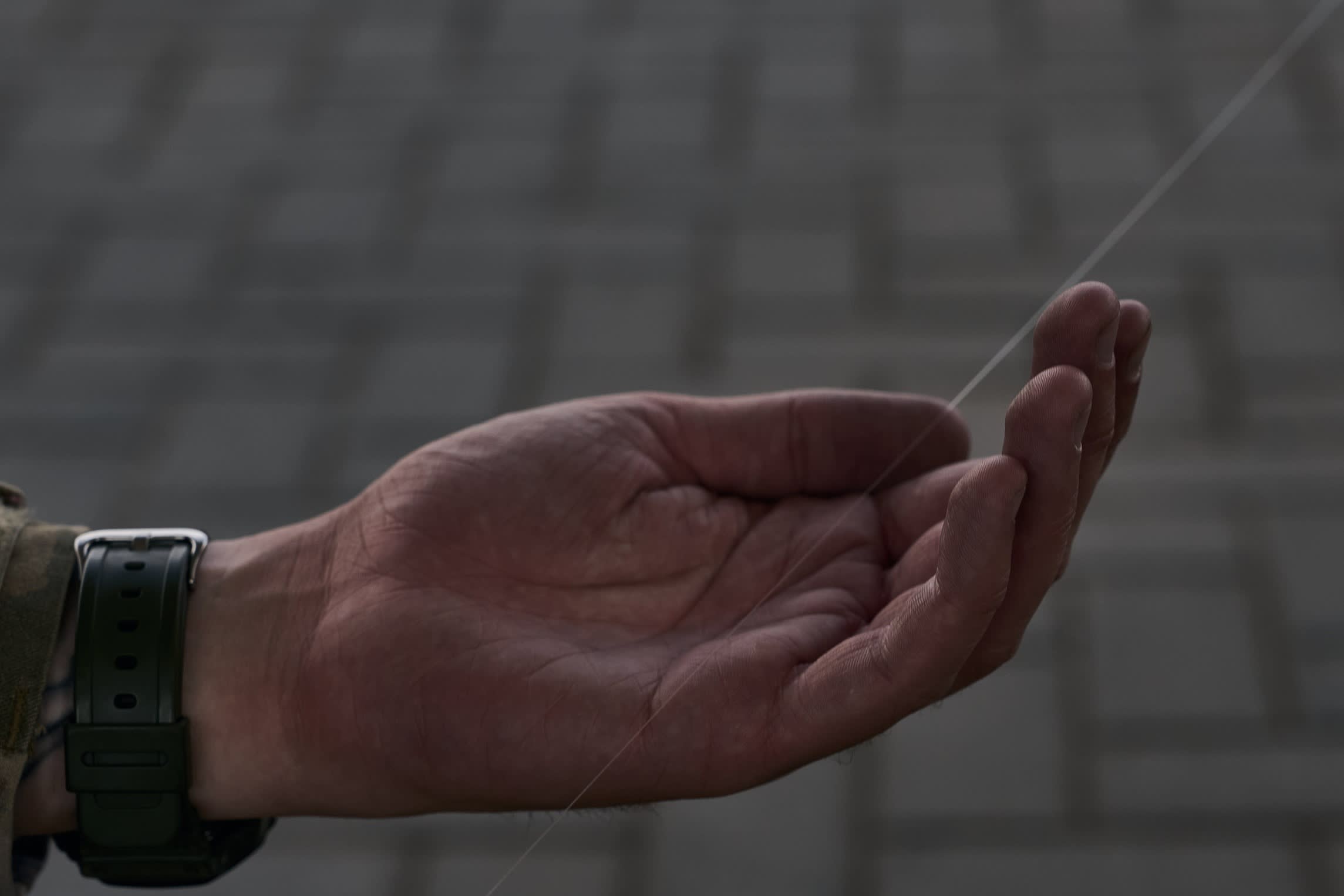
The Russian advances have been aided by the deployment of a novel model of drones connected with a hair-thin fibre optic cable. Deployed in increasingly large numbers since the start of the year, these unmanned aerial vehicles (UAVs) are immune to Ukrainian jamming, which only works on wireless devices.

“At this point, you’re a lucky man if you drive five kilometres from the frontline and your car is still operational,” a Ukrainian drone unit commander deployed in eastern Donetsk region told the Financial Times. He said his men now sometimes have to walk up to 15km at night to reach their positions.

But Ukrainian forces have been applying similar pressure, according to him: “we control their side of the frontline, and they control ours”.
Rob Lee, a military analyst and senior fellow at the Foreign Policy Research Institute, said the stakes of Russia’s summer offensive were high for both sides.
“Much is riding on what will happen this summer. If Russia struggles to advance, negotiations may have a better chance in the fall or winter . . . but the opposite may happen if Russia manages to make more significant gains, or if winter approaches and it looks like Ukraine has trouble sustaining the fight,” Lee said.
Russia’s largest gains have been in the northern Ukrainian Sumy region, where it was able to seize 200 sq km of territory after pushing Ukrainian forces out of its own border region of Kursk.
Some 350km to the south, a small group of Russian soldiers has reached the border of the Dnipropetrovsk region for the first time since the beginning of the full-scale invasion in 2022, geolocated footage showed. Ukrainian military officials have denied that Russian troops gained a foothold in the region.
One emerging flashpoint along the 1,000km frontline is around the Ukrainian town Kostyantynivka, a major urban redoubt on the way to Kramatorsk, the largest city in Ukrainian-held Donetsk region.Among Putin’s demands is full control of Donetsk and other regions that his troops have only partially occupied.
In recent months, Russian units began to approach from three directions. In May they advanced 10 kilometres towards the town’s western flank, and are currently about 12km from the city. Those gains also allowed Russian forces to sever Ukraine’s logistical artery that linked Kostyantynivka to another stronghold, Pokrovsk — increasing the risk for Kyiv’s forces to be encircled.
But despite the occasional breakthrough, Russian advances have been mostly incremental and bloody, as Ukrainian drone teams use UAVs fitted with explosives to break the assaults.
Russian troops have adapted, switching from slower and more vulnerable tanks to motorcycles and dismounted infantry to dart across cratered fields and reach the tree lines hiding Ukrainian dugouts.
“That’s how they work, anything else is the exception now,” said the drone unit commander.
Ukraine still struggles to replenish frontline brigades, a predicament Russian command has been looking to exploit by pressing across a wide front to stretch Ukrainian lines.
Emil Kastehelmi, an analyst monitoring the war for the Finland-based Black Bird Group, said that “we probably won’t see the lines crumbling in the next few months, but Russian advances could start moving at a higher pace.
“Careful management of reserves is a key factor for Ukraine this summer, where to put them and how to manage them so that emerging crises do not become catastrophes.”
One such stark choice could soon face commanders in charge of defending Kostyantynivka, located just 30km west from Bakhmut, a Ukrainian stronghold that became a national symbol of resistance in the first year of the war.
President Volodymyr Zelenskyy refused to heed calls from western allies and some of his military commanders to pull back his troops as the town had no strategic significance. Russian forces finally captured the town in March 2023, after many months of gruelling battles.
With a prewar population of about 65,000, Kostyantynivka already bears the hallmarks of a frontline city. Residents started fleeing in droves last month when the situation deteriorated and the threat of drone strikes became permanent.
Ukrainian private post operator Nova Poshta closed its last functional office in the city in early May, while the few remaining shops began moving to hidden basements. Some 8,000 people remained in the city in late May, down from 17,000 six months prior, city officials said.
“It’s not a city suited for life anymore”, said Roman Buhaiov, a-33 year-old former engineer overseeing the evacuation of civilians from frontline areas.
His NGO, East SOS, has already stopped going to several districts of Kostyantynivka which are within 10km from the frontline — what Buhaiov describes as a “kill zone . . . where nothing can operate”.
Lacking armoured vehicles, East SOS may soon be forced to further wind down evacuations from Kostyantynivka. The organisation is also considering relocating its base of operation from nearby Kramatorsk, the bigger city which for the past three years had been a relative haven for thousands of people fleeing from frontline areas.
In the past weeks, Ukrainian supply trucks have reportedly been hit by Russian drones on the road linking Kramatorsk to Dobropillia, some 30km from the fighting. On both sides of the frontline, roads are being covered with anti-drone nets in an attempt to stop fibre optic drones.

On the front around Siversk, a town Russian forces now threaten from the east as well as the north and south, local commanders have urged their men to stop all daytime movement on a specific patch of road targeted by drones, one soldier from a territorial defence brigade positioned in the area told the FT. Movement of vehicles in that area should only be done at sunset and at night — “in the grey and in the dark”, he said.
“For now they’re focusing on logistics, hitting up to 30km-40km deep, it’s quite terrible. What will happen next, we don’t know,” the soldier added.
The increasing reach of Russian fibre optic drones has also heightened the threat to large urban centres like Sumy or Kramatorsk, which not only house tens of thousands of civilians but also serve as key military strongholds.
“Even if Russia doesn’t capture cities, it can make it very difficult for these cities to operate in a functional way once they are within artillery and [drone] range,” said Lee.
“Kramatorsk and Slovyansk are the main logistical and command and control hubs for Ukraine in the Donetsk region. Russia getting close will change how Ukraine defends itself.”
About The Author