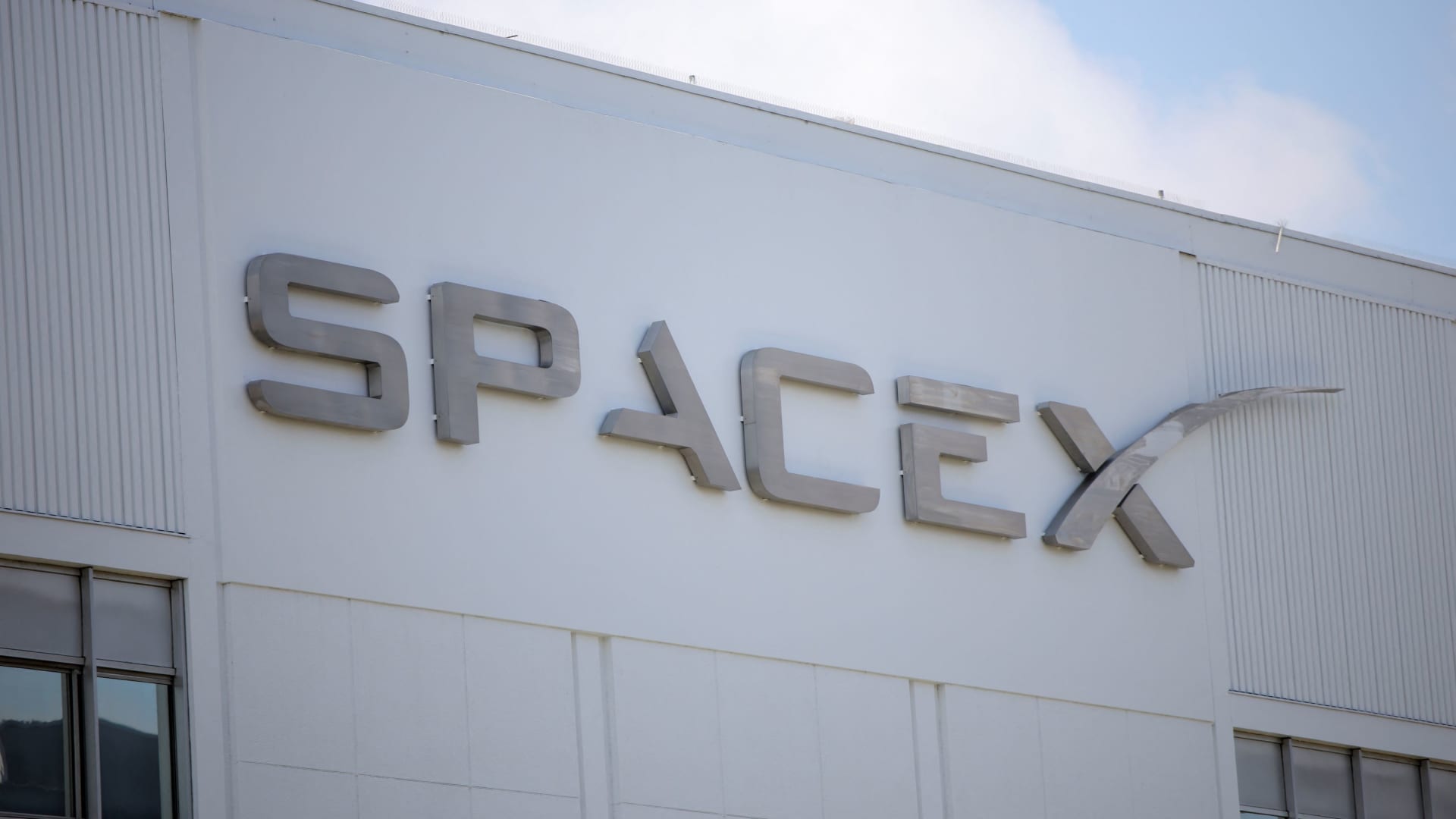
SpaceX headquarters is shown in Hawthorne, California, U.S. June 5, 2025.
Daniel Cole | Reuters
Astronauts sidelined for the past year byBoeing’s Starliner troubleblasted off to theInternational Space Stationon Friday, getting a lift fromSpaceX.
TheU.S.-Japanese-Russian crew of four rocketed from NASA’sKennedy Space Center. They’ll replace colleagues who launched to the space station in March as fill-ins for NASA’s twostuck astronauts.
TheirSpaceXcapsule should reach the orbiting lab this weekend and stay for at least six months.
Zena Cardman, a biologist and polar explorer who should have launched last year, wasyankedalong with anotherNASAcrewmate to make room for Starliner’s star-crossed test pilots.
The botched Starliner demo forcedButch WilmoreandSuni Williamsto switch toSpaceXto get back from the space station more than nine months after departing on what should have been a weeklong trip. Ensuring their safe return “meant stepping aside,” Cardman said before her launch.
“Every astronaut wants to be in space. None of us want to stay on the ground, but it’s not about me,” said Cardman, the flight commander. Even after launch, “things can change at the last minute, so I’ll count myself very fortunate when the hatch opens” to the space station.
NASA’sMike Fincke— Cardman’s co-pilot — was the backup for Wilmore and Williams on Starliner, making those three still the only ones certified to fly it. Fincke and Japan’sKimiya Yui, former military officers with previous spaceflight experience, were training for Starliner’s second astronaut mission. With Starliner grounded until 2026,NASAswitched the two to the latestSpaceXflight.
Rounding out the crew is Russia’sOleg Platonov. The former fighter pilot was pulled a few years ago from the Russian Soyuz flight lineup because of an undisclosed health issue that he said has since been resolved.
On hand for the first launch attempt on Thursday,NASA’s new acting administrator, Transportation SecretarySean Duffy, met with Roscosmos director generalDmitry Bakanov, an invited guest. The two discussed future collaboration, then left town after thick clouds forced a last-minute delay.
“What we learn on these missions is what’s going to get us to the moon and then from the moon to Mars, which is I think the direction thatNASAhas to be,” Duffy said in aNASAinterview. “There’s critical real estate on the moon. We want to claim that real estate for ourselves and our partners.”
To save money in light of tight budgets,NASAis looking to increase its space station stays from six months to eight months, a move already adopted byRussia’sspace agency.SpaceXis close to certifying its Dragon capsules for longer flights, which means the newly launched crew could be up there until April.
NASAis also considering smaller crews — three astronauts launching onSpaceXinstead of the typical four — to cut costs.
As for Starliner,NASAis leaning toward launching the next one with cargo before flying another crew.
Engineers are still investigating the thruster failures and helium leaks that bedeviled Starliner following liftoff. Time is running out asNASAlooks to abandon the aging space station by 2030. An air leak on the Russian side of the station remains unresolved after years of patching.
“I am not in the least worried” about the leak, which is localized, Platonov said earlier this month.
About The Author