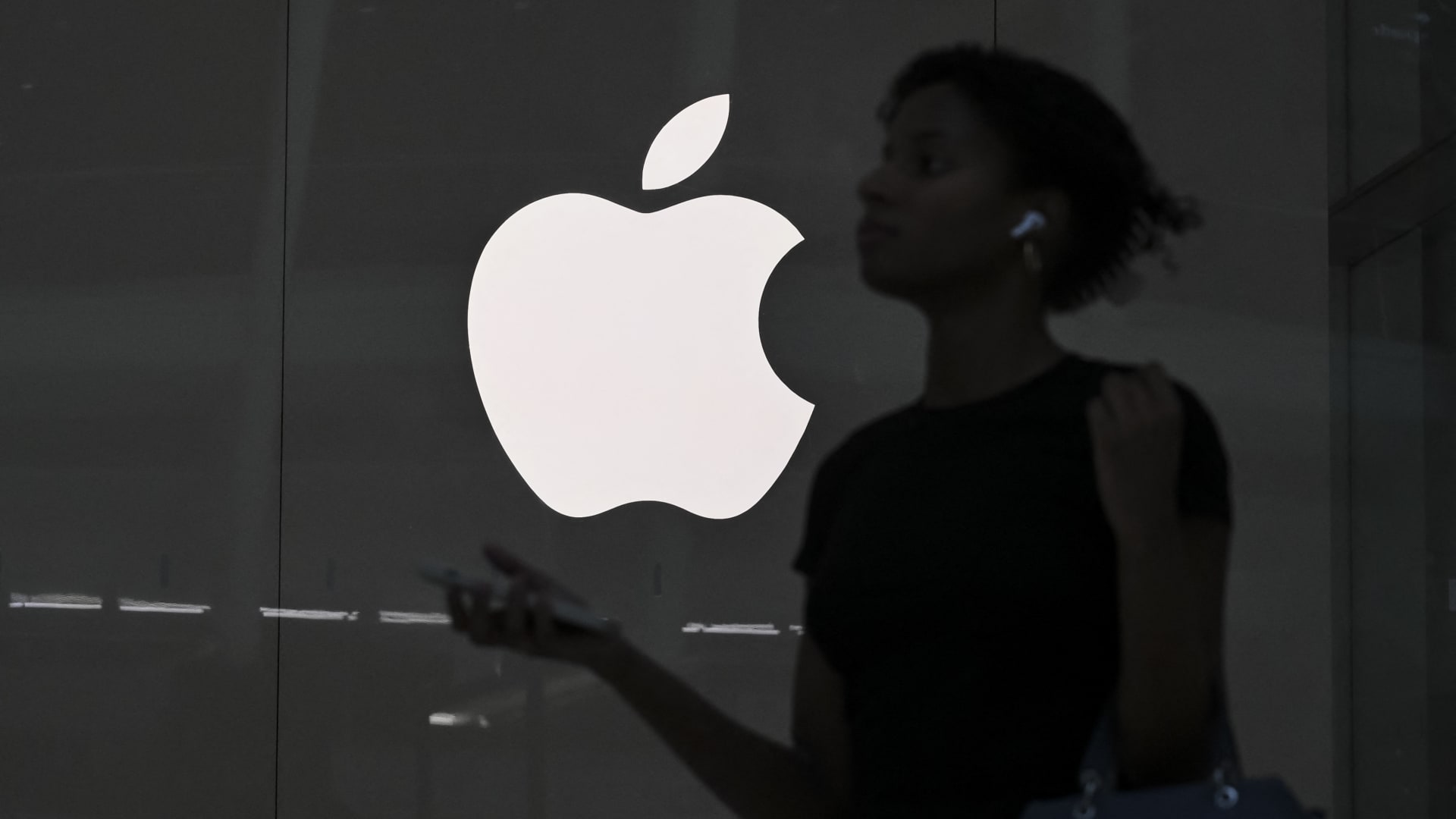
U.S. Director of National Intelligence Tulsi Gabbard said on Monday the UK had agreed to drop its mandate for iPhone maker Apple to provide a “back door”.
Angela Weiss | AFP | Getty Images
U.S. Director of National Intelligence TulsiGabbardsaid on Monday theU.K.hadagreedtodropitsmandatefor iPhone makerAppleto provide a “back door” that would have enabled access to the protected encrypted data of American citizens.
Gabbardissued the statement on X, saying she had worked for months with Britain, along with President Donald Trump and Vice President JD Vance to arrive at a deal.
British Prime Minister Keir Starmer was in Washington on Monday along with other European leaders to meet Trump and discuss Russia’s war in Ukraine.
The U.K. government and Apple did not immediately respond to requests for comment onGabbard’s statement.
U.S. lawmakerssaid in May that theU.K.’sorder toAppleto create a backdoor to its encrypteduser data could be exploited by cybercriminals and authoritarian governments.
Apple, which has said it would never build a so-called back door into its encrypted services or devices, had challenged the order at theU.K.’s Investigatory Powers Tribunal (IPT).
The iPhone maker withdrew its Advanced Data Protection feature forU.K.users in February following theU.K.order.Users ofApple’s iPhones, Macs and other devices can enable the feature to ensure that only they — and not evenApple— can unlock data stored on its cloud.
U.S. officialssaid earlier this yearthey were examining whether the U.K. broke a bilateral agreement by demanding that Apple build a backdoor allowing the British government to access backups of data in the company’s encrypted cloud storage systems.
In a letter dated February 25 to U.S. lawmakers,Gabbardsaid the U.S. was examining whether the U.K. government had violated the CLOUD Act, which bars it from issuing demands for the data of U.S. citizens and vice versa.
Cybersecurity expertstold Reutersthat if Apple chose to build a backdoor for a government, that backdoor would eventually be found and exploited by hackers.
Apple has sparred with regulators over encryption as far back as 2016 when the U.S. government tried to compel it to build a tool to unlock the iPhone of a suspected extremist.
About The Author