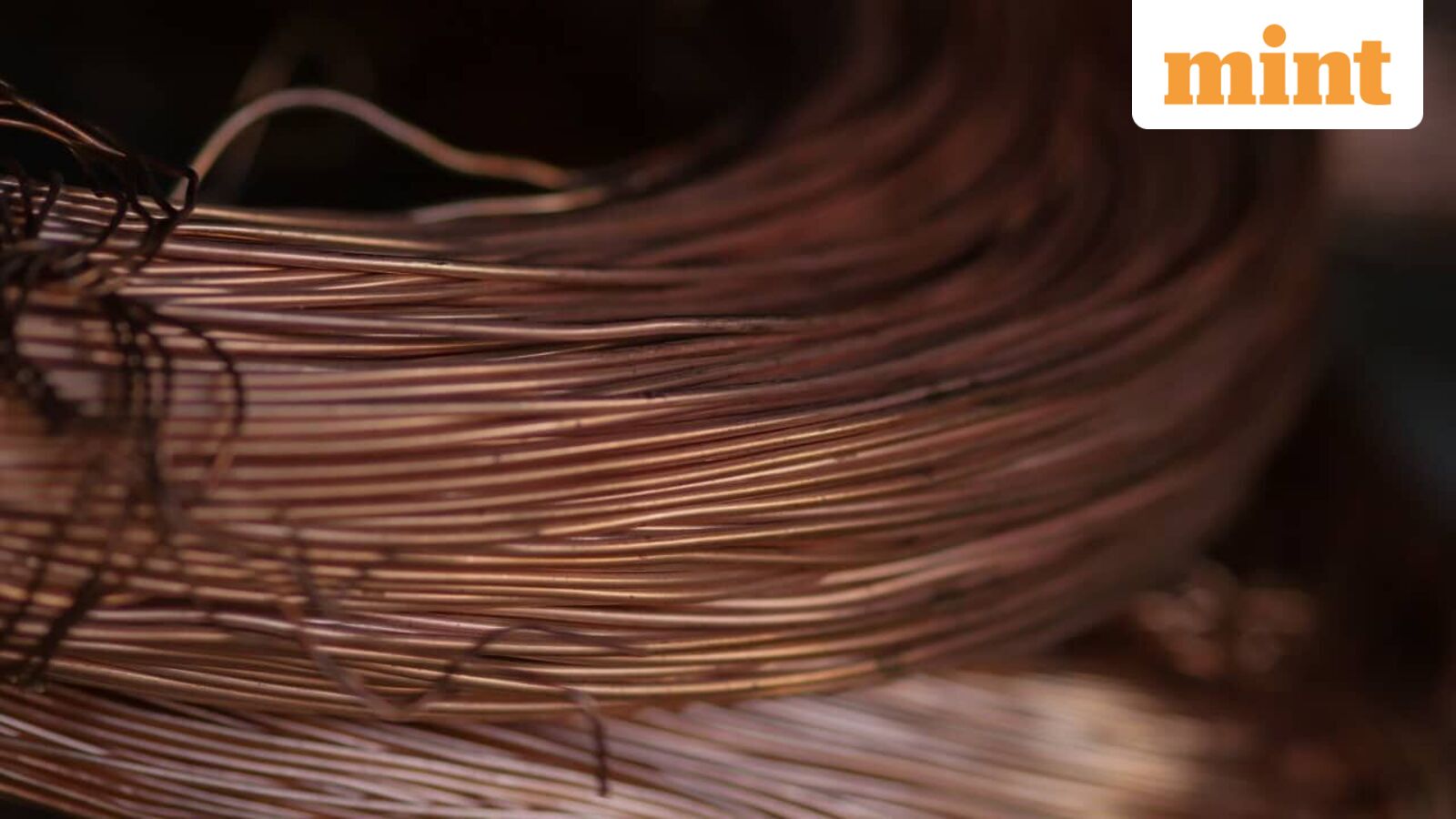
Copper prices continue to rally for the sixth session straight on Monday, December 29, surging as much as 7.72% to ₹1,376.05 per kg on Multi Commodity Exchange (MCX), led by uncertainties over US President Donald Trump’s trade policies. On Friday, the metal had hit a high of ₹1,249.95 per kg in futures trade.
Meanwhile, in the international markets, copper topped the $13,000-a-ton mark on the London Metal Exchange (LME) earlier today in a striking year-end rally, driven by worries about tightening supply.
The key metal for renewable energy and power infrastructure jumped as much as 6.6% to $12,960 a ton on the LME as trading resumed after a two-day public holiday in the UK.
On Comex in New York, futures were up 1.2% to $5.908 a pound after a 5% surge on Friday.
What’s driving the rally in copper?
The latest sharp rally crowns a remarkable year for copper, shaped by major unplanned mine disruptions, uncertainty surrounding US President Donald Trump’s trade policies, and intense strain on global smelters.
However, concerns are emerging that prices may have risen too far, with buoyant sentiment in precious metals markets potentially spilling over into copper as well.
President Trump is expected to decide on import tariffs for refined copper by mid-next year, and US prices are already trading above LME levels on expectations that the tariffs will be imposed. This has prompted large traders to ship substantial volumes of copper to the US ahead of any duties, significantly drawing down inventories elsewhere around the world.
Is it the right time to invest in copper?
According to market experts, copper prices are on track for their strongest annual performance since 2009, driven by growing demand from technology and energy transition industries, along with uncertainties linked to tariffs.
“Tight mine supply, disruptions in key producing regions, and pre-emptive stockpiling amid trade and tariff uncertainty have collided with structurally rising demand from electrification, renewables, EVs, and AI-led data centre expansion. Unlike gold, copper is a direct proxy for real economic and infrastructure activity. While it lacks defensive characteristics, its outlook remains constructive as long as global growth and energy transition spending stay intact. That said, volatility will be higher, and investors should treat copper as a growth metal allocation rather than a hedge, with disciplined position sizing,” said Justin Khoo, Senior Market Analyst – APAC, VT Market.
Goldman Sachs Research, in a report, said that copper prices are expected to ease in 2026 from recent record levels, although rising demand from grid and power infrastructure is likely to support higher prices over the longer term.
“Next year, it expects the LME copper price to remain in a range of USD 10,000-11,000, as strong global demand growth from the grid and power infrastructure, backed by investment in strategic sectors such as AI and defence, keeps prices from falling below USD 10,000,” the firm said.
Disclaimer: This story is for educational purposes only. The views and recommendations above are those of individual analysts or broking companies, not Mint. We advise investors to check with certified experts before making any investment decisions.
About The Author