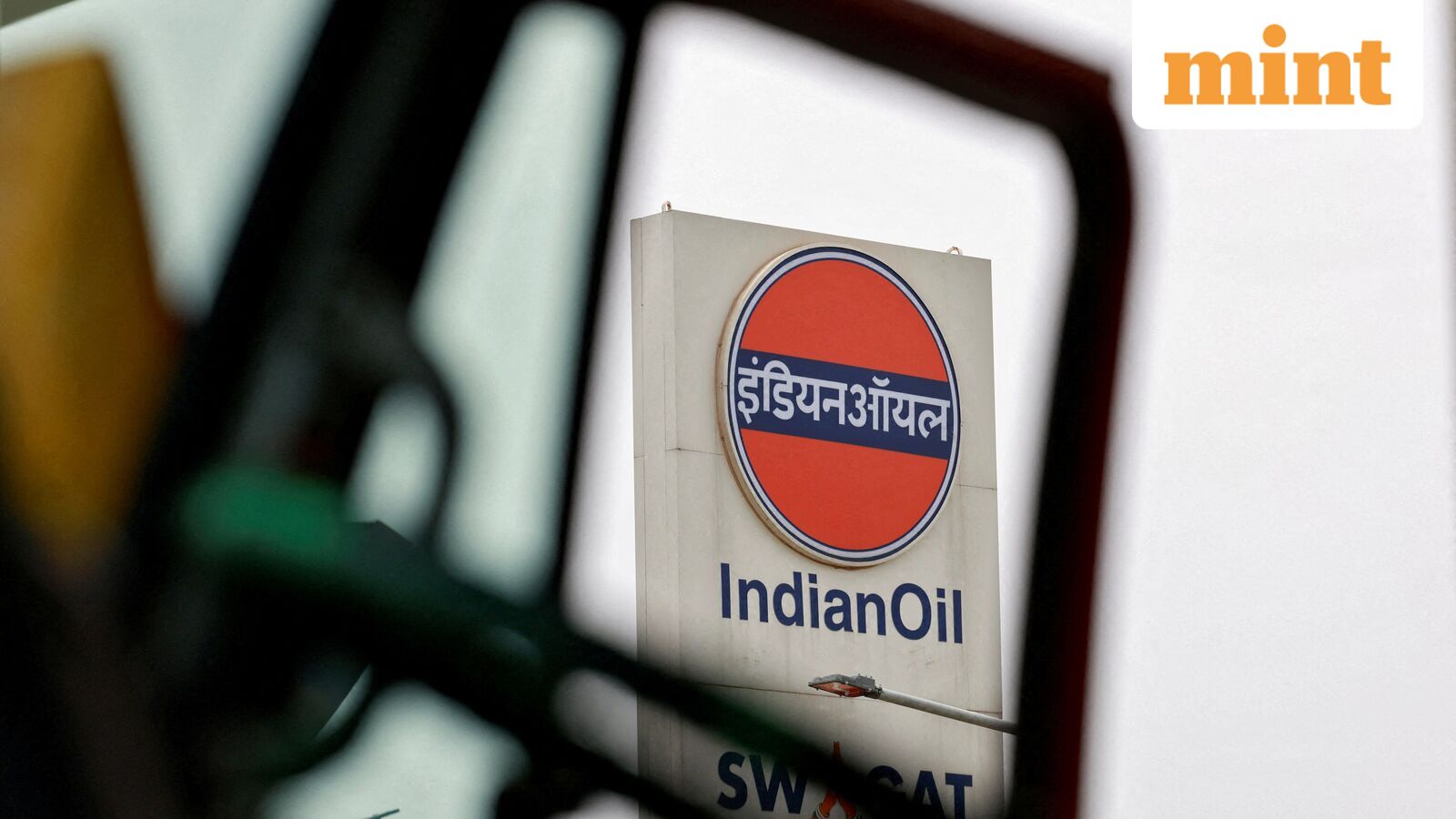
India’s state-run oil marketing companies (OMCs), which account for nearly 90% of the domestic fuel retail market, on Friday raised petrol and diesel prices by over ₹3 per litre each, marking the first fuel price hike in four years.
The petrol, diesel price hike, which was widely anticipated, comes amid a nearly 50% surge in global crude oil prices over the same period. Petrol and diesel prices had remained unchanged despite sustained pressure from rising international oil prices.
Although the petrol and diesel price hike offers some relief to OMCs, analysts believe it is insufficient to fully offset the massive under-recoveries accumulated over the past few years.
People also ask
AI powered insights from this story
•5 QUESTIONS
Petrol and diesel prices were increased by ₹3 per litre after state-owned oil marketing companies (OMCs) ended a four-year hiatus in rate revisions. This hike was prompted by a nearly 50% surge in global crude oil prices over the same period, which had led to OMCs incurring significant losses.
Analysts generally agree that the ₹3 per litre hike is insufficient to fully offset the mounting losses and under-recoveries accumulated by OMCs. While it offers some relief, further calibrated hikes may be required to restore retail margins and profitability, especially if global crude oil prices remain elevated.
The direct impact of the ₹3 per litre fuel price hike on CPI inflation is expected to be modest, likely in the range of 10-25 basis points. However, second-order effects may emerge, particularly from diesel price increases, which could raise freight and farm input costs, exerting mild upward pressure on food inflation.
State-owned fuel retailers abandoned daily price revisions in April 2022 to shield consumers from soaring global oil prices following Russia’s invasion of Ukraine. They incurred heavy losses initially but later recouped them when rates fell. However, the conflict in West Asia has again pushed international oil prices higher.
Estimates suggest that cumulative fuel price hikes of ₹10-15 per litre may be required for OMCs to normalize profitability and recover past losses. A substantially larger increase beyond the current ₹3 per litre adjustment would likely be needed unless accompanied by a correction in crude prices or government compensation.
At prevailing crude oil prices, OMCs were estimated to be incurring losses of around ₹20 per litre on petrol and nearly ₹100 per litre on diesel, according to earlier estimates by the oil ministry.
Brent crude futures were trading 1.66% higher at $107.48 per barrel, while US West Texas Intermediate (WTI) crude gained 2.01% to $103.20 per barrel.
“Indian Oil Corporation (IOC), Bharat Petroleum Corporation Ltd (BPCL), and Hindustan Petroleum Corporation Ltd (HPCL) were together incurring under-recoveries of ₹1,600–1,700 crore per day by selling fuel below cost. The cumulative under-recovery for the quarter alone is expected to surge to nearly ₹2 lakh crore, with losses of around ₹1 lakh crore,” said market veteran Sunil Subramaniam.
He added that while the latest fuel price hike is a positive development for OMCs, the structural stress on the sector will persist as long as Brent crude oil price remains above $100 per barrel.
Jahol Prajapati, Equity Research Analyst at SAMCO Securities, also noted that the ₹3 per litre increase is incrementally positive for OMCs but remains inadequate to bridge the accumulated losses.
“With retail fuel prices largely frozen for an extended period despite a sharp rise in global crude prices, OMCs have continued to absorb significant margin pressure. While the latest hike should improve near-term earnings visibility and sentiment for IOC, BPCL, and HPCL, further calibrated hikes may still be required to fully restore retail margins,” Prajapati said.
Dhaval Popat, Analyst – Energy, Choice Institutional Equities explained that every Re 1 per litre increase in fuel prices can improve annualized EBITDA by roughly ₹15,000 – ₹16,000 crore for the three PSU OMCs combined, implying that the latest hike could translate into an annualized earnings benefit of nearly ₹45,000 – ₹48,000 crore across OMCs.
“However, against estimated industry-wide losses currently running at nearly ₹1 lakh crore monthly, the present hike only offsets a limited portion of the earnings erosion,” said Popat.
According to ICRA, at crude oil prices of $105–110 per barrel and factoring in the 10-year average crack spreads for auto fuels, OMCs continue to incur losses of nearly ₹500 crore per day on the sale of auto fuels and domestic LPG, even after the latest fuel price hike.
Is the ₹3 per litre hike enough?
Analysts broadly agree that the current increase is not sufficient to restore the financial health of OMCs.
“The ₹3 per litre hike ends a symbolically important four-year freeze, but it is not enough to restore OMC profitability at current crude price levels. It is mildly inflationary, particularly through diesel’s impact on logistics and transportation costs rather than petrol’s direct effect on consumers. This is a beginning, not a resolution,” Subramaniam said.
He further noted that sustained pressure from elevated crude oil prices, rising forex concerns, and Prime Minister Narendra Modi’s public appeal to reduce fuel consumption could strengthen the case for another, larger fuel price revision if crude prices remain elevated.
Prajapati estimates that cumulative fuel price hikes of ₹10–15 per litre may ultimately be required for OMCs to normalise profitability and recover past losses. However, he added that the future pricing trajectory would depend on global crude oil trends as well as government policy decisions.
To restore profitability to pre-crisis levels and fully neutralize current marketing losses, Dhaval Popat said that a substantially larger increase in retail fuel prices would likely be required, potentially well beyond the current ₹3 per litre adjustment, unless accompanied by a meaningful correction in crude prices, reduction in product cracks, or government-led compensation measures.
Hence, he believes further hikes are required to offset the current losses.
“Against this back drop, provided there is no change in the global scenario, and the crude price continue to build, a rise of ₹10 per litre overall, which includes ₹3 per litre hike, would be required to offset the losses,” said the Choice Institutional Equities’ analyst.
Saurabh Jain, Head of Fundamental Research, SMC Global Securities also believes further calibrated price increases may be required in case crude oil prices remain volatile at higher levels.
“For the market, the key positive is that concerns around prolonged margin stress and balance sheet pressure on OMCs could now start easing. Investors may now start focusing again on core fundamentals such as refining margins, inventory gains and the possibility of additional calibrated hikes if global energy prices stay volatile,” said Jain.
Macroeconomic impact
Economists believe the direct impact of the latest fuel price hike on inflation is likely to remain limited, although second-order effects may emerge over time.
“The direct impact on CPI inflation is expected to remain modest, likely in the range of 10–15 basis points, depending on how transport and logistics costs feed into the broader economy,” Subramaniam said.
He highlighted that diesel prices are more significant from a macroeconomic perspective, as diesel is widely used in goods transportation, agriculture, and commercial vehicles.
“Even a ₹3 per litre increase in diesel prices could raise freight and farm input costs, exerting mild upward pressure on food inflation — particularly for vegetables and other perishables — over the next four to eight weeks,” he added.
Radhika Rao, Senior Economist and Executive Director at DBS Bank, said that given the weightage of petrol and diesel in the Consumer Price Index (CPI) basket, a 3–5% increase in fuel prices could add nearly 15–25 basis points to headline inflation, excluding any second-round effects.
Disclaimer: The views and recommendations made above are those of individual analysts or broking companies, and not of Mint. We advise investors to check with certified experts before making any investment decisions.
About The Author