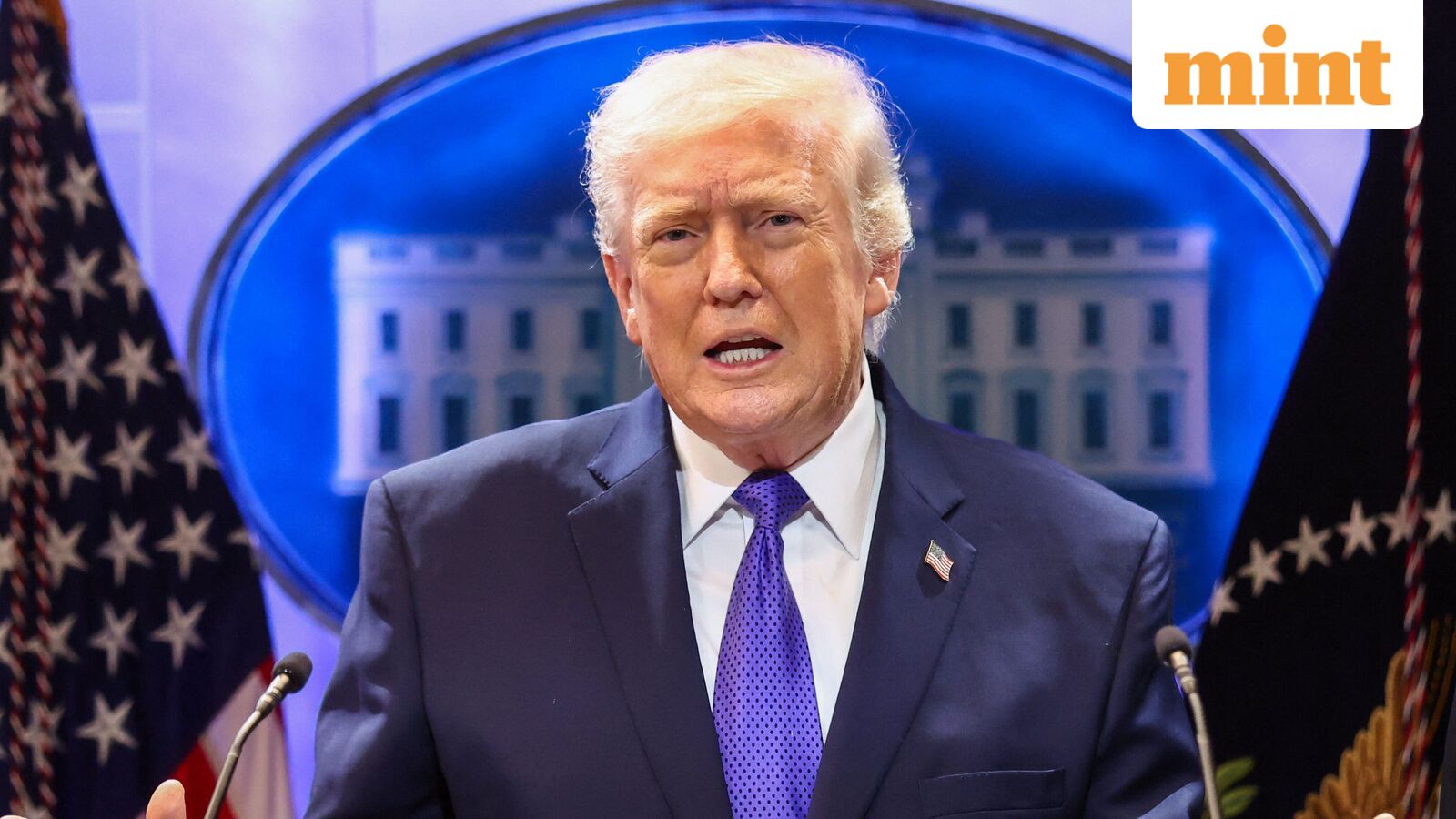
President Donald Trump’s new 15% global tariff is causing uncertainty and confusion among investors and international lawmakers alike.
Trump announced the move Sunday, up from a 10% rate, after the Supreme Court struck down levies the administration imposed under the International Emergency Economic Powers Act Friday.
Stock futures pointed lower early Monday, reversing Friday’s rally, while haven assets gold and silver rose. Investors don’t quite know what to make of it all.
Well, the combined effect of the ruling and the new levies is actually a reduction in the increase of the effective tariff rate since the beginning of 2025—to 9 percentage points, from 10, Goldman Sachs analysts estimated in a note Sunday.
The changes in policy mean the bank’s estimates for the tariff impact on inflation and growth are “little changed.” They said the bulk of the inflationary effect passed through to consumers has already happened, expecting just a further 0.1% impact to core PCE prices in 2026.
But it’s the uncertainty that’s currently unaccounted for—the new 15% levy can only stay in place for 150 days. And other countries around the world are also scrambling to protect existing trade agreements with the U.S.
The European Commission demanded “full clarity” from the U.S. and said it expects the Trump administration to honor the trade deal it agreed with the European Union in August last year.
“A deal is a deal,” the commission said in a statement Sunday. “The current situation is not conducive to delivering ‘fair, balanced, and mutually beneficial’ trans-Atlantic trade and investment, as agreed to by both sides,” it added.
“Pure tariff chaos,” is how Bernd Lange, chair of the European Parliament’s International Trade committee put it. “No one can make any sense of it anymore—only open questions and growing uncertainty for the EU and other U.S. trading partners,” Lange said in a post on X.
He proposed halting the formal approval of the U.S.-EU trade deal at a meeting later on Monday.
The U.K. government expects trade deals negotiated with the U.S. last year to stay in place. Britain negotiated a 10% tariff rate last year and a government spokesperson told Barron’s “we expect our privileged trading position with the U.S. to continue,” in a statement Friday.
Write to Callum Keown at callum.keown@dowjones.com
About The Author