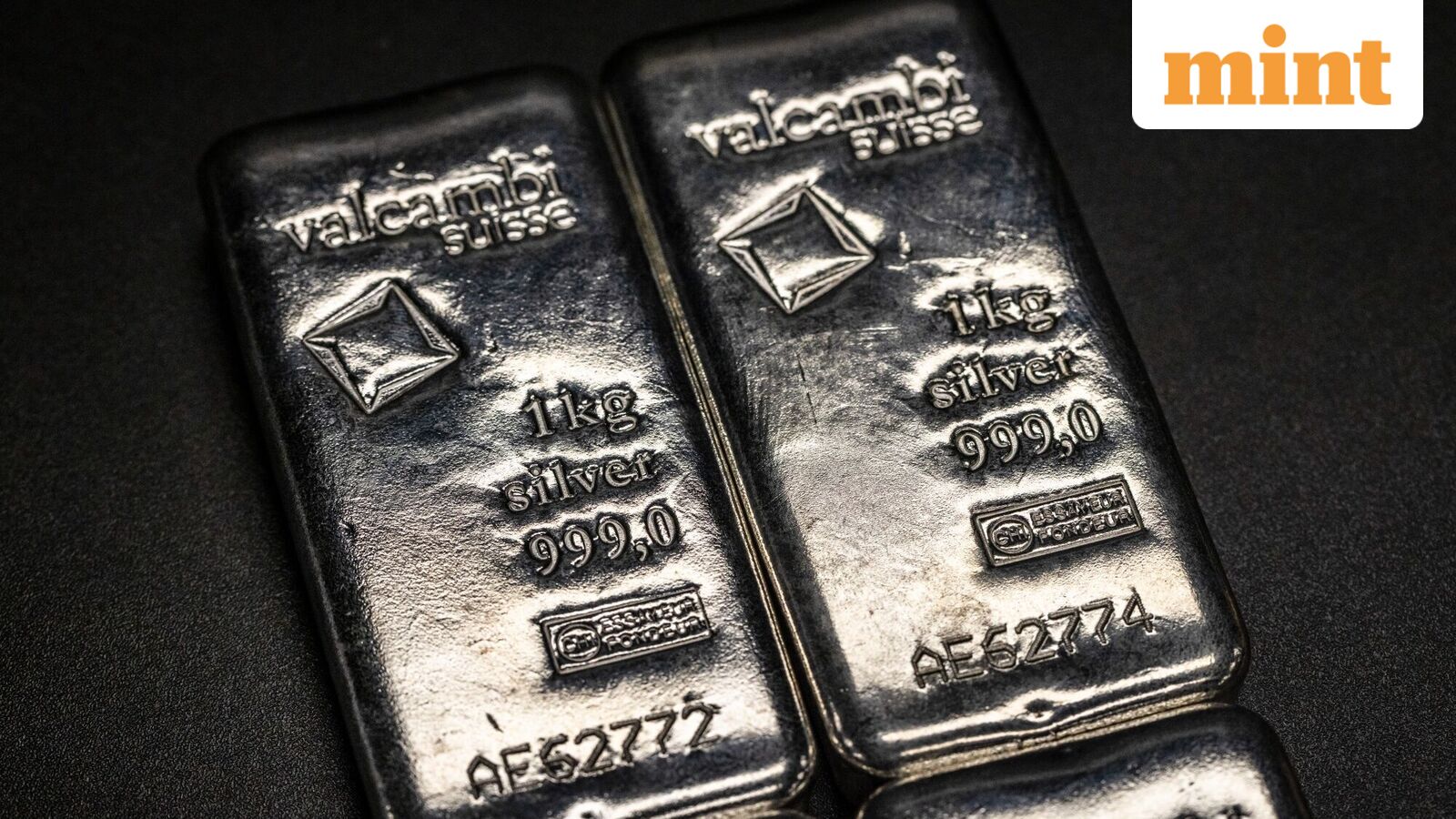
Silver price in India slipped on Friday, April 24, tracking weakness across precious metals as a sharp surge in crude oil prices, rising bond yields and a stronger U.S. dollar weighed on sentiment.
MCX Silver rate fell 1% or over ₹2,300 to ₹2,39,200 per kg, whereas, MCX Gold price lost 0.4% or over ₹600 to ₹2,41,513 per 10 grams.
In global markets as well, Spot silver fell 0.3% to $75.22 per ounce. Meanwhile, Spot gold edged down 0.1% to $4,686.29 per ounce as of 0230 GMT and is down 3% so far this week, snapping a four-week winning streak. U.S. gold futures for June delivery fell 0.5% to $4,702. Among other metals, platinum declined 0.6% to $1,993.63, and palladium dropped 0.3% to $1,464.12.
Oil surge, yields and dollar pressure bullion
The pressure comes as Brent crude prices have jumped over 17% this week to above $105 per barrel, with the key Strait of Hormuz still largely closed despite an extension of the Iran ceasefire. Higher oil prices increase transportation and production costs, fuelling inflation and reinforcing expectations that interest rates may remain higher for longer—typically negative for non-yielding assets like gold and silver.
Geopolitical tensions escalated after Iran showcased tighter control over the strait, releasing visuals of commandos boarding a cargo ship following the collapse of U.S.-Iran peace talks. Donald Trump said Tehran may want a deal but added the U.S. is in no hurry and could act militarily if needed.
Adding to the pressure, the U.S. dollar is up 0.7% this week, making bullion more expensive for other currency holders, while benchmark 10-year U.S. Treasury yields have risen over 2%, increasing the opportunity cost of holding non-yielding metals.
Should you buy silver?
Amid volatile global cues and shifting macro dynamics, analysts see diverging opportunities emerging within the precious metals space, with gold retaining its defensive appeal while silver offering higher return potential.
Ruchit Thakur, Market Analyst at VT Markets, said the outlook for precious metals reflects a contrasting dynamic between gold and silver. “Gold continues to serve as a relatively stable safe-haven asset, supported by persistent geopolitical uncertainties, central bank buying—especially across Asia—and its role as an inflation hedge,” he said. He added that while real yields remain elevated, they are no longer rising sharply, which is supporting gold prices.
Thakur noted that silver offers higher return potential but comes with greater volatility due to its dual role as both a precious and industrial metal. He indicated that silver is well placed if global growth stabilises, supported by strong structural demand from solar energy, electronics and electric vehicles.
He also highlighted that the gold-to-silver ratio remains relatively elevated, creating scope for mean reversion in silver’s favour, with historical trends showing stronger outperformance in late-cycle phases when growth stabilises and gold remains steady.
He believes that while gold remains the safer allocation in uncertain times, silver is better positioned to outperform over the next 6–12 months, provided global conditions do not deteriorate sharply, adding that a relative strategy favouring silver over gold could be more rewarding in the current environment.
Disclaimer: The views and recommendations made above are those of individual analysts or broking companies, and not of Mint. We advise investors to check with certified experts before making any investment decisions.
About The Author