U.S.-Iran attacks are putting a spotlight on drone technology. How to invest
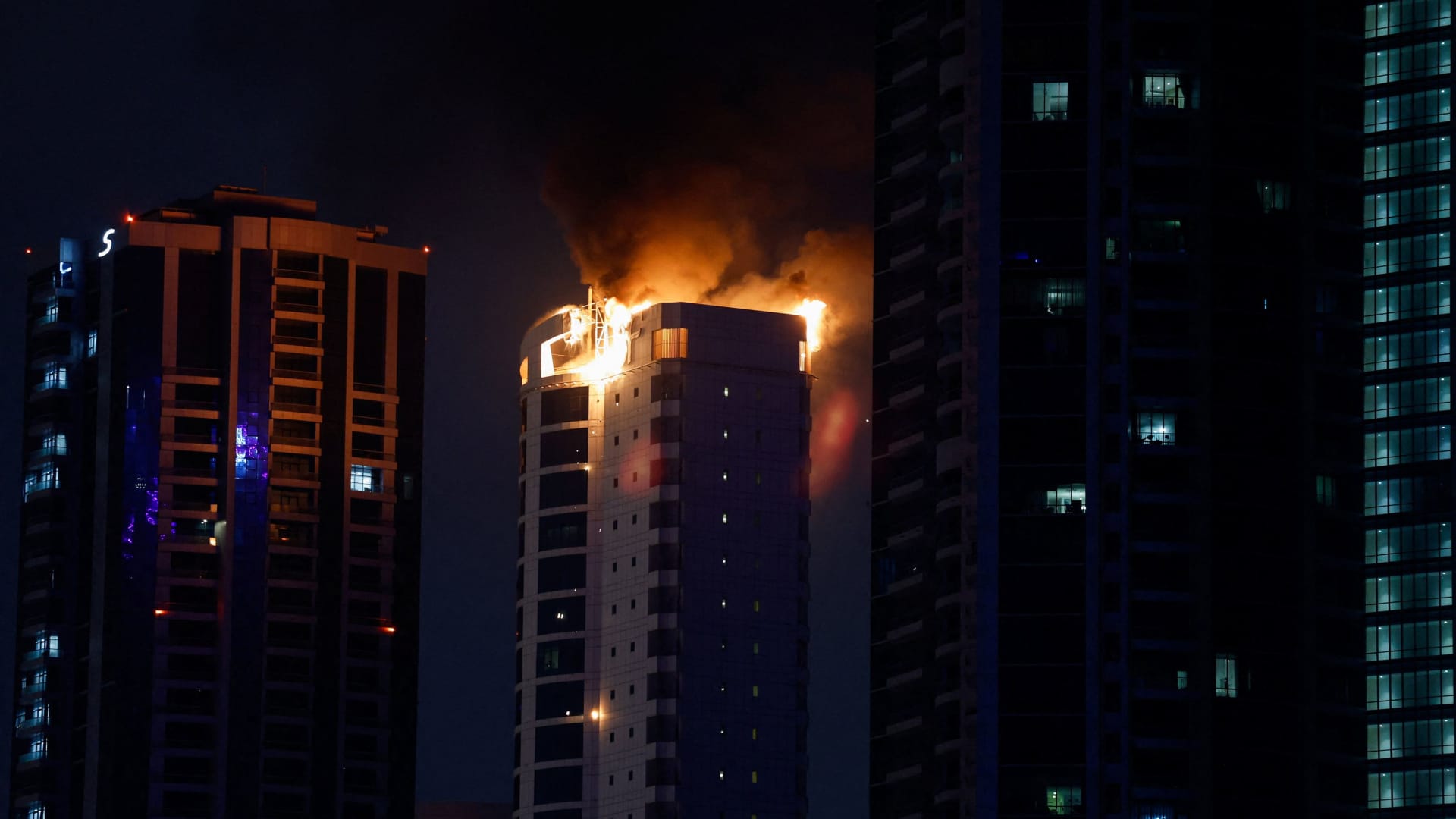
Investors suspect widening geopolitical conflict will boost demand for drone systems, putting attention on a sector that’s trading at an attractive valuation, analysts say. Unmanned systems have been a key driver of the growing defense market, given their heavy use in the Ukraine-Russia war that began in 2022. Artificial intelligence has accelerated the Pentagon’s push for unmanned systems, as the technology has enabled the development of low-cost drones at scale . Also important are counter-drone systems that can defend against attacks, according to BTIG analyst Andre Madrid. Already, drones are playing a prominent role in the war between the U.S. and Iran that erupted over the weekend. Iran is deploying its low-cost, long-range Shahed drones . Three Amazon Web Services facilities were damaged this week in the Middle East. On Tuesday, Iranian drones struck the U.S. Embassy in Riyadh as President Donald Trump’s “Operation Epic Fury” expanded throughout the region. Madrid said the expanding defense capabilities of U.S. adversaries have led to increased production and distribution of counter-drone systems, which detect, track and neutralize threats from unmanned aerial systems (UAS) through technologies such as radio frequency. The primary beneficiaries in counter-defense drone technology are AeroVironment and Leonardo DRS . “The fact that this threat has become so proliferated made it very apparent that we don’t have effective countermeasures in place to deter them or to stop them. That’s really where … we’ve seen rising demand for counter-drone tech,” Madrid said in an interview. “Now we have to beef up our defenses.” Leaders in counter-defense drones The U.S. government is earmarking more funding for unmanned systems — such as aerial drones, unmanned marine vehicles and counter-unmanned aircraft systems — in recent budgets. The fiscal 2025 National Defense Authorization Act boosted the budget for counter-drone programs by about $336 million above prior projections. “We’ve seen the use case for counter drone technology materialize,” Madrid said. “What Iran is shooting out, it’s a lot of Shahed 136, which is a long-range slaughtering drone. I think the bigger question is how do you effectively deter those threats without expending several millions, potentially even billions, of dollars on air defense missiles.” Madrid said he foresees a “several hundred million, if not several billion dollar opportunity” for AeroVironment, a defense company known for manufacturing small military drones and loitering munitions. The company has a sizeable opportunity to grow its revenue if, for example, the U.S. military decides to install AeroVironment’s C-UAS systems at a number of critical infrastructure sites, he said. In late 2025, the U.S. Army selected AeroVironment’s low-cost Freedom Eagle-1 as a counter-drone interceptor, primarily to defend against longer-range attack drone and other uncrewed aerial systems. AeroVironment is a well-loved name. Of the 18 analysts covering it, seven have a strong buy rating and 10 have a buy rating, per LSEG. Their consensus price target suggests 66.1% potential upside. William Blair analyst Louie DiPalma recently reiterated his outperform rating on the stock, writing in a Monday note to clients that the company is a leading drone provider. AVAV 1Y mountain AeroVironment stock performance over the past year. The stock has been on a wild ride this week, to be sure. Shares plunged more than 17% on Monday on news that it lost exclusivity in a massive U.S.SpaceForce contract. But the stock clawed back 9.6% on Tuesday, as it touted it advantages versus its competition. Shares remain down more than 5% year to date. “That’s a program more geared toward the space domain. So to me, it doesn’t really influence AeroVironment’s growth profile as a drone manufacturer,” Madrid said, adding that the stock deserves a “premium multiple” to peers. U.S.-based defense electronics company Leonardo DRS is another undervalued name in counter-drone technology, according to Madrid. The stock has rallied more than 33% this year. Leonardo DRS is a key supplier to the U.S. Army’s Directed Energy Maneuver-Short Range Air Defense (DE M-SHORAD) system, which is designed to shoot down drones. The company also develops traditional radar systems that play a role in drone detection and tracking, Madrid said. “In a lot of areas in which they operate, there are high barriers to entry,” he said. Madrid added, the company has a “very high caliber management team.” Defense primes in favor Analysts on Wall Street also remain bullish on defense primes such as Lockheed Martin and Northrop Grumman . Morgan Stanley’s Kristine Liwag on Monday reiterated her “attractive” view on the defense sector, citing the favorable backdrop for U.S. defense budget growth. She also reiterated her overweight rating on General Dynamics , RTX (formerly Raytheon Technologies) and Northrop Grumman. She also sees upside for equal-weighted aerospace and defense giants Lockheed Martin and Boeing . “We see Operation Epic Fury as particularly emphasizing the need for robust air and missile defense systems, and note that the DoW has been focused on incentivizing production expansion for the Primes in this area,” Liwag wrote. For example, the Department of Defense and Lockheed Martin have agreed to ramp up output of THAAD and Patriot PAC-3 missile systems and the government is working with RTX to scale production across a range of missile and interceptor programs. “We expect more of these types of agreements as U.S. defense spending grows. Given these tailwinds, with the Defense Primes trading at a ~20% discount to the S & P 500 on an [next 12 months price-to-free- cash-flow] basis, we see upside to current trading levels,” Liwag said. Bernstein’s Adrien Rabier similarly said that the strongest performers from the ongoing war should be companies with exposure to tactical missiles and munitions currently being used by the U.S., Israel and Gulf countries. RTX, Lockheed Martin and L3Harris are the most exposed names in Bernstein’s coverage that meet this criteria, he said.