We're changing our rating on Microsoft — and making sense of Boeing's latest delay
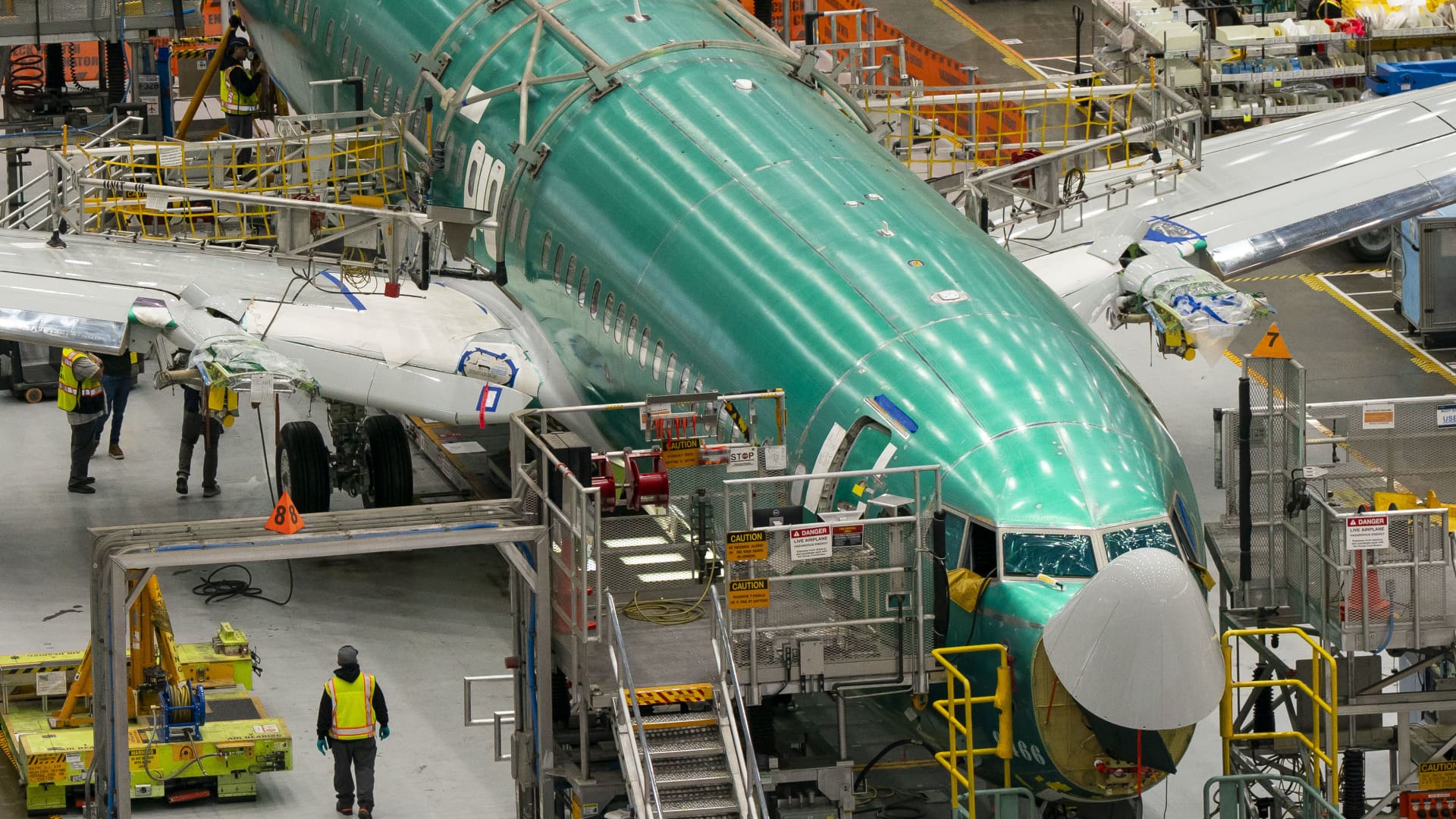
Every weekday, the CNBC Investing Club with Jim Cramer releases the Homestretch — an actionable afternoon update, just in time for the last hour of trading on Wall Street. Stocks reboundedfrom early declines and oil tumbled to the low 80s after the International Energy Agency said it met with G7 Energy Ministers in Paris to share its view of the global oil and gas market. Due to current conditions, the IEA said it will hold an extraordinary meeting with its member governments later Tuesday to assess the security of supply and market conditions and decide whether to make emergency stocks available to the market. The IEA said its member countries hold more than 1.2 billion barrels of public emergency oil stocks , along with another 600 million barrels of industry inventories held under government obligation, providing some short-term firepower to offset supply disruptions. Shortly after 1 p.m. ET, the stock market rally gained steam as oil prices fell below $80 per barrel, following a since-deleted post from U.S. Energy Secretary Chris Wright on X, which claimed the U.S. had successfully escorted an oil tanker through the Strait of Hormuz. It’s unclear why the post has been removed, but our colleagues at CNBC have reached out to the Trump administration for comment. As of 1:45 p.m. ET, U.S. benchmark WTI crude traded above $81, off the lows of the day but still down sharply from the prior settle. We’re downgrading Microsoft as stocks find some stable footing. During our February Monthly Meeting a couple of weeks ago, Jim expressed concerns about Microsoft and regretted not selling it last year. “This is the one I am worried about,” he said. “I slept on this one, didn’t pay enough attention. It has the weakest AI business in Copilot and a cloud computing unit, Azure, that is no longer the envy of the industry. I will be blunt: we should have sold Microsoft.” To better align Jim’s views with our rating system, we are changing our rating on Microsoft shares to a hold-equivalent 2, from a 1. Why not sell it right here? There are a few reasons. The stock is cheap versus its history. It currently trades at around 21x its estimated fiscal 2027 earnings per share, and below its 10-year average of 23.5x, according to a recent report by Jefferies analysts. The company is also still expected to generate more than $70 billion of free cash flow in both its 2026 and 2027 fiscal years, meaning it’s not stretching its balance sheet to invest in AI. Finally, Jim said that our hesitancy to sell is due to fear that the company will figure out how to solve its AI woes. If management allocated more compute toward Azure and less on Copilot, it would generate a better ROI on its investments. Quality control is the best thing Boeing can do to avoid making headlines. Unfortunately, there was an incrementally negative update on Tuesday, causing shares to move slightly lower. The aircraft maker said it delayed deliveries of some of its 737 MAX planes after finding a wiring issue. These delays could impact first-quarter deliveries, but the issue won’t be long-term. Boeing said the fixes could be completed in days and won’t impact its current 737 MAX production rate. The fewer mistakes the company makes, the more the market will be convinced that its past problems are behind it, giving investors greater confidence in its ability to generate $10 billion in free cash flow by 2028. As confidence builds, the market should reward the stock with a higher multiple. This latest issue is a small blip that doesn’t change our broader thinking on Boeing, but it’s still disappointing to see. Up next: Oracle reports earnings after the bell, and what the company says about capital expenditures and its backlog could impact sentiment about demand for AI computing. AeroVironment also reports results. Before the opening bell on Wednesday, Campbell’s reports earnings, and the February Consumer Price Index report comes out. The latter won’t take into account the recent oil shock, but will still matter to the broader inflation picture. (See here for a full list of the stocks in Jim Cramer’s Charitable Trust.) As a subscriber to the CNBC Investing Club with Jim Cramer, you will receive a trade alert before Jim makes a trade. Jim waits 45 minutes after sending a trade alert before buying or selling a stock in his charitable trust’s portfolio. If Jim has talked about a stock on CNBC TV, he waits 72 hours after issuing the trade alert before executing the trade. THE ABOVE INVESTING CLUB INFORMATION IS SUBJECT TO OUR TERMS AND CONDITIONS AND PRIVACY POLICY , TOGETHER WITH OUR DISCLAIMER . NO FIDUCIARY OBLIGATION OR DUTY EXISTS, OR IS CREATED, BY VIRTUE OF YOUR RECEIPT OF ANY INFORMATION PROVIDED IN CONNECTION WITH THE INVESTING CLUB. NO SPECIFIC OUTCOME OR PROFIT IS GUARANTEED.