
This is a unique coin in American numismatics.
At first glance, it seems conventional, but then you look closer: is that Lady Liberty wearing a Native American headdress?
The coin we offer today is as unique as its design. First, it is an unusual denomination: $3. Second, the reason it was made is more than a little odd.
Why the $3 Gold Coin Was Created
In 1851, the postage rate of a local prepaid letter was lowered from five cents to three cents. At the same time, a three-cent silver piece was introduced as a convenience, because the public disliked the large cents in circulation at the time. The idea of forcing people to count out three cents for a stamp was seen as impractical, which led to the creation of the three-cent piece.
In 1853, that logic was extended further. Why not create a $3 gold piece so people could more easily buy sheets of three-cent stamps?
There you have it. This coin was created so people could buy sheets of stamps more easily.
Public demand never met production. That is exactly what makes surviving examples so desirable today. Many $3 gold coins have remained in excellent condition for over 150 years.
Design of the $3 Gold Coin
Currently, we have one MS65 $3 gold coin available.
On the obverse, you see a Native American “princess,” modeled on the Greco-Roman Crouching Venus statue that was in a Philadelphia museum at the time. She wears a feathered headdress with a band inscribed with the word LIBERTY. Such headdresses trace back to early depictions of Native Americans from the 16th century. In the 1850s, Native American “princess” imagery was widely used as a symbol of America before Columbia became more common. The words UNITED STATES OF AMERICA encircle the portrait.
The reverse features a wreath of tobacco, wheat, corn, and cotton. Inside the wreath are the words 3 DOLLARS and the date.
In 1889, the $3 gold piece was discontinued, and U.S. coinage moved toward more practical denominations.
To get your hands on this unique coin, call 888-782-6405. We only have one, and we expect it to go quickly.
February 1878 – The Bland-Allison Act Goes into Effect
The passage of the Bland-Allison Act leads to the creation of the Morgan Dollar, which goes on to be minted in the hundreds of millions. Today, the Morgan Dollar is the most widely collected and traded numismatic coin in the world. For collectors who pursue a complete set of about 100 Morgan Dollars, it can be a lifelong and endlessly fascinating quest.
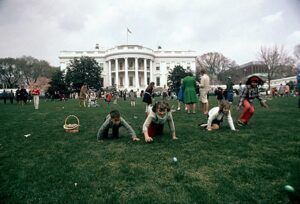
April – The First White House Egg Roll Takes Place
President Rutherford B. Hayes agrees to open the White House grounds to children who want to roll Easter eggs, and First Lady Lucy Hayes does the first honors. The tradition has continued ever since, with pauses during the First and Second World Wars.
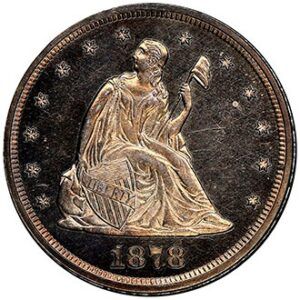
May – U.S. Stops Minting 20 Cent Coin
From 1875 to 1878, America had 20 cent coins, the shortest-lived of all U.S. circulated coins. When they were in use, people found them inconvenient and too easily confused with quarters because they were nearly the same size and had almost identical obverse designs. Today, however, collectors love them.
November – Marie Selika Williams Performs at the White House
Opera singer Marie Selika Williams becomes the first African-American artist to perform at the White House when she sings for the president and first lady. In the years following this performance, she tours nationwide and performs for Queen Victoria in London.
About The Author
