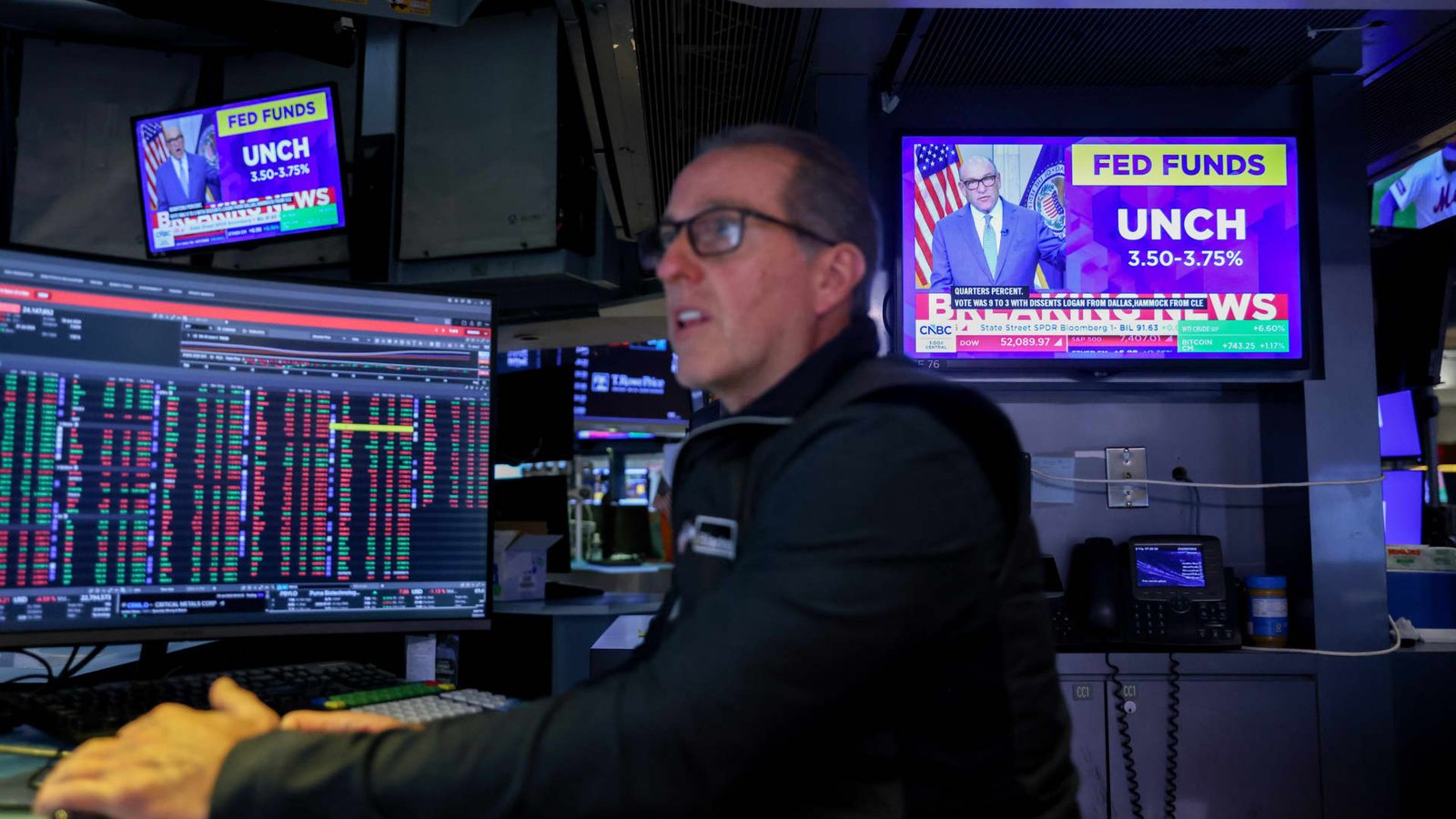
The Federal Reserve last week raised its overnight rate for the first time in three years. That could mean bad news for stocks near term. Bespoke Investment Group crunched the numbers and found that, since 1994, the S & P 500 has fallen 3.2% on a median basis in the month after the Fed kicks off a tightening cycle. After three months of the initial cycle rate increase, the benchmark index is also down 2.3%. The index is also positive just 17% of the time during those time frames. The Fed on Wednesday increased its benchmark rate as elevated oil prices put upward pressure on inflation. Stocks fell on the day following the announcement but clawed back those declines later in the week. Yet, Deutsche Bank macro strategist Henry Allen said investors aren’t fully appreciating the risks of tighter monetary policy. “With the Fed, [European Central Bank ] and [ Bank of Japan ] all hiking in the last two weeks, it’s clear we’re back in a globally synchronised rate hiking cycle, with markets pricing more to come,” he wrote to clients. “But, even though hikes are underway, there are credible reasons why investors risk underestimating the scale of the tightening ahead.” Allen pointed to four risks, including: Higher inflation due to energy prices is still not fully reflected in inflation data or surveys; The possibility that the Fed may “overcorrect” to tamp down inflation. “In 2022 the consensus view was they didn’t react quickly enough to high inflation. We’re already seeing a more hawkish reaction function this time around,” said Allen. To be sure, Bespoke data shows the S & P 500 eventually recovers. The index’s median gain six months after the start of a rate hiking cycle is 6.4%. One year out, it’s 6%. Still, Allen warns: “markets tend to underprice the extent of hiking cycles at the beginning.”