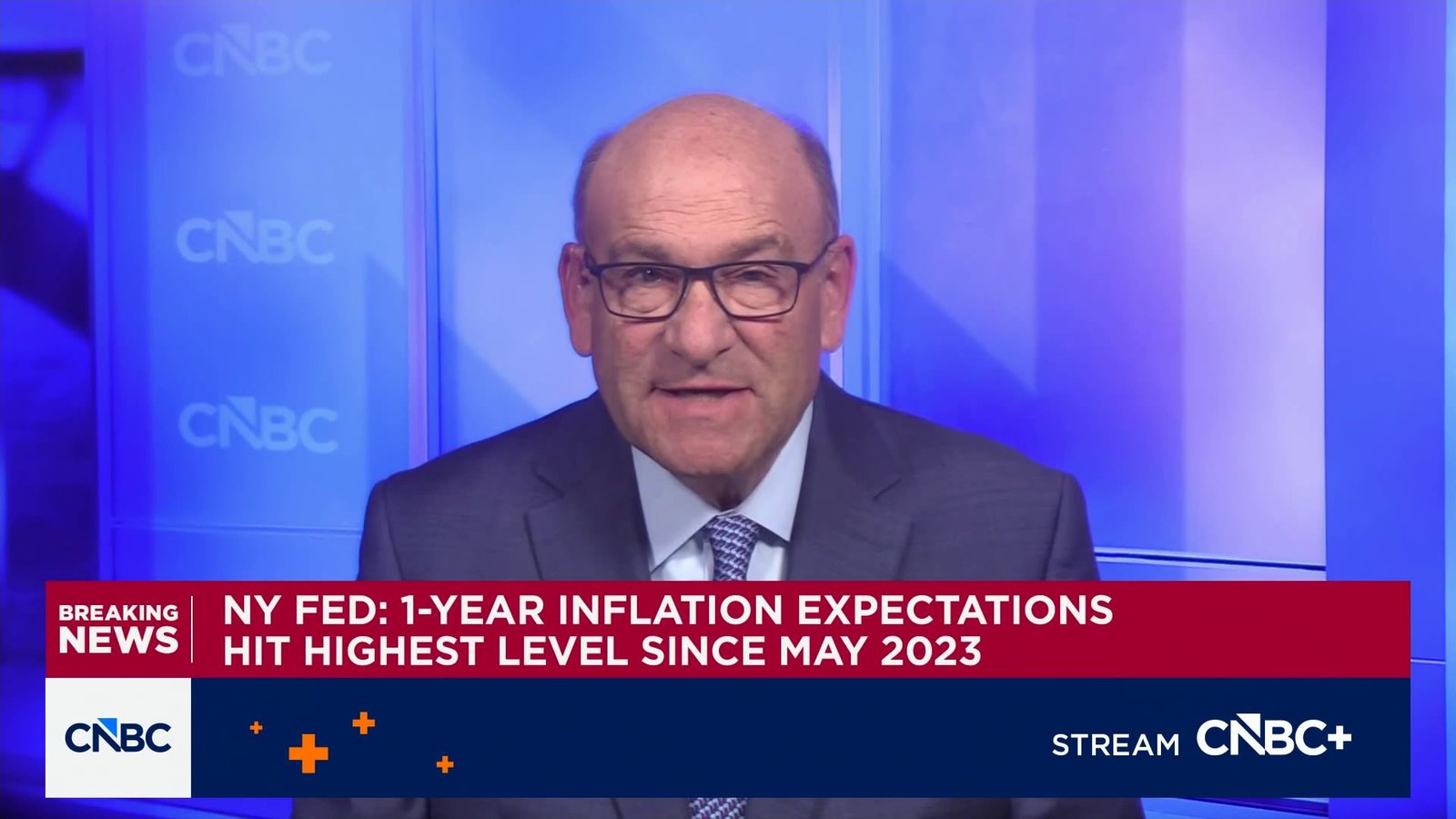

Americans are increasingly worried about their financial outlook amid expectations that inflation could worsen in the year ahead, according to a New York Federal Reserve survey released Wednesday.
The central bank’s monthly Survey of Consumer Expectations found that consumers expect inflation to be even higher a year from now, while perceptions about their own financial standing deteriorated.
More householdssurveyedreported they were in a worse financial situation than a year ago and expected to be in a weaker financial state in the coming year, the New York Fed found. The New York Fed’s Survey of Consumer Expectations polls a rotating panel of approximately 1,300 households.
“This data is just further proof that Americans are worried about inflation getting worse before it gets better,” said Matt Schulz, chief credit analyst at LendingTree.
“Many Americans are already living on tight budgets and looking for ways to stretch their dollars further,” he said. “Their glum outlook on inflation likely means that many families expect to make some sacrifices and tough choices in the months to come.”
Consumers are feeling the pinch of higher prices for necessities like gasoline, other reports also show.
Gas prices were up nearly 4% in the month of August and more than 27% from August 2025, according to the latestconsumer price index. Consumers paid a national average of $4.37 per gallon as of Wednesday, according toAAA— up from about $3.12 a year ago.
Elevated fuel costs threaten to push up costs for other consumer goods as well, at a time when Americans remain concerned about affordability and are widely dissatisfied with high prices, economists say.
Anthony Covington pumps diesel fuel into his tractor-trailer at a truck stop on Sept. 11, 2026 in Pembroke Pines, Florida.
Joe Raedle | Getty Images
“American consumers are feeling the squeeze,” Heather Long, chief economist at Navy Federal Credit Union, said in an email. “Spending remained strong in August, but income growth is not keeping up. Many people are dipping into savings or using credit to continue spending and that’s not sustainable.”
While perceptions and expectations about households’ future financial situation worsened, income and spending growth expectations both increased, the New York Fed’ssurvey found.
“The consumer continues to defy gravity,” analysts from Bank of America Global Research said in an Oct. 1 note. However, the surge in gas prices could weigh on discretionary spending and likely hit lower-income households hardest, the bank’s analysts said. “They may also feed through to food inflation, creating an additional headwind.”
About The Author