
Oil prices are surging. Inflation forecasts are rising.Futuresmarkets increasinglyraisethe chances ofarate hikefrom the Federal Reserve.
And then there’s Kevin Warshand his stated desire — and edict from President Donald Trump — to cut interest rates.
Even before a hearing is scheduledonhis nomination as the next Fed chair, Warsh’s ambitiousagenda for “regime change” at the Fed faces challenges.The most obvious:$100-a-barreloil prices and the incipient inflation threatthey poserun counter to Warsh’shopesto sharply reduce interest rates.
But the challenges go further. The newchair, once he takes his seat, could come up against resistance tonearly everyaspect of hisplan to rewrite the central bank’s operating system.Warsh has committed toslashingthe Fed’s balance sheet.The overhaul could also include “breaking some heads” at the Fed, as he told Fox News in July, “because the way they’ve been doing business is not working.” That could imply staff changes or bringing in new people, as well as adjustments to the models used to forecast the economy and communications strategy the Fed uses to convey its policy outlook to markets and the public.
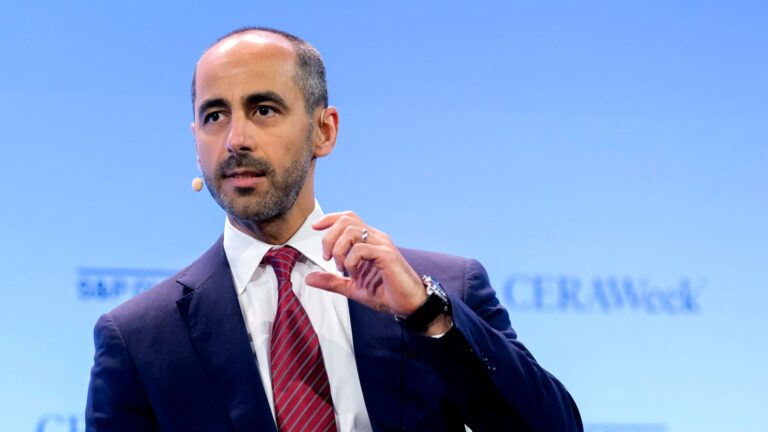
Kevin Warsh, former governor of the US Federal Reserve, during the International Monetary Fund (IMF) and World Bank Spring meetings at the IMF headquarters in Washington, DC, U.S., on Friday, April 25, 2025.
Tierney L. Cross | Bloomberg | Getty Images
Inallthese areas, Warsh could come up against institutional resistance fromFed staff or Fed governors and presidents,and from marketsthat are accustomed to how the Fed does businessandgenerally averseto change.Even getting to thechair’sseat will be a challenge for Warsh, whose hearings have been delayed by Sen. Thom Tillis‘ discontent about a criminal investigationinto Fed Chair Powell.Tillis, R-N.C., says he will hold up a Senate vote on Warsh unless the Justice Department drops that probe.
Underpinning Warsh’s agenda is his deep-seated belief that the Fedhas made aseries of long-running policy errors. From maintaining too large a balance sheetafterthe emergency of the 2008 financial crisisto missing the inflation from the pandemic, Warshbelieves the mistakes made by the Fed are rooted in theinstitution’svery fiber.
Merely installing a new Fed chair — even if it’s him —isn’tenough for Warsh.
“What the Fed needs ismorerobust discussion of ideas, less groupthink. Idon’tlike it thateveryone’sfollowing the same models,”Warshtold CNBC last year.
Warsh, in keeping with practice for federal nominees, declined to comment.
For Warsh, one thing matters most: “Fed credibility is everything.”
Former Federal Reserve Governor Kevin Warsh, a fellow in economics at the Hoover Institution and lecturer at the Stanford Graduate School of Business, speaks during the Sohn Investment Conference in New York, May 8, 2017.
Brendan McDermid | Reuters
Through it all, the 55-year-old former Fed governor exudes a confidence that isthe antithesis of Harry Truman’s paradigmatic two-handedeconomist — qualities that seemed to attract the president and might be essential in his effortto reform the staid Federal Reserve.When you are Fed chair, Warsh has said, you not only need to getinterest rates right,youneedto“make sure you look like you know what you’re doing.”
Warsh’s most pointed challengecould comequicklyon interest rates as he’s squeezed between his and Trump’s desires on rates and on market expectations.
Markets are priced with a 35-40% chance of a rate hike by December. There is no cut priced in forat leastthe next 16monthsand the2-yeartreasurytrades near 4%, a signalthat markets,at least for now, think the funds rate willholdsteady at best for an extended period, not go down.
Even before the U.S. attack on Iran, futures markets had priced in only50 basis points ofcutsthrough 2026, suggestingmarketsweren’tbuyingthatWarsh could deliver onTrump’s demandsfor faster, deeper rate cutsbeyond the long-run neutral rate of 3%.
Thatmarket judgment isa challenge toWarsh’s main economic argumentthatAIwillrapidly make the economy more productive, so much so that it can deliver fastergrowthwithout generating inflationary pressures.
Warsh’s view already finds skeptics ontheFederal Open MarketCommittee. Chicago Fed president Austan Goolsbee told journalists in February thatthe Fed should notbankon growth in productivity to lead to lower price pressures.
“You want to be extremely careful. … You can overheat the economy easily,”he said.”Let’s be a little bit careful, circumspect.”
Shrinking the Fed’s balance sheet
Warsh hasargued he can lower rates while also reducing the Fed’s$6.7 trillionbalance sheet. He argues the Fed’s holdingseffectivelyraiseinterest rates troubling consumers, andby doing so stray intowhat should really be fiscal policy that is the domain of the rest of the government.
“Money on Wall Street is too easy, and credit on Main Street is too tight,” Warsh wrote in a November essay in theWall Street Journal.”The Fed’s bloated balance sheet, designed to support the biggest firms in a bygone crisis era, can be reduced significantly.”
In Warsh’s game plan, a smaller balance sheet could free up funds for greater lending into theeconomyand banks would trade with each other for reserves, giving the Fed a truer signal ofwhat’shappening in markets, including potentially earlier signs of systemic stress.
It allmay be easier said than done.Fed ChairBen Bernanke sparked a taper tantrum in 2013 with just the mention ofthe possibilityofreducing Fed asset purchases.AndPowellsaw rates flarein 2019 when he brought reserves down too low.
Kevin Warsh, former governor of the US Federal Reserve, walks to lunch during the Allen & Co. Media and Technology Conference in Sun Valley, Idaho, US, on Wednesday, July 9, 2025.
David Paul Morris | Bloomberg | Getty Images
Warsh has said he is attentive to therisksof moving too fast.
“Regime change in policy shouldn’t be done overnight,” he told CNBC last year.Since resigning asa Fed governor in 2011,he has spent the past 15 years working for legendary investor Stanley Druckenmiller, a position Warsh’s supporters say has honed his perspective on the markets.
Any effort by Warsh to reduce the balance sheet wouldalmost certainlyinvolve sheddingsome of the Fed’s$2 trillioninmortgages, which could put upward pressure onmortgagerates.It would also appear to run counter to Trump’s order to Fannie Mae and Freddie Mac to buy$200 billionin mortgages to help the housing market.
Fed Governor Chris Waller, in a recent CNBC interview, said he supported reducing the amount of reserves the Fed holds so long as banks’ demand for reserves also fell. That could be accomplished, for instance, through some regulatory changes already in motion that would affect what assets banks are required to hold. But he opposes reducing reserves without reducing demand.
“Reducing the balance sheet, holding reserve demandconstantand moving to scarce reserves, to me, that’s just idiotic,” he said.”But reducing reserve demand and then shrinking the balance sheet correspondingly — that’s something that you seriously could talk about.”
Overhauling how the Fed communicates
Warsh is also promising what would be highlyvisiblechanges to the way the Fed communicates its views to the public and the markets. He has suggestedhedoesn’t feel compelled to contribute tothe Fed’s so-called dot plot, where Fed officials anonymously record their individual preferences for the course of interest rates.
The dots ”don’t matter that much for the conduct of policy,” he said at a New York financial-sector conference in the fall.
The dots are a mainstay ofFed analysis, because they help marketsinfer whatFed officials are thinking. Wall Street analystsroutinely put outtheir guesses for which dot belongs to which official. Still,they arecontroversial.The market focuses on the mediandotand often mistakes it for a plan,even thoughthey are derived from 19 separate forecastsand not curated into a policy forecast by the committee.
Warsh believes the Fed overshares with the public,highlightinga general concern he has aboutwhat’scalled forward guidance.The Fed leaned heavily on forward guidancein the Great Recession tokeep rates low for an extended period,strongly promising easy policy in the future.In Warsh’s view,forward guidancecreated a problem for Powell and his colleagues in 2021 when inflation began to climb. The Fedwaitedbefore raising interest ratesamid persistent inflation because it had promised to wait in its guidance.
Warshhas said adherence to outdatedforward guidancecosttheinstitutioncredibility.
“They weresort of torturedbecause they had told you what they would do.Yougottaget out of that. Spend less time predicting the future and more time shaping it,” he said ona Hoover Institutionpodcastlast year.
A Fed that pulls back on sharing its thinking could be jarring for markets and the public. Investors watch every word the Fed chair says at the press conferencesthatthey have come to expect aftereachratedecision. The Fed’s top officials are sought-after guests on TV andatconferences, where their words move markets. Theofficialsthemselvesmay resist a chair who tries to reinthem in.
WhileWarsh will face obstacles to his agenda, hewill hardly be powerless inimplementing it.If he can make it through Senate confirmation,he will come in with several advantages.
One is the power of the chair itself.Warsh’s skeptics like to point out that he will be only one of a dozen votes on the rate-setting FOMC, but the chairisthoughtof as first among equals and wieldsauthority in other, more subtle ways.The chair sets the agenda for the committee’s meetingsand directsthe organization’s influential research staff.A chair who wants certain data considered willalmost certainlyget his or her wish.
Warsh also has allies.The Fed is governed by its seven-member board.Warsh willlikely findsupportinseveralareasfrom two other board members appointed by Trump, Waller andgovernor and regulatory chiefMichelle Bowman.It remains to be seen if Trump will get more appointments to the board, including the seat of Powell — who can stay on as a governor after being replaced as chair — and other governors whocouldeventuallydecide toresignbefore their terms are up.Warshwill also likelyplay a role in directing the 12 district banksaboutwhomto nominate when sitting presidents leave or retire.
Warshalsobrings to the Fed table a persuasive personality rooted in the confidence of his convictions— that the Fed has had it wrong and that he has it right, that there’s asubstantially betterway to do monetary policy.The upside would be potentially lower rates, less volatility around the Fed and its pronouncementsand press conferencesand, ultimately,moreindependenceforthecentral bank as itssmaller economicfootprintputsit less in the crosshairs of the political world.The downside is a potentially rocky transition process wheremarketsbecome morevolatile and pushrateshigherdueto uncertainty. To avoid that outcome, Warsh will need to convince his colleagues and markets that he has right plan to overhaul the Fed.
And, ofcourse,itwill be transcendingly important thatWarsh’s analysis ofwhat’swrong with the Fed and hisprescriptions for fixing it end up being right.
About The Author