AUDIENCE MEMBER:I know you like to buy into success stories, but you don’t like to buy high tech.
And it seems to me, say, in the case of Microsoft, that 10 years from now they’ll be doing software development, just like 10 years from now Coke will be selling sugared water.
And what I’m wondering is, why you feel that way when it seems certain companies, high-tech companies, are predictable…
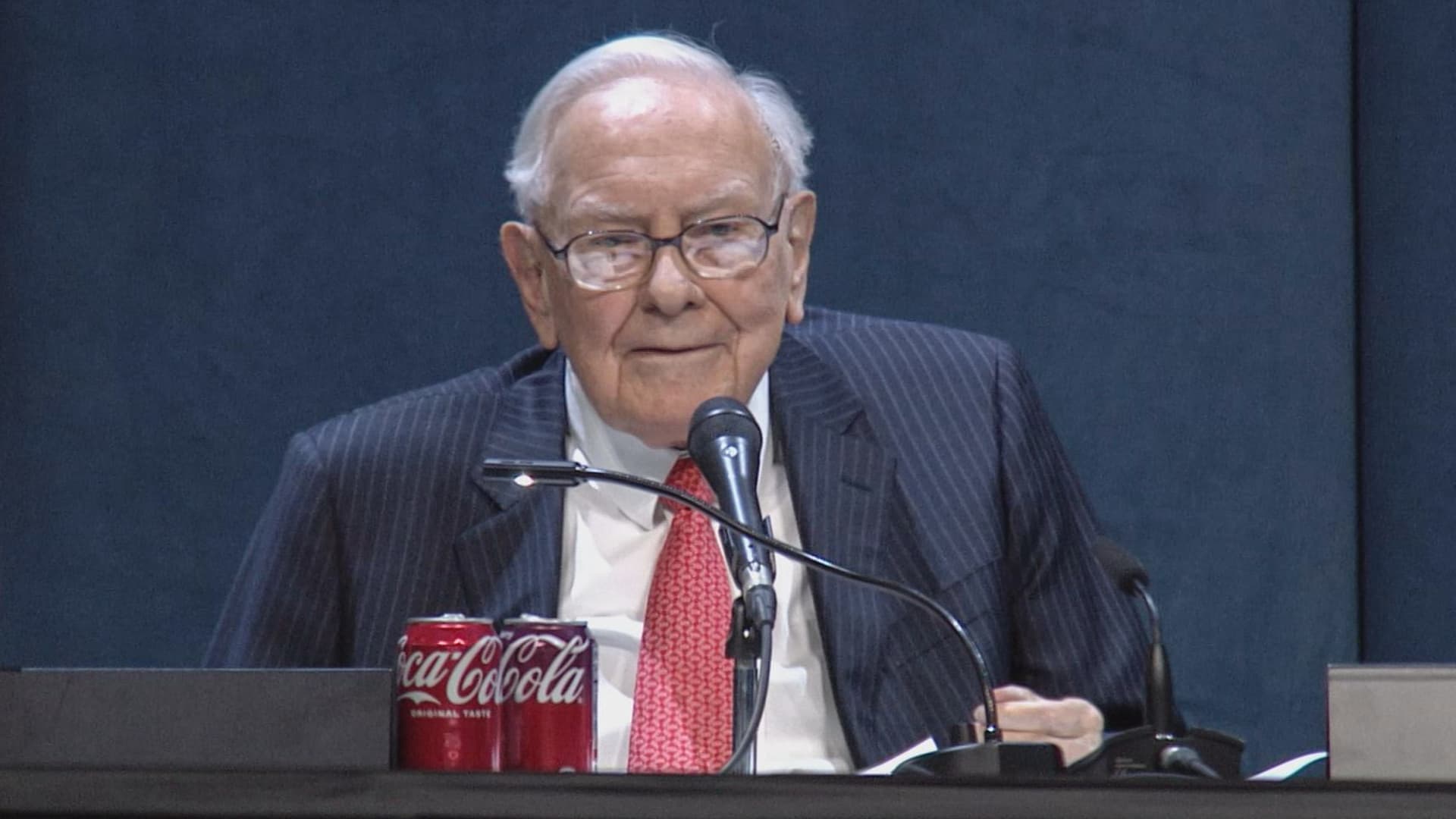
WARREN BUFFETT: I think it’s much easier to predict the relative strength that Coke will enjoy in the soft drink world than the strength — the amount of strength — that Microsoft will possess in the software world.
That’s not to knock Microsoft at all. If I had to bet on anybody, I’d certainly bet on Microsoft, bet heavily if I had to bet. But I don’t have to bet. And I don’t see that world as clearly as I see the soft drink world.
Now somebody that has a lot of familiarity with software may very well see it that way and they’re entitled to — if it’s true they have superior knowledge and they act on it, they’re entitled to make money from that superior knowledge. There’s nothing wrong with that.
I know I don’t have that kind of knowledge, and I simply — and I do think that it’s — that if you have a general knowledge of business over decades, that you would regard the industry they’re in as less predictable than the soft drink industry.
Now it may also be that even though it’s less predictable that there’s a whole lot more money to be made, so that if you’re right, that the payoff is much larger.
But we are perfectly willing to trade away a big payoff for a certain payoff. And that’s the way we’re put together.
It does not knock the ability of other people to make those decisions.
I mean, I asked — first time I met Bill Gates in 1991, I said, “If you’re going to go away on a desert island for 10 years, you had to put your stock in two companies in the high-tech business, which would they be?”
And he named two very good stocks. And if I’d bought both of them, we’d have made a lot more money than we made, even buying Coca-Cola.
But he also would have said at the same time that if he went away, he’d rather buy Coca-Cola, because he would have felt sure about that happening.
It’s — you know, different people understand different businesses. And the important thing is to know which ones you do understand and when you’re operating within what I call your “circle of competence.”
And the software business is not within my circle of competence, and I don’t think it’s within in Charlie’s.
Charlie?
CHARLIE MUNGER: Well, I certainly agree with that. I think there are interesting questions, too, about how far the whole field can go…
I don’t know what happens once you get unlimited bandwidth into the house and way more options, and —
Beyond a certain point, it strikes me that there might be a surfeit of anybody’s interest in the field.
I don’t know where that point is, whether it’s 20 years out or 30 years out, but it would affect me a little.
About The Author