(WO) — Advances in downhole battery monitoring technology are providing drilling operators with more than improved battery runtime estimates, offering additional insights into downhole conditions, tool performance and opportunities to reduce non-productive time (NPT).

Traditional battery management systems relied primarily on capacity-based estimates to determine remaining runtime, often prompting operators to replace batteries earlier than necessary. According to Ultralife, one measurement-while-drilling (MWD) operator discovered that batteries were being retired with an estimated 50%–60% of their usable capacity remaining, representing approximately $1.9 million in avoidable annual costs.
Newer monitoring systems incorporate current draw, temperature, vibration, shock and rotation measurements to provide more accurate runtime predictions while helping operators assess the conditions affecting downhole equipment.
Bob Fay, regional manager at Ultralife’s Houston facility, said the expanded capabilities have transformed battery monitoring into an additional source of operational intelligence.
“When battery monitoring systems began incorporating these additional metrics, operators could use them to manage their tools as well as their batteries,” Fay said. “Not only could this data indicate accelerated battery depletion, but it could also alert engineers to severe downhole conditions requiring tool retrieval.”
Elevated vibration and shock levels can increase power consumption and accelerate battery depletion. Monitoring these conditions can help engineers identify abnormal tool behavior and assess whether intervention is needed before equipment damage or premature battery failure occurs.
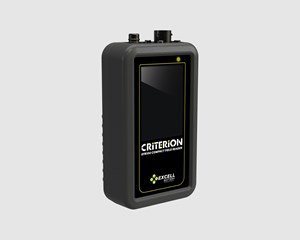
Some systems also provide additional measurements relevant to drilling operations. Ultralife’s Criterion 5, for example, offers inclination reporting with accuracy within 1°, allowing operators to monitor wellbore trajectory and identify potential drilling angle adjustments. Data can be accessed through Criterion software or the company’s EFR100 Compact Field Reader.
IMPROVING ACCESS TO DOWNHOLE DATA
Downhole battery monitoring systems typically use compact gauges embedded within lithium thionyl chloride (LiSOCl₂) battery packs to record battery performance and environmental conditions throughout a drilling operation.
Earlier generations primarily stored this information for retrieval after the tool returned to the surface. More advanced systems can support continuous data transmission while equipment remains downhole, providing near-real-time visibility into battery performance and operating conditions.
This additional information allows engineers to investigate potential tool problems during a run rather than relying exclusively on post-operation analysis. Earlier identification of abnormal conditions can support maintenance decisions, improve equipment reliability and help reduce NPT.
However, intelligent battery monitoring is not intended to replace dedicated downhole tool control systems. Instead, it provides a complementary source of data that can be used alongside existing diagnostics to improve operational awareness.
As drilling operations move into deeper, hotter and more demanding environments, including geothermal applications, the need for reliable downhole monitoring is expected to increase.
Combining high-temperature battery technology with advanced monitoring capabilities could help operators extend usable battery life, better understand downhole conditions and make more informed decisions about tool performance and retrieval.
About The Author