(Bloomberg) — Bitcoin is on pace for its best weekly gain in more than three years as traders assess the fallout from a recent spike in bond yields and a new initiative from the US aimed at fiscal consolidation.
The original cryptocurrency jumped as much as 9.4% and changed hands at around $77,500 in late New York trading. It has advanced roughly 23% this week, a gain that, if sustained, would be the biggest on that basis since March 2023. Bitcoin last traded at $80,000 in May.
Market exuberance returned to cryptocurrencies when US Treasury Secretary Scott Bessent announced Wednesday the department would at least double the size of its long-dated bond buybacks, triggering an upswing that forced traders to liquidate billions in short positions. The same day, President Donald Trump met with crypto industry leaders, further adding to optimism. Meanwhile, gold reached its highest level since May amid investor fears that the intervention in the bond market will weigh on the dollar.
In a LinkedIn post Friday, Bridgewater Associates founder Ray Dalio said investors should diversify across assets and countries with strong finances. Underweighting bonds and holding about 10% to 15% of a portfolio in gold and “a bit” of Bitcoin could both reduce risk and boost returns, he said.
“The real driver was the US Treasury doubling long-dated bond buybacks, which pulled long yields lower and lifted risk appetite broadly,” said Rachael Lucas, an analyst at BTC Markets. “Nothing has rewritten Bitcoin’s long-term case, but nothing’s rewritten its volatility either.”
A short squeeze continues to be a major driver of rising Bitcoin prices, according to Adam Morgan McCarthy, lead researcher at LO:TECH, a London-based digital-asset liquidity and market data firm. Nearly $2.5 billion in leveraged bearish bets on Bitcoin and $4.5 billion across all crypto assets were liquidated in the past three days, according to Coinglass data.
Bearish bets on BlackRock Inc.’s IBIT ETF — the world’s largest — had been steadily rising all year, with short interest as a percentage of float outstanding on the $55 billion fund surging to roughly 3%, according to data from S3.
“Gold carries this week’s real macro signal: it rallied cleanly on the Treasury doubling its bond-buying operations, with none of the forced buying that inflated Bitcoin’s price,” McCarthy said. “If you’re looking for where investors are actually hedging against currency and inflation risk this week, gold shows it, and Bitcoin doesn’t.”
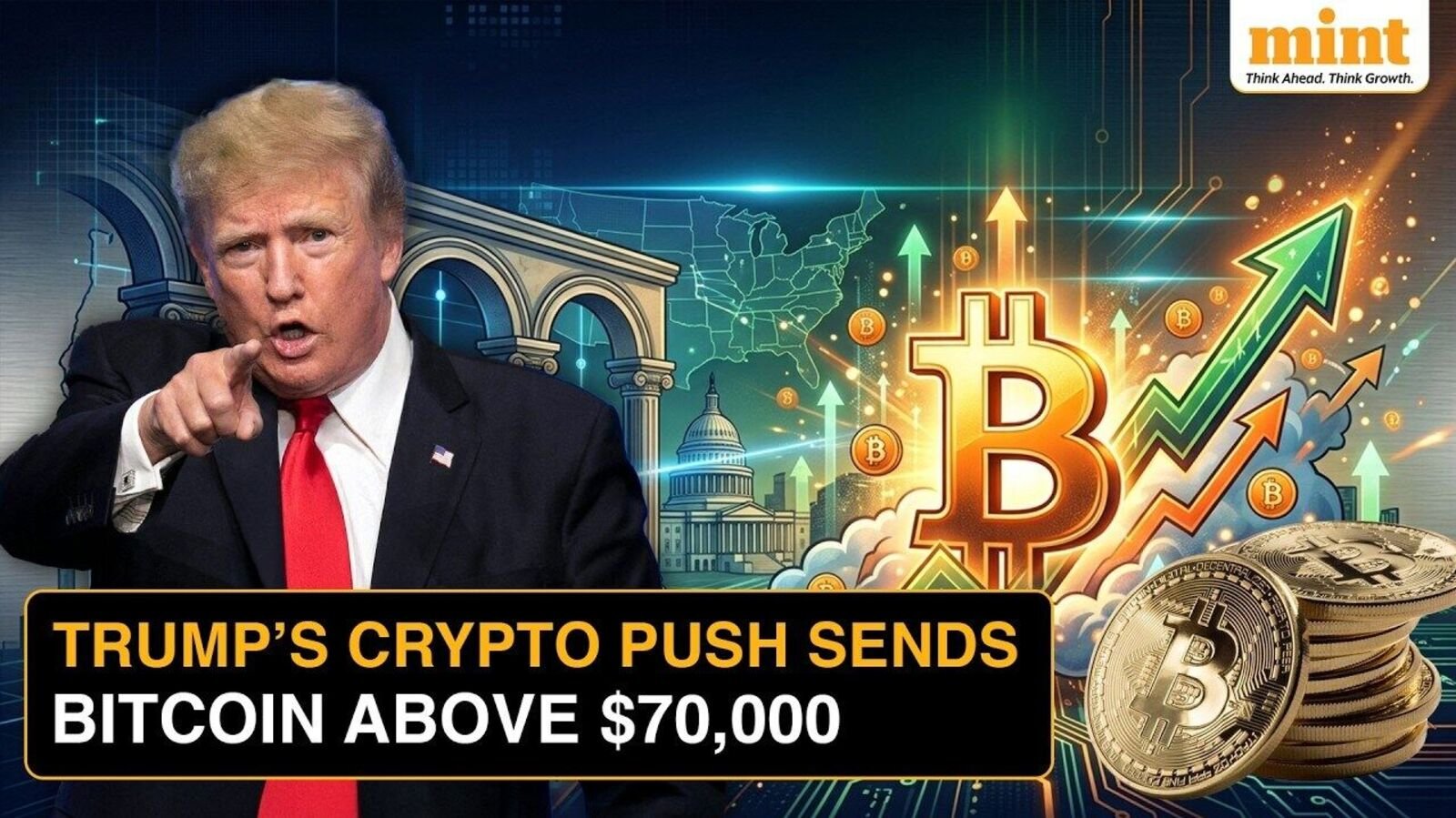
Trump’s meeting, which included executives from firms such as Coinbase Global Inc. and Payward Inc., was taken as a positive signal about the administration’s commitment to crypto. Trump urged the Senate to pass the Clarity Act, a crypto market structure bill that’s stalled over disagreements concerning ethics provisions. The bill failed to come to a vote before the Senate’s August recess.
Shares of crypto-focused companies also continued to rally. Coinbase — the biggest US digital trading platform — jumped 8.2%, Bitcoin accumulator Strategy Inc. increased 6% and stablecoin issuer Circle Internet Group Inc. climbed 5.2%.
Institutional buyers returned to the market this week, with the US-listed spot Bitcoin exchange-traded funds on track for their largest weekly inflows since January. The 13 ETFs have added more than $1 billion so far this week, further fueling the bullish mood in crypto.
“For the first time this year there is now a risk my end year forecast (of USD100k) is too low,” wrote Geoffrey Kendrick, global head of digital-assets research at Standard Chartered Plc, in a note to clients.
“Trump’s crypto meeting, Clarity Act momentum, and positive ETF inflows added sentiment on top, but they weren’t the whole story,” said Lucas.
In another sign of life, large holders of the token known as Bitcoin whales recently added roughly $2.75 billion worth of the token in 60 days, according to CryptoQuant.
Bitcoin remains well off its peak above $126,000 last October, which came just ahead of a sharp selloff that took it as low as $58,642 at the end of June.
–With assistance from David Pan and Dave Liedtka.
(Updates with analyst comments)
More stories like this are available on bloomberg.com
About The Author