
BlackRocks Rick Rieder urges investors to show dynamic patience — and get paid to wait
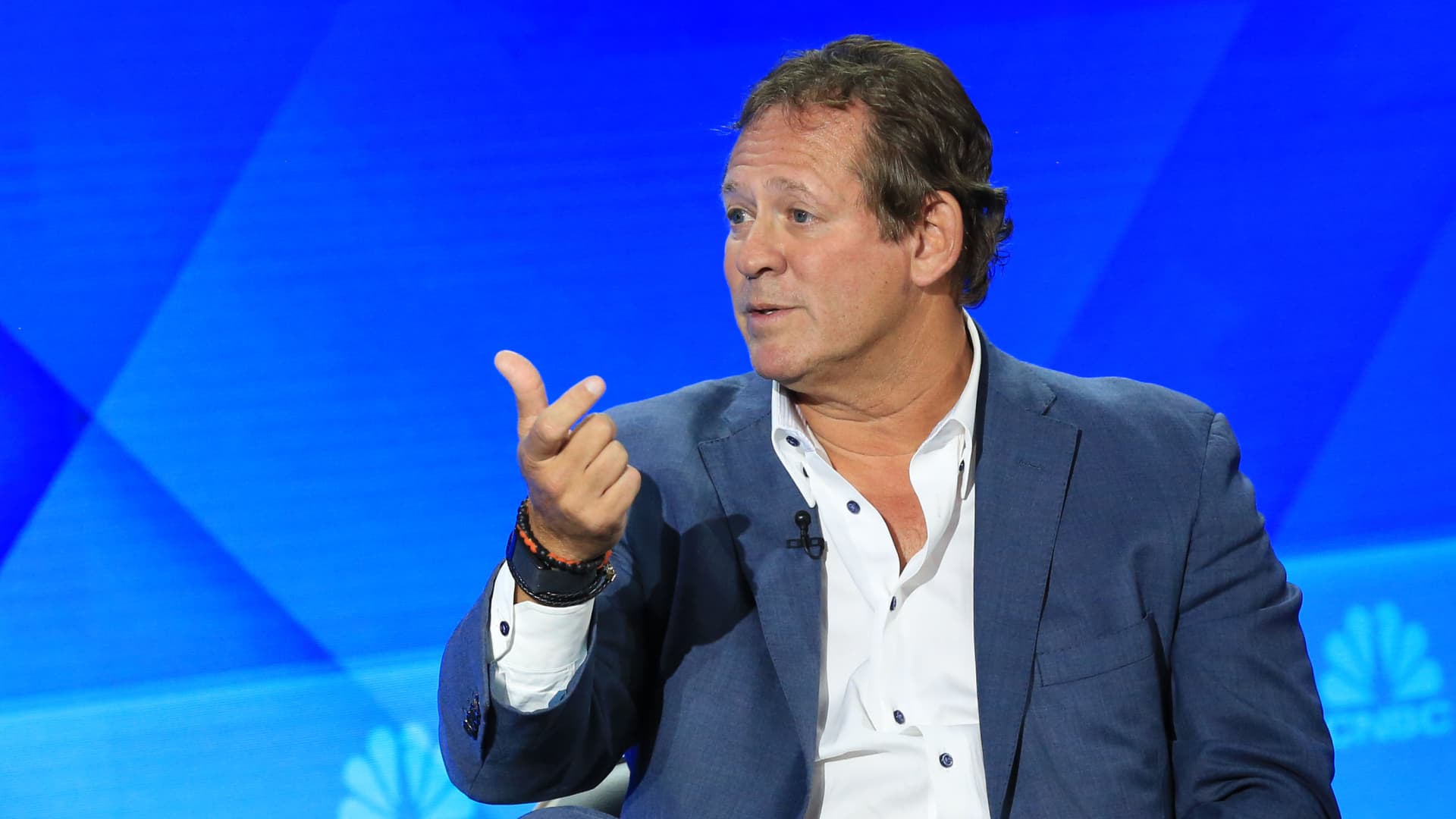
Amid the markets’ twists and turns, BlackRock’s Rick Rieder believes “dynamic patience” has become essential for navigating the turbulence. The 10-year Treasury yield hit a new high for the year after wholesale prices for April came in hotter than expected on Wednesday. The benchmark Treasury touched 4.49%, its highest level since July 17. The Dow Jones Industrial Average and S & P 500 moved lower, while the Nasdaq Composite was boosted by gains in chip stocks. Rieder’s theory of “dynamic patience,” which he laid out in his second-quarter fixed income outlook Wednesday, centers on building income, being creative in deploying capital and opportunistic with duration. That will help investors ride out the ups and downs of the bond market, which will continue to be defined by tensions between macroeconomic issues and the most attractive yield opportunity in more than a decade, said Rieder, BlackRock’s chief investment officer of global fixed income. “There’s a short term nature to what we’re doing and I think there’s a longer term — meaning patience. Income works for you. Compounding works for you,” he said in an interview with CNBC. “If you stay in it, return ends up being pretty good.” But in the short term you have to manage risk. One way is to take advantage of the interest rate volatility, because Rieder doesn’t think yields will ultimately move too high, he said. “We’re trying to move our interest rate exposure around, per the regime we’re operating in,” said Rieder, who is also the portfolio manager of the iShares Flexible Income Active ETF (BINC), which marks its three-year anniversary this month. The fund has a 5.12% 30-day SEC yield and a 0.40% net expense ratio. BINC YTD mountain iShares Flexible Income Active ETF year to date “What’s the market doing? The market is saying, in the short term, ‘I’m willing to price these yields higher,'” he added. “If you think about Europe, growth is going to slow. They’re going to get that rate down. Your total return performance from assets like that are tremendous.” He is also selling rate options and is keeping his rate exposure moderate. Income over spreads Rieder isn’t making any concentrated duration bets since the Federal Reserve’s rate path is too uncertain. He’s focusing on assets that have enough income to compensate him for holding them through the volatility. In fact, yield is where the opportunity lies, since credit spreads are tight, Rieder said. With spreads currently sitting near the fifth percentile of the last eight years, he doesn’t see a compelling opportunity for spread compression from here. He’s also sticking with the belly — or intermediate part — of the curve and has recently sold down a decent amount of his front-end holdings. “I just don’t know in the near term we’re going to see any rate move and so the front end doesn’t really do a lot,” he said. “We’re not going to make a lot of money on interest rates.” Where Rieder sees opportunities Rieder’s favorite play is securitized assets, specifically commercial- and residential-mortgage backed securities (MBS). While people were nervous about commercial real estate a few years ago, now there are tremendous opportunities in investments like class A properties in New York that are fully leased, he said. Within residential MBS, investors also have the ability to diversify regionally, he said. In addition to Europe, Rieder sees select opportunities in emerging market bonds, which were pulled down because of concerns around the Iran war. He likes both hard currency and local currency assets. “We like Mexico, like Brazil and parts of Asia, and some of the high yielding corporates in emerging markets are giving you a good yield today,” he said. Lastly, he believes U.S. high yield is a good core holding. “Defaults aren’t going to be high,” he noted. That said, the market is pretty idiosyncratic, so investors should be selective. With most of the BB market experiencing tight spreads, the “sweet spot” for Rieder is B-rated bonds in the U.S. and BB-rated bonds in Europe. He tends to stay in the front end of the yield curve in Europe and longer in the U.S, where he said growth is more durable. Overall, investors should be diversified — and the bond market offers plenty of opportunities for that, Rieder said. “The equity market has two-thirds of the returns coming from 10 stocks. There’s a million and a half fixed income securities,” he said. “The ability to create real diversification in what you don’t have in your equity portfolio, it’s truly historic.”
