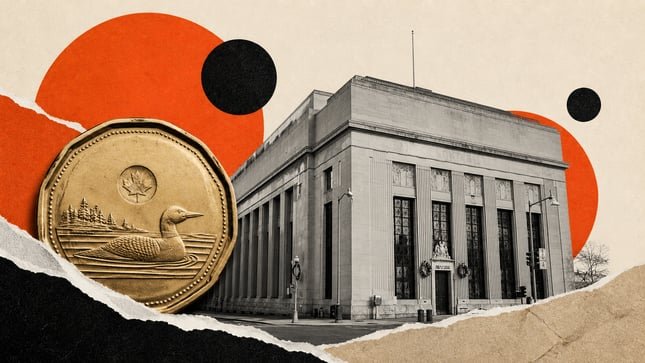
The Bank of Canada (BoC) left its overnight interest rate unchanged at 2.25%, as widely anticipated, but delivered a more cautious message as inflation risks increased and the recovery became harder to assess. Governor Tiff Macklem said multiple rate increases could be required if inflation remained a problem, while stressing that decisions would be guided by the inflation outlook and the risks surrounding it.
The bank’s statement highlighted a difficult combination of subdued labour demand, continued excess supply and rising uncertainty about the sustainability of the economic rebound. New US tariffs and the threat of further trade action are clouding growth prospects, while the ongoing Middle East conflict is keeping energy prices higher for longer.
Macklem acknowledged that inflation was too high, although he noted that the increase was heavily concentrated in gasoline and oil prices. The key question for policymakers is how long energy prices remain elevated and how far they rise. The BoC’s tolerance for higher inflation is limited, and it remains prepared to adjust monetary policy as risks shift.
Macklem was explicit that multiple rate increases could be needed if inflation became a broader problem. However, he did not present that as the central scenario, instead emphasising that future decisions would depend on inflation forecasts and the risks surrounding them. Rogers added that monetary policy could not respond to a single risk or isolated data point.
The recent bond-market sell-off was also discussed. Macklem said global bond yields were spilling over into Canada, while Rogers described the move as a repricing of risk rather than a sign of drying liquidity, dysfunction or financial instability. That distinction gives the BoC room to monitor market conditions without treating the bond-market move as an immediate policy emergency.
All in all
The BoC delivered a cautiously hawkish hold. It kept rates unchanged because economic slack and trade uncertainty argue for patience, but the inflation message has become less comfortable. Macklem’s warning that multiple hikes could be necessary means that a renewed tightening cycle remains a genuine possibility if oil prices stay high or price pressures broaden beyond energy.
About The Author