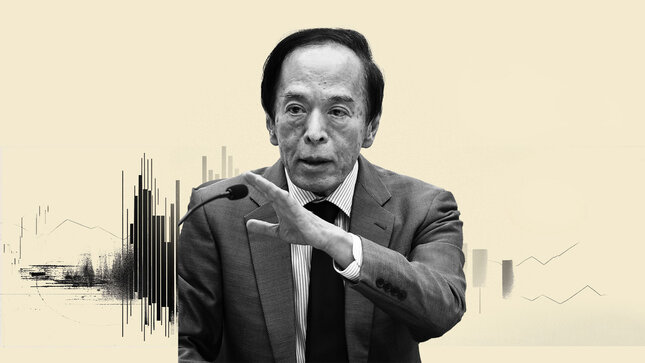
Bank of Japan (BoJ) Governor Kazuo Ueda is addressing the press conference, explaining the reason behind leaving the key interest rate unchanged at 0.75% in the March policy meeting.
BoJ press conference key highlights
Japan’s economy likely continues to grow moderately.
Global markets are volatile, and crude oil price jumped significantly after rising Middle East tensions.
Pace of inflation increase expected to face upward pressure from higher oil prices.
Underlying inflation expected to be at a level in line with the price target in the second half of the projection period.
Real interest rates are at significantly low levels.
We will continue to raise policy rate if economy, prices move in line with forecast, in accordance with improvements in economy, prices.
It would be difficult to measure CPI trends.
Re-evaluating natural interest rate based on latest data.
It’s hard to clearly state whether to put more emphasis on curbing inflation or supporting the economy due to the Iran conflict.
Watching spring wage talks and business behavior.
Will check whether wage trend and corporate price action will sustain the mechanism for a positive cycle.
Cannot say how long it would take to judge whether energy supply shocks affect underlying prices.
Will explain after the release of the April Tankan report on whether they fully capture the Middle East conflict impact.
If there is a big enough risk, it’s possible we would conduct policy by placing weight on that risk.
Before Middle East conflict, data showed ‘on track’.
New indicator on underlying inflation may exclude govt policy effects on inflation.
All things equal, rising (adds missing word) oil prices can push up inflation, curb economy.
We held rates steady this month since we put emphasis on lower visibility on likelihood of achieving inflation target.
A rate hike is still possible if economic downturn proves to be temporary, doesn’t affect underlying inflation.
Underlying inflation is gradually accelerating towards our 2% target but it is not fixed.
We are some distance from the target inflation rate still now.
The section below was published on March 19 at 3:13 GMT to cover the Bank of Japan’s monetary policy announcements and the initial market reaction.
The Bank of Japan (BoJ) announced on Thursday to hold the short-term interest rate steady at 0.75% after concluding its two-day monetary policy review meeting.
The decision was widely expected by markets.
Summary of the BoJ’s policy statement
BoJ makes policy decision by 8-1 vote.
BoJ board member Takata proposed raising short-term interest rate target to 1.0% from 0.75%.
BoJ’s Takata said price stability target had been more or less achieved.
BoJ’s Takata said risks to prices in Japan were skewed to the upside due to the second-round effects of price rise sstemming from overseas developments.
Takata’s rate hike proposal turned down by majority vote.
Japan’s economy recovering moderately, although some weaknesses are seen.
Japan’s economy likely to continue growing moderately.
Inflation expectations have risen moderately.
Will conduct monetary policy as appropriate from the perspective of sustainably, stably achieving 2% inflation target.
Will continue to raise policy rate if the conomy, prices move in line with its forecast, in accordance with improvements in the economy, prices.
Financial markets are making unstable moves due to Middle East conflict.
Crude oil prices are rising sharply, future developments warrant vigilance.
Core consumer inflation likely to briefly slow below 2%, re-accelerate due to the impact of rising oil prices.
Japan will likely sustain the mechanism in which the wages, prices rise moderately in tandem.
Must be vigilant to the impact rising crude oil prices could have on underlying inflation.
Risks to Japan’s economic outlook include developments in the Middle East, oil price moves, market developments, including FX.
Market reaction to the BoJ policy announcements
USD/JPY picks up bids, back toward 159.00 in an immediate reaction to the Bank of Japan’s (BoJ) rates on hold decision, still down 0.09% on the day.
Japanese Yen Price Today
The table below shows the percentage change of Japanese Yen (JPY) against listed major currencies today. Japanese Yen was the strongest against the US Dollar.
| USD | EUR | GBP | JPY | CAD | AUD | NZD | CHF | |
|---|---|---|---|---|---|---|---|---|
| USD | -0.13% | -0.10% | -0.11% | -0.05% | -0.19% | -0.35% | -0.12% | |
| EUR | 0.13% | 0.03% | 0.00% | 0.08% | -0.05% | -0.23% | 0.01% | |
| GBP | 0.10% | -0.03% | -0.02% | 0.05% | -0.09% | -0.24% | -0.03% | |
| JPY | 0.11% | 0.00% | 0.02% | 0.06% | -0.09% | -0.29% | 0.00% | |
| CAD | 0.05% | -0.08% | -0.05% | -0.06% | -0.13% | -0.32% | -0.08% | |
| AUD | 0.19% | 0.05% | 0.09% | 0.09% | 0.13% | -0.17% | 0.04% | |
| NZD | 0.35% | 0.23% | 0.24% | 0.29% | 0.32% | 0.17% | 0.23% | |
| CHF | 0.12% | -0.01% | 0.03% | -0.00% | 0.08% | -0.04% | -0.23% |
The heat map shows percentage changes of major currencies against each other. The base currency is picked from the left column, while the quote currency is picked from the top row. For example, if you pick the Japanese Yen from the left column and move along the horizontal line to the US Dollar, the percentage change displayed in the box will represent JPY (base)/USD (quote).
This section below was published on March 18 at 23:00 GMT as a preview of the Bank of Japan Interest Rate Decision.
- The Bank of Japan is widely expected to leave interest rates unchanged at 0.75% on Thursday.
- The Middle East war and higher energy prices are complicating the economic and inflation outlook.
- Markets will look for clues on whether a rate hike could still come as soon as April.
The Bank of Japan (BoJ) is expected to leave its benchmark interest rate unchanged at 0.75% at the end of its monetary policy meeting on Thursday, adopting a cautious stance as the Iran war-related spike in energy prices adds uncertainty to the economic and inflation outlook.
After delivering a rate hike in December, followed by two pauses in January and February, the Japanese central bank is likely to remain on hold in March as well to assess the cumulative impact of previous tightening steps in an increasingly uncertain environment.
The war in the Middle East has become a key factor behind this cautious approach. Japan’s heavy dependence on imported energy leaves the economy exposed to Oil price shocks, which could both lift inflation and weigh on growth. Against this backdrop, the BoJ is seeking to avoid tightening policy too early, as that could hurt consumption and business investment.
Domestic fundamentals remain broadly consistent with further monetary policy normalization. Economic growth has remained resilient, while spring’s wage negotiations point to robust pay increases that should support inflation dynamics over the medium term. Still, the BoJ is likely to wait for more visibility, particularly from the full Shunto wage results and upcoming business surveys.
What to expect from the BoJ interest rate decision?
The Bank of Japan is expected to keep rates unchanged at this meeting while maintaining a hawkish bias. Policymakers are likely to emphasize their data-dependent approach and the need to closely monitor how geopolitical tensions affect the economy and inflation.
BoJ Governor Kazuo Ueda is expected to reiterate that the normalization path remains intact, while also stressing that uncertainty linked to energy prices and financial conditions warrants a gradual approach. Analysts from several banks, including Citibank and JPMorgan, expect the BoJ to stress flexibility while avoiding a firm commitment on the timing of the next hike.
Markets continue to attach meaningful odds to a rate increase as soon as April, although that scenario will depend heavily on developments in the Middle East and confirmation that wage-driven inflation remains on track.
According to a Bloomberg survey, market expectations remain firmly anchored around a pause in March, but with increasing confidence in a near-term hike. All 51 economists surveyed expect the Bank of Japan to keep rates unchanged at 0.75%, while 37% now anticipate a rate hike as early as April, up from 17% in the previous survey. Bloomberg also notes that nearly two-thirds of respondents see April as the earliest possible timing for a move, although some analysts still point to later dates, including June and July.
Some BoJ board members, such as Hajime Takata, may again argue in favor of tightening, which would be seen as a sign that hawkish momentum is building within the Policy Board.
How could the Bank of Japan’s monetary policy decision affect USD/JPY?
Investors are fully expecting a hold this week, which means the focus will fall squarely on the BoJ’s communication and on the tone struck by Governor Kazuo Ueda. A clearly hawkish message that keeps the door open to an April hike could provide temporary support to the Japanese Yen (JPY).
However, several factors are limiting the Japanese currency’s upside potential. The persistent strength of the US Dollar (USD), supported by geopolitical uncertainty and safe-haven flows, continues to weigh on the JPY. In this context, even firmer BoJ rhetoric may not be enough to trigger a lasting reversal in USD/JPY.
At the same time, Japanese Yen weakness remains a major constraint for the central bank. It is feeding imported inflation through higher energy costs and increasing the risk of a loss of policy credibility. Japanese officials have already stepped up verbal warnings, and the risk of intervention in the foreign exchange market is rising as USD/JPY approaches the 160.00 level.
Against this backdrop, the BoJ will need to strike a delicate balance between caution over growth risks and the need to contain further JPY depreciation. Communication that clearly leaves the door open to near-term tightening could prove essential to stabilizing the currency, even if the current uncertainty argues for patience in the very near term.
From a technical perspective, USD/JPY retains a bullish near-term bias as price holds above the rising 50- and 100-period Simple Moving Averages (SMAs) on the 4-hour chart at 158.71 and 157.68, respectively, keeping buyers in control. The recent pullback from the 159.70 area is shallow, and the Relative Strength Index (RSI) has eased near 49.9, signalling cooled but still balanced momentum rather than a decisive shift to selling pressure.
Measured from the 152.27 low to the 159.75 high, USD/JPY is consolidating above the 23.6% Fibonacci retracement at 157.99, suggesting the broader uptrend structure remains intact despite the short-term consolidation.
The 50-period SMA at 158.71 provides a dynamic support that guards the upside bias. A break beneath 157.99 would expose the 100-period SMA at 157.68, ahead of the 38.2% retracement at 156.89 as the next significant floor. On the topside, initial resistance comes at the recent high and swing top near 159.75, and a clear move above this level would open the way toward fresh cycle highs beyond 160.00, reinstating stronger bullish momentum on the 4-hour horizon.
Bank of Japan FAQs
The Bank of Japan (BoJ) is the Japanese central bank, which sets monetary policy in the country. Its mandate is to issue banknotes and carry out currency and monetary control to ensure price stability, which means an inflation target of around 2%.
The Bank of Japan embarked in an ultra-loose monetary policy in 2013 in order to stimulate the economy and fuel inflation amid a low-inflationary environment. The bank’s policy is based on Quantitative and Qualitative Easing (QQE), or printing notes to buy assets such as government or corporate bonds to provide liquidity. In 2016, the bank doubled down on its strategy and further loosened policy by first introducing negative interest rates and then directly controlling the yield of its 10-year government bonds. In March 2024, the BoJ lifted interest rates, effectively retreating from the ultra-loose monetary policy stance.
The Bank’s massive stimulus caused the Yen to depreciate against its main currency peers. This process exacerbated in 2022 and 2023 due to an increasing policy divergence between the Bank of Japan and other main central banks, which opted to increase interest rates sharply to fight decades-high levels of inflation. The BoJ’s policy led to a widening differential with other currencies, dragging down the value of the Yen. This trend partly reversed in 2024, when the BoJ decided to abandon its ultra-loose policy stance.
A weaker Yen and the spike in global energy prices led to an increase in Japanese inflation, which exceeded the BoJ’s 2% target. The prospect of rising salaries in the country – a key element fuelling inflation – also contributed to the move.
About The Author