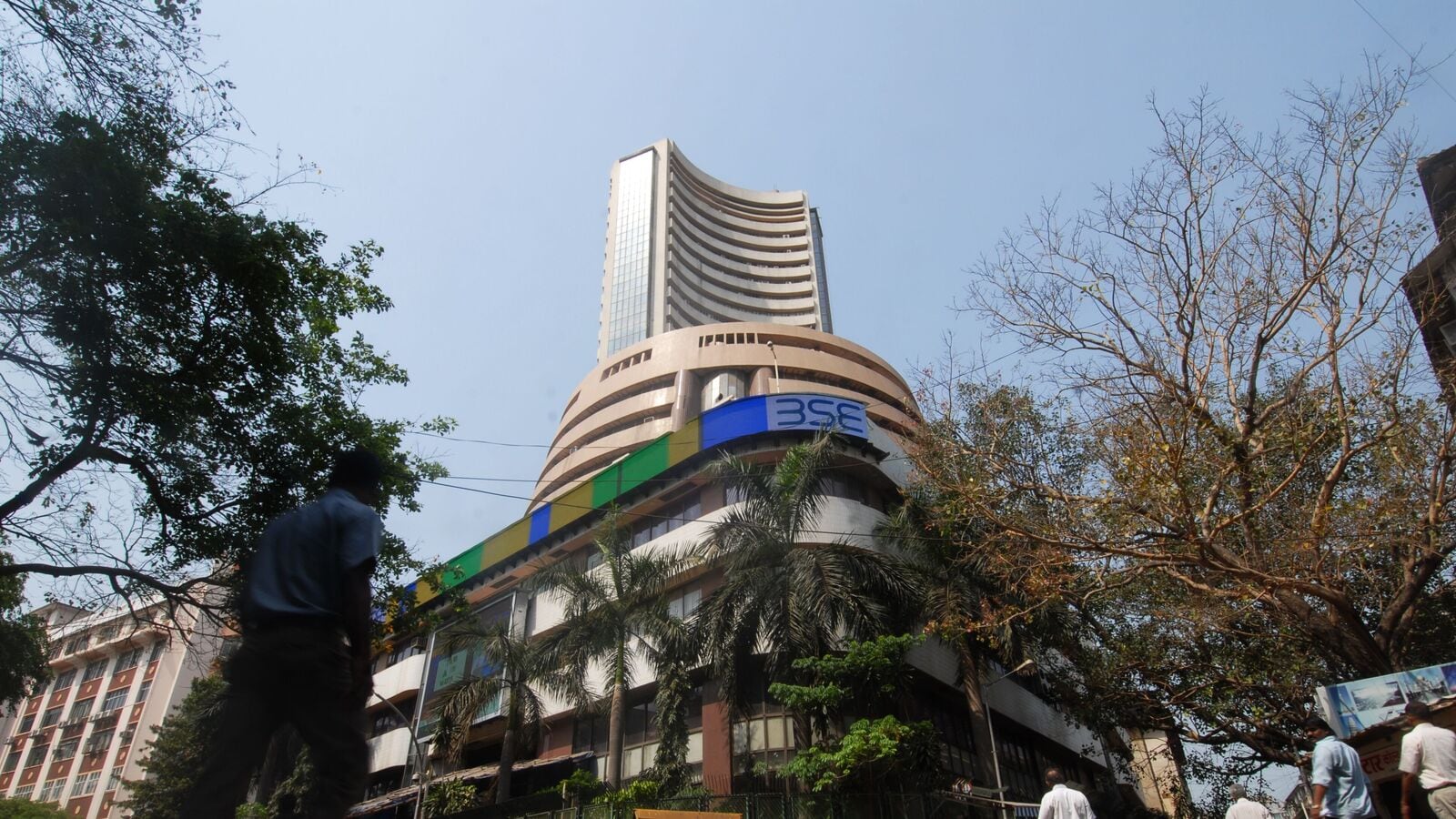
Shares of BSE Ltd and Angel One have come under pressure following the comments of Securities and Exchange Board of India (Sebi) chairman Tuhin Kanta Pandey on 21 August, suggesting further curbs on equity derivatives, specifically the weekly expiries on Nifty and Sensex. Both stocks are seen as capital market plays, with significant revenue exposure to options trading. BSE is the only listed equity exchange, and Angel One is a prominent listed discount broker; competitors Zerodha and Groww are still unlisted.
Over the past six trading sessions, BSE has lost 17% of its value, falling to ₹2,096, while Angel One has declined 19% to ₹2,210. However, treating both stocks equally may overlook key differences in their business models and revenue sensitivity.
Divergent revenue models
But punishing both the stocks alike may not be justified. Their revenues from the segment have shown divergent trends following the earlier Sebi measures that included the scrapping of weekly contracts on many popular indices such as Bank Nifty, Bankex. Before analyzing the likely impact of further moves to curb option volumes by discontinuation of weekly expiries, it is important to understand that there is a significant difference in key variables that affect the calculation of revenue. BSE levies 0.0325% ( ₹3,250 per one crore) as transaction charges on the premium value of options, and Angel One charges flat brokerage fees of ₹20 per order, irrespective of premium value.
Read more: Tariffs leave Indian textile firms hanging by a thread, forcing pivot beyond US
As BSE’s revenue is linked to the premium value of options, average daily premium turnover (ADPT) becomes an important metric to track. Even after the earlier set of measures by Sebi, such as increased contract size, stricter margin requirements, and rationalization of the number of weekly expiries that took full effect in Q4FY25, BSE’s ADPT actually rose 35% sequentially in Q4FY25 to ₹11,783 crore. In fact, it kept rising even in Q1FY26 by 28% sequentially to ₹15,084 crore. The bifurcation into index options premium turnover and stock options premium turnover is not available; still, BSE’s income from transaction charges on options continued to increase, irrespective of the earlier Sebi measures. Simply put, BSE’s earnings have shown resilience to regulatory changes in the options segment.
On the other hand, for Angel One, the hit on broking revenue from Sebi’s measures is more pronounced. Here, the focus should be on the number of orders, unlike the ADPT in the case of BSE. Its total number of orders in the F&O segment (bifurcation into futures and options is not available and does not matter much as both are charged at ₹20 per order) fell by 25% sequentially in Q4FY25 to 23 crore and then recovered marginally by 5% sequentially to 24.1 crore in Q1FY26. Even so, this is 22% lower than the order volumes in Q3FY25 before the earlier Sebi curbs were fully effective. In short, Sebi’s measures to curb F&O activity have not dampened BSE’s revenue even as Angel One has suffered.
BSE is expected to grow its FY26 earnings per share by 54% to ₹50, according toMotilal Oswal Financial Services, while Angel One’s EPS may fall 24% to ₹98. While further Sebi measures could affect both companies, BSE appears better positioned, operating in a duopoly and benefiting from rising premium turnover.
Read more: Top gear: How components maker Uno Minda defied the auto industry slowdown
About The Author