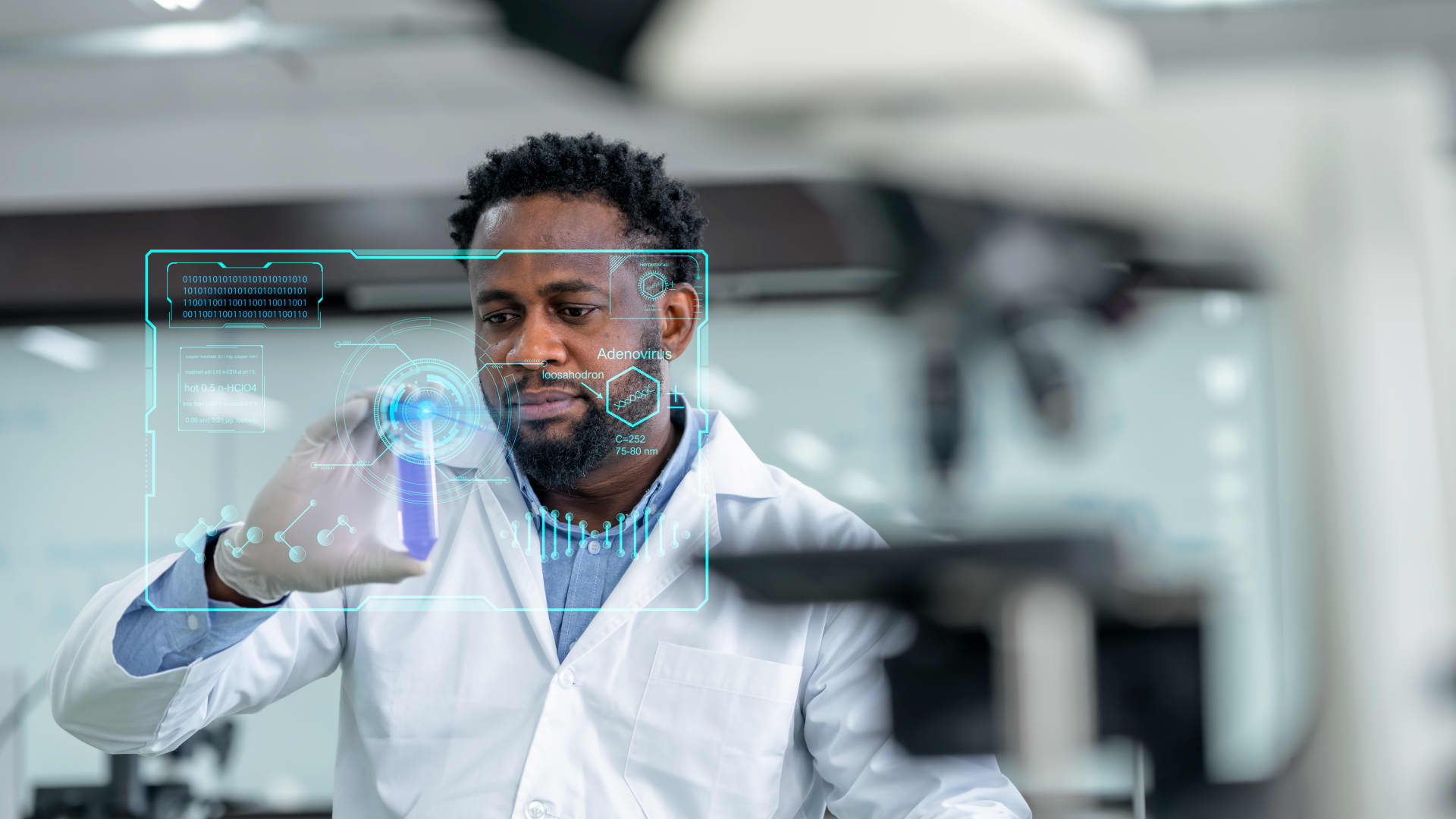
Cravetiger | Moment | Getty Images
You may already be familiar with AI taking notes in your doctor’s office, or being used to help book appointments or analyze medical images.
But some experts believe consumers should be using AI even more to help understand their health.
“People should be using AI much more than they do today,” according to Alex Zhavoronkov, founder and CEO of AI drug discovery company Insilico Medicine.
“Many of those AI models that are used by consumers, they actually achieve the level of capability that is close to some of the doctors and sometimes better,” Zhavoronkov said, speaking on a panel at CNBC’s CONVERGE LIVE event in Singapore on Wednesday.
He advocated the use of AI to answer basic health questions, such as: “What should I eat? … Should I diet?” he said. “Some very basic questions could be answered by an AI physician for you, you actually will save the time with the real doctor,” he added.
ChatGPT, Amazon launch health tools
AI is being used in a number of ways in consumer health care.
In January, OpenAI launched ChatGPT Health, allowing people to securely connect their medical records and wellness apps to the AI chatbot. The company said the new health experience was not intended for diagnosis and treatment. In the same month, Amazon rolled out its HealthAI tool for members of its primary care chain One Medical, which is designed to provide advice based on medical records, lab results and current medications.
Shreehas Tambe, CEO and managing director of biotechnology company Biocon, said he is cautiously optimistic about the use of AI in health care settings, describing a “learning curve” for new users.
“Trying to put an evolved technology platform in the hands of someone who is still probably getting a hang of it, I think could lead to more erroneous results,” he told CONVERGE LIVE.
“Then you could have more challenges than benefits of that technology,” Tambe added.
AI tools are reducing research time for drugs to get to the developmental candidate stage to 18 months, Zhavoronkov said, compared to more than four years traditionally. Developmental candidates are a part of the drug discovery process that happens before human trials. In March, pharmaceutical giant Eli Lilly signed a $2.75 billion deal with Insilico Medicine to bring drugs developed using AI to market.
Tambe said it was important for “the human in the loop” to validate AI models used in the discovery of new drugs. “You need these models to be validated by people who understand the science, who can push those boundaries to say, this is the solution that I want these generative models to develop,” he said.
— CNBC’s Ashley Capoot and Annie Palmer contributed to this report.
About The Author