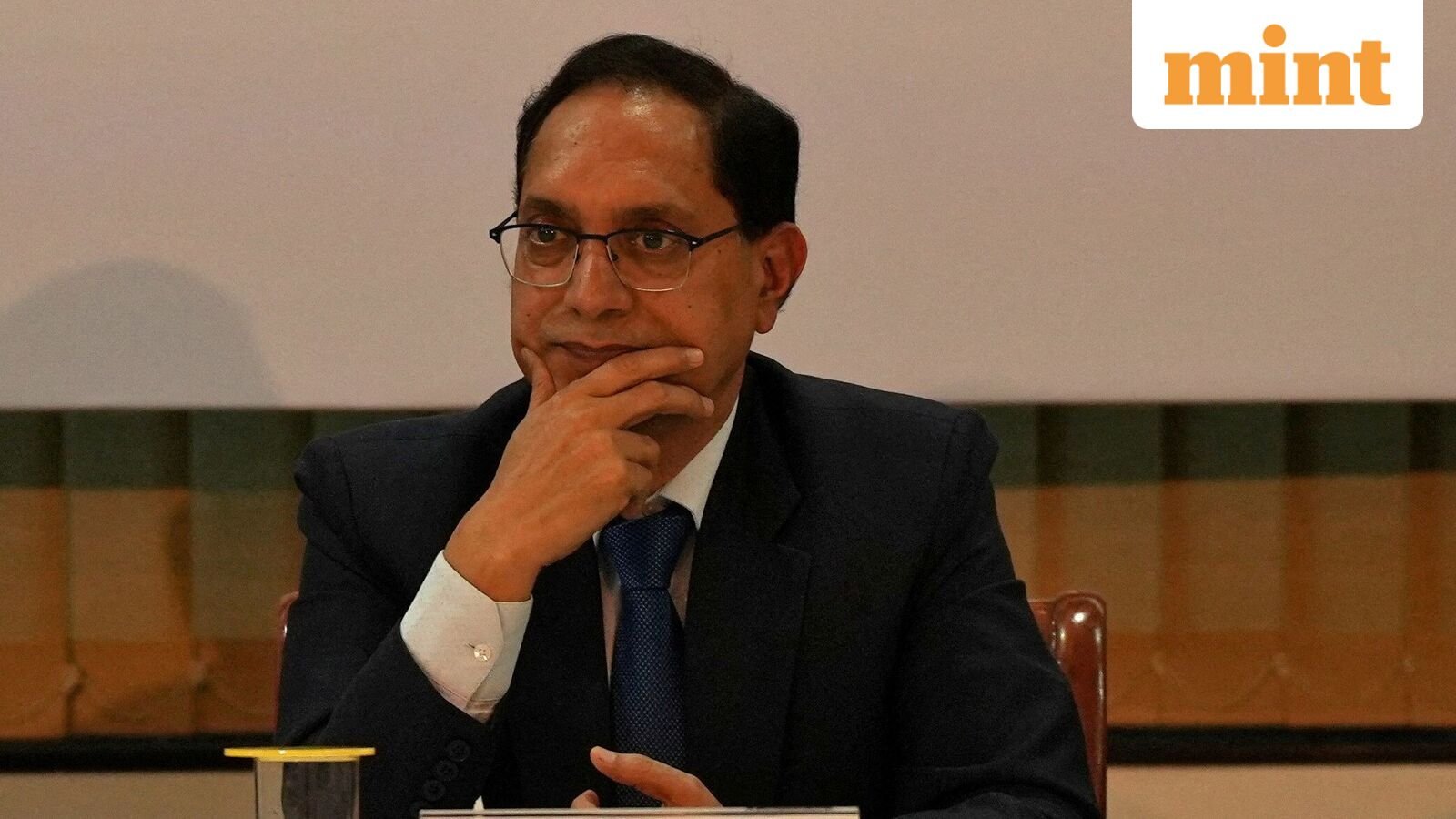
The Securities and Exchange Board of India (Sebi) has so far not observed any wrongdoing during closing auction sessions (CAS) for stocks, a mechanism introduced to curb price manipulation and improve price discovery, its chief Tuhin Kanta Pandey said on Wednesday.
“We haven’t seen it yet, but we are constantly checking our data. Mutual fund participation [in the closing auctions] was 5-7% earlier. Now it’s almost 25%,” Pandey said at an event in Mumbai.
India’s first closing auction session for its securities market made its debut on 3 August for 208 derivative-traded stocks, replacing the long-standing volume-weighted average price (VWAP) system.
Liquidity concerns
Pandey’s comments come against the backdrop of criticism from market participants over the new auction mechanism, which has seen low liquidity trigger sharp price swings.
For instance, on the first day of CAS, the NSE Nifty50 surged 1.6%, while the BSE Sensex gained just 0.7%. The Nifty’s move was driven by a 200-point jump in the final two minutes of the order-closing period, leaving traders puzzled not only by the divergence between the Nifty and Sensex, but also by the gap between the Nifty’s underlying stocks and their futures.
The CAS framework had raised doubts of market manipulation due to low participation during the auction session.
The pricing discrepancy was because of the absence of participants, like arbitrageurs, who seize such gaps between the same stock traded on two exchanges.
“We were behind in introducing CAS, all our counterparts have already done it. But whenever there is a change, it takes time to prepare the whole industry. This is not a black box where traders wouldn’t know what is happening in the 15 minutes, CAS has indicative prices. There is a need for greater participation and for more and more people to understand it,” said Pandey.
Mint reported on August 10 that the unpredictability and uncertainty around prices limited participation in CAS to passive funds, domestic and foreign high-frequency traders and other foreign portfolio investors, even as arbitrage funds run by mutual funds and retail have largely kept away.
Average traded volumes of index futures, Nifty and Bank Nifty, fell 40% to 69,982 contracts in the week through 7 August, from 134,754 contracts in the week ended 31 July. Throughout last month, weekly average traded volumes ranged between a low of 95,433 contracts and a high of 141,912 contracts, according to National Stock Exchange (NSE) data.
The story for weekly index options, expiring every Tuesday, was no different, either. Volumes of index call options purchased on 4 August were at 151.9 million contracts, down 16% from 180.6 million traded on 28 July. Purchased put options volumes were down 10% last Tuesday from the those in the preceding week.
About The Author