CNBC Sport: How a seismic ruling changes college sports compensation
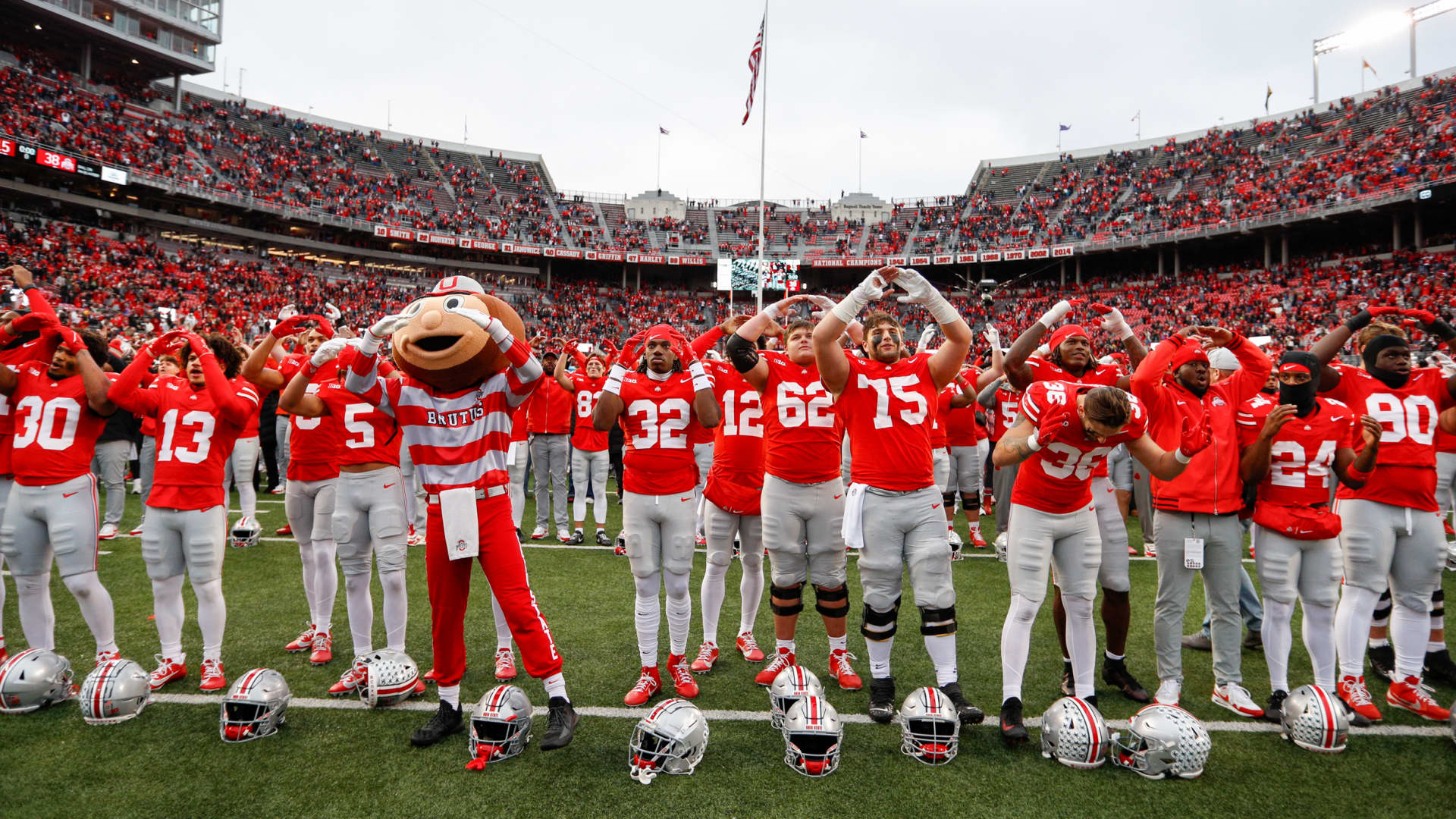
A version of this article first appeared in the CNBC Sport newsletter with Alex Sherman, which brings you the biggest news and exclusive interviews from the worlds of sports business and media. Sign up to receive future editions, straight to your inbox. If you’re even a casual observer of college sports, you’re probably aware of the House v. NCAA settlement , officially approved Friday, which sets the stage of a new era of paying college athletes. The highlights are: – $2.75 billion in back pay to Division I college athletes who played from 2016 to 2025. This is money meant as repayment to athletes who couldn’t legally collect on their name, image and likeness from their schools. Ex-college athletes Grant House and Sedona Price filed a complaint against the NCAA and five major conferences in 2020 that challenged existing rules preventing athletes from receiving compensation for the use of their NIL. U.S. District Court Judge Claudia Wilken allowed for class-action certification for damages and backdated the compensation to 2016, taking advantage of a four-year statute of limitations from the time a case is filed. – Moving forward, colleges can spend up to $20.5 million per year, escalating most years by at least 4%, to directly pay athletes. While many star athletes have been paid on the side by NIL collectives for the past four years, this officially ends the era of amateurism. Most of the money will go to the two sports that generate the most revenue for schools: football and basketball. There are all sorts of ramifications from this judgment, including which schools will be competitive, how universities allocate resources among sports, whether athletes should be viewed as employees, and whether schools will need to tap outside sources of capital (like private equity) to pay for their athletic programs. These will undoubtedly spark future newsletter items, but for now, I wanted to focus simply on the definition of NIL – because House v. NCAA changes how we should think about NIL moving forward. Deciphering the new framework is the start of understanding the entire system. For the past four years, there have been two buckets of NIL compensation: collective NIL and commercial NIL. Collective NIL (or, NIL collectives) are groups of donors and wealthy individuals that have contributed money (often millions of dollars) to convince athletes to join their school of choice. You may remember the story of Bryce Underwood , the No. 1 high school recruit in football, who spurned LSU to attend the University of Michigan last year. That story featured a University of Michigan NIL collective called Champions Circle, which leveraged its relationship with Oracle co-founder Larry Ellison (the fourth richest man in the world; net worth of about $218 billion) to woo Underwood by throwing a lot of money at him, causing him to change his enrollment decision. CBS Sports reported the multiyear deal was worth somewhere in the $10 million range, “the largest known NIL deal for any player since the name, image and likeness benefits were allowed in July 2021.” Colloquially, collective NIL is often referred to as legalized donorism, whose main purpose is to convince star athletes to attend universities to make those schools win games. Commercial NIL is the attachment of college athletes to businesses and sponsors so that students could get paid for their name, image and likeness. Examples of this are paying a college football player to use his image in a video game, or a brand paying a women’s basketball player for advertising a product on social media. This money didn’t really have anything to do with winning or losing a game or convincing a player to attend a specific college, though NIL opportunities at bigger schools can be far more lucrative than those at smaller ones. Opendorse, a maker of one of the largest NIL technology platforms that connects student-athletes to business opportunities, pegged the overall NIL market in the 2024-25 school year at about $2 billion, with $1.6 billion of that money coming from NIL collectives. In the new world, with the passing of House v. NCAA, there will be a third NIL category, which Opendorse CEO Stephen Denton calls “college NIL”. Many big-money donors will stop funding NIL collectives and instead send money directly to universities. A number of big college athletic program NIL collectives, such as Colorado and UConn, have already shut down. Smaller schools will likely need to keep their NIL collectives up and running, because they won’t be paying anything close to $20.5 million per year to athletes. St. Bonaventure men’s basketball general manager Adrian Wojnarowski told me last month schools like his will need every cent they can get to convince star players to return rather than escape to greener pastures via the transfer portal. While many schools bring in hundreds of millions of dollars in revenue per year , it’s fairly common for some universities to lose money annually, given the massive expenses associated with running large athletic programs. Another new development of House v. NCAA is the invention of “NIL Go” ( Editor’s note: Why did they name this like a subscription streaming video service? ), run by Deloitte, the financial advisory services company. Deloitte will use a so-called “fair market value” standard to ensure NIL deals are on par with what open-market businesses (i.e. commercial NIL) would pay athletes. NIL Go also aims to “determine whether a payor’s intent is to use the student-athlete’s NIL to legitimately advance business objectives.” The purpose is to eradicate the usage of NIL as disguised payments for recruitment or athletic performance. The Deloitte clearinghouse will examine all deals worth more than $600 . This crackdown will likely further accelerate the transition from collective NIL to college NIL, Denton said. “The collective dollars will probably move to the colleges, and you’ll get a tax donation for that,” Denton said in an interview. “The collectives will then rebuild as commercial NIL. And then commercial NIL really becomes the new battleground for colleges and universities, because you’ll have a cap of $20.5 million to pay the athletes. And, candidly, that’s not enough.” The House v. NCAA settlement will likely trigger a cascade of future lawsuits. A group of female athletes filed an appeal of the House v. NCAA settlement approval on Wednesday, related to the $2.75 billion in back damages, arguing that it violates the Title IX gender equity statute. Anotherappeal filed Wednesday will pause the NCAA’s plans to begin back paying former athletes, ESPN reports. While college NIL has potentially negative ramifications for women’s sports, as most of the money will go toward football, a boom in commercial NIL should be phenomenal for women student athletes, who dominate social media over their male counterparts, Denton said. “It will be the great equalizer,” said Denton. “When you strip out the boosters and college football players, female student athletes out-earn their male counterparts. Our research shows that 59 cents out of every dollar spent goes to a female athlete because they’re just really good at name, image, and likeness.” That’s something about which I asked this week’s “On The Record” guest – Candace Parker . On the record With Candace Parker … Parker is an expert on both men’s and women’s basketball. She’s one of the greatest college basketball and WNBA players of all time, she’s been an analyst and commentator for TNT Sports covering the NBA since 2018. She’s moving to Amazon Prime Video to cover both the NBA and WNBA for next season. She also just wrote a book, “The Can-Do Mindset: How to Cultivate Resilience, Follow Your Heart, and Fight for Your Passions,” about the challenges of raising a young daughter while going through a divorce and starring in the WNBA, playing abroad (for 20-times more money than in the U.S.), remarrying, coming out as part of the LGBTQ+ community, and ultimately winning three league championships and two MVPs. One of the topics Parker writes about in her book is the growing realization among corporations that women’s athletes have been grossly underutilized as spokespeople. Last year, she accepted a role as the president of Adidas Women’s Basketball to amplify women’s sports. “A lot of the corporations, once you got to the WNBA, you heard, ‘women can’t sell sneakers, they can’t be on video game covers. It doesn’t sell well.’ Well, now, we have numbers, we have analytics,” Parker said. “We have data that proves otherwise. NIL has been a huge reason why the WNBA has had to move forward, because, guess what? When you look at Instagram followers, they’re following the women more than the men.” We had a wide-ranging discussion about what WNBA players should ask for in their collective bargaining agreement talks (the current CBA expires in October), including more roster spots and paid one-year maternity leave. The Women’s Tennis Association announced its players would receive paid maternity leave of up to 12 months earlier this year. “The WNBA has an opportunity to set the standard for what maternity leave and support of motherhood looks like,” Parker told me. “During my time, it was 53 days from when I had my daughter to when I started playing basketball. And during those 53 days, I didn’t get paid, because at the time, there was no paid maternity leave. At the time, we were splitting hotel rooms, and so I had to buy out half my room so my mom could come take care of my daughter, because I was nursing her, and I nursed her for 15 months. There was no child care. There was none of that. Now there is, but there’s still far more things we can do to support motherhood.” Parker commended WNBA Commissioner Cathy Engelbert for bringing in owners who have shown commitment to improving accommodations for players. She said the league should draw inspiration from the HBO series “Winning Time,” about Jerry Buss ‘s first years owning the Los Angeles Lakers, for how individual owners can change the dynamics for everyone. “The reason Dr. Buss wanted to build a winning team was he was sick of seeing [then-Boston Celtics president] Red Auerbach win championships,” Parker said. “One of the biggest rivalries now is Vegas [Las Vegas Aces] and New York [Liberty], and a lot of it has to do with the fact that their owners have really been the catalyst for the league in the growth of practice facilities, of chartered flights, of having chefs and things like that.” Mark Davis , who also owns the NFL’s Las Vegas Raiders, is the controlling owner of the Aces. Joe Tsai and his wife Clara Wu Tsai own the Liberty. Watch the entire interview here. Or listen to it here and follow the CNBC Sport podcast if you prefer the audio version, which this week includes an even closer look at NIL and what it may mean for private equity investment with my colleague, Michael Ozanian . CNBC Sport highlight reel The best of CNBC Sport from the past week: Speaking of private equity interest in college programs, the global sports and marketing agency Elevate announced a $500 million fund this week to help universities create long-term growth through strategic investments. CNBC’s Jess Golden has the details. And more WTA news: the tennis organization will allow players to protect their rankings during fertility treatments. As CNBC’s Krysta Escobar writes, the policy means “players can step away from professional tennis to undergo procedures like egg or embryo freezing and return to the tour with a protected ranking.” CNBC’s Dominic Chu spoke with the CEO of Topgolf, Artie Starrs , as he prepares to split off from Callaway Golf. Topgolf will be a separate publicly traded company. “We win on fun and atmosphere,” Starrs says of his company’s core product – those big roadside venues you gawk at from the highway. I wrote about how Warner Bros. Discovery’s decision to split into two companies may spell the eventual end of an increasingly fractured relationship between the company’s CEO David Zaslav and sports programming. Zaslav’s Turner Sports and the NBA ended their decades-long relationship earlier this month, as the NBA will move off TNT next season. The big number: 8.76 million It’s probably not lost on Zaslav that NBA Finals ratings have underwhelmed through two games. This may not be too surprising, given the finals’ participants are the small market Oklahoma City Thunder and Indiana Pacers, but the lack of celebrity star power and national interest is showing in the data. Game 2’s 8.76 million viewers were the lowest for a Game 2 in the Finals in 18 years , other than 2020 during the pandemic. Quote of the week “Blame whoever you wish to blame. But the simple truth is clear: College sports’ collective inability or unwillingness to change years ago put the entire enterprise at risk. Is the settlement disruptive? Very much so. But it is an opportunity for the D-I community to pay for back damages over 10 years, instead [of] triple that amount all at once. And it creates a future that comes with choices, instead of bankruptcy.” — NCAA President Charlie Baker , addressing the National Association of Collegiate Directors of Athletics during its keynote address. Around the league While WBD’s Zaslav said this week that U.S. sports has never been much of a driver for HBO Max signups, TNT Sports took a well deserved victory lap with its coverage of the French Open this week. The women’s final between Coco Gauff and Aryna Sabalenka was the most-watched final since 2016, and the men’s thriller between Carlos Alcaraz and Jannik Sinner was the most-watched since 2021, peaking at 2.6 million viewers. It helped that both finals pitted the No. 1 player vs. the No. 2 seeded player, with both 2-seeds emerging victorious. Serena Williams and her sister Venus Williams are launching a podcast that will air on X . It will be an interview show that features guests who are “visionaries, creators and rulebreakers passionate about shattering the status quo.” The Netflix series “America’s Team: The Gambler and His Cowboys”, the story of the Dallas Cowboys and owner Jerry Jones , premieres Aug. 19. The winner of this week’s U.S. Open at Oakmont Country Club will pocket a cool $4.3 million.