Copper is becoming increasingly strategic to governments and industries as artificial intelligence, power-grid investment and defense spending increase demand for the industrial metal, investors say.
The metal — a key component in electronics, construction and transportation, and often seen as a barometer of economic activity — has outperformed gold this year, as the need to secure reliable supplies has intensified.

Copper has rallied 15.8% year-to-date, and is up more than 30% over the past 12 months. By comparison, gold futures have slipped 4.11% year-to-date, and are down 4.52% over the past 12 months. Spot gold is 4.89% lower over the past 12 months, and 4% down year-to-date.
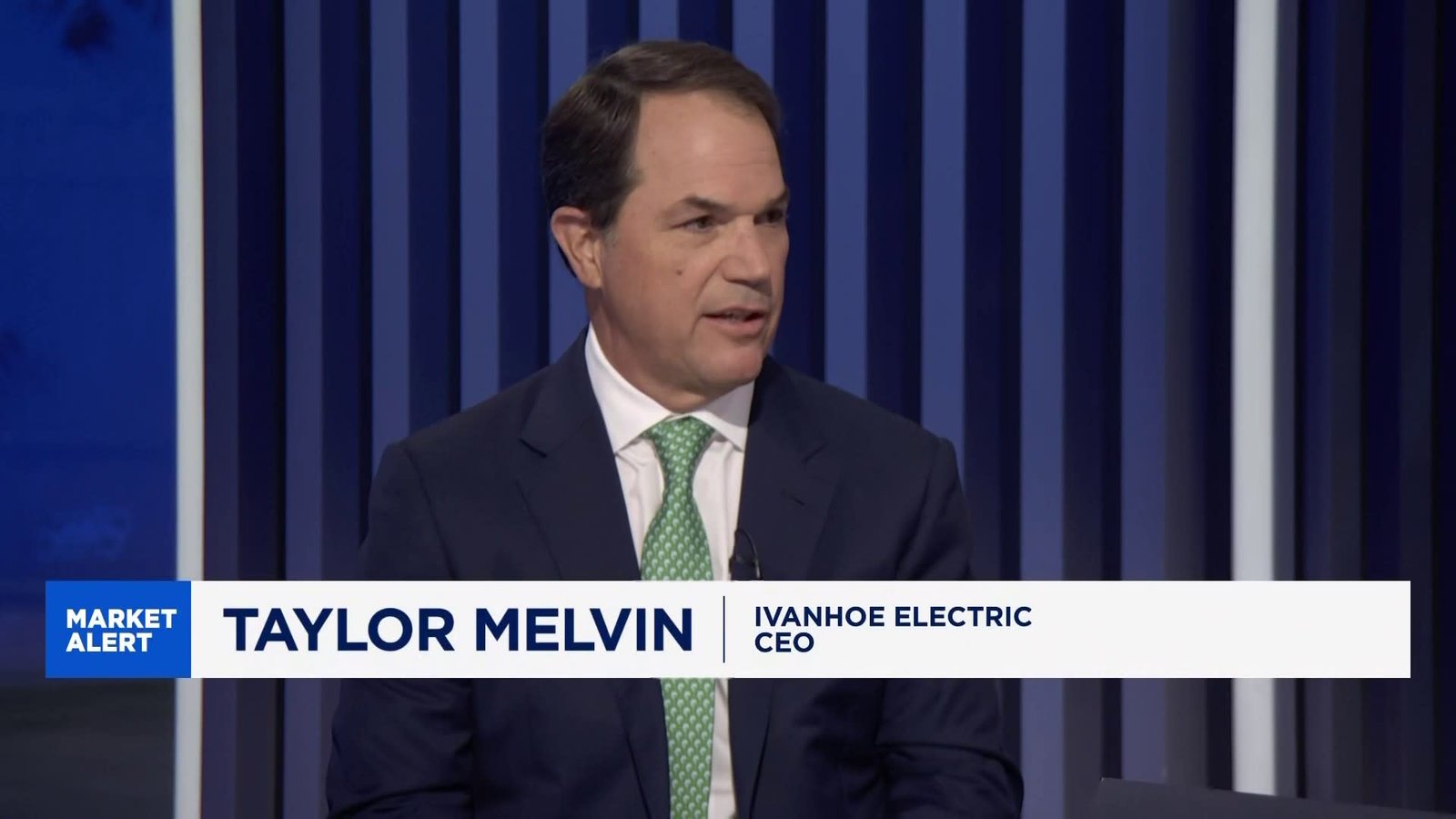
Speaking to CNBC’s “Squawk Box Europe,” Ivanhoe Electric CEO Taylor Melvin said countries, regions and industries are increasingly focused on securing access to metals for national security, economic growth and technology infrastructure. Melvin said that shift has helped support copper prices.
“It’s certainly a good time to be in copper mining globally, and specifically in the United States,” said Melvin, whose Arizona-based mining and exploration company focuses on copper, gold, silver, nickel and cobalt.
“We’re really in a world right now where the metals that we used to refer to, and still do, as critical metals are really becoming strategic metals, in every sense of the word,” said Melvin, who spoke as LME Week, the annual gathering of the global metals industry, began in London on Monday.
AI and defense demand
That shift comes as investors question the sustainability of AI spending and the hyperscaler build-out, which has led to a recent wobble in tech stocks.
But Melvin said he expects copper to withstand the recent volatility.

Copper.
“It’s a new pocket of demand, and it really is almost an inelastic demand for copper,” he said of the tech sector’s need for the metal. “It’s hard to think that one of these large-scale technology companies is going to make an investment decision on a hyperscale data center based on the cost of copper.”
He added: “That same inelasticity applies to another demand pocket that’s emerging, which is national security, national defense budgets. So when you look at copper demand, the impact of technology, artificial intelligence infrastructure, I think we can all agree that that market is growing.
“There certainly has been a bit of a retrench, a retreat, in those [tech] valuations. But two things can be true at the same time — you can have a capital market move in sentiment on equity values… but it can also be true that those industries are growing, and they’re going to be a source of incremental demand for our metal.”
U.S. copper tariffs
The rally has also been supported by uncertainty over whether the U.S. will impose a tariff on refined copper. In 2025, the Commerce Department recommended a 15% tariff beginning Jan. 1, 2027, but no final decision on the proposed levy has been publicly announced.
Gold.
“Because of the potential for US tariffs, a large share of the world’s copper is now stored in the U.S., and it isn’t clear those stocks will be available to the rest of the market,” said Iain Pyle, senior investment director at Aberdeen Investments and co-manager of the abrdn Future Minerals Fund.
“At the same time, Chinese inventories look exceptionally low and premiums there are rising.”
In an Oct. 15 note, Pyle called copper the “clearest example” of a market where supply cannot keep up with demand. “Higher incentives will be needed in the form of sustained higher copper prices.
“There is still some risk of a pullback around tariff announcements, but we see the underlying fundamentals as clearly bullish, and the potential for a spike in prices has increased.”
About The Author