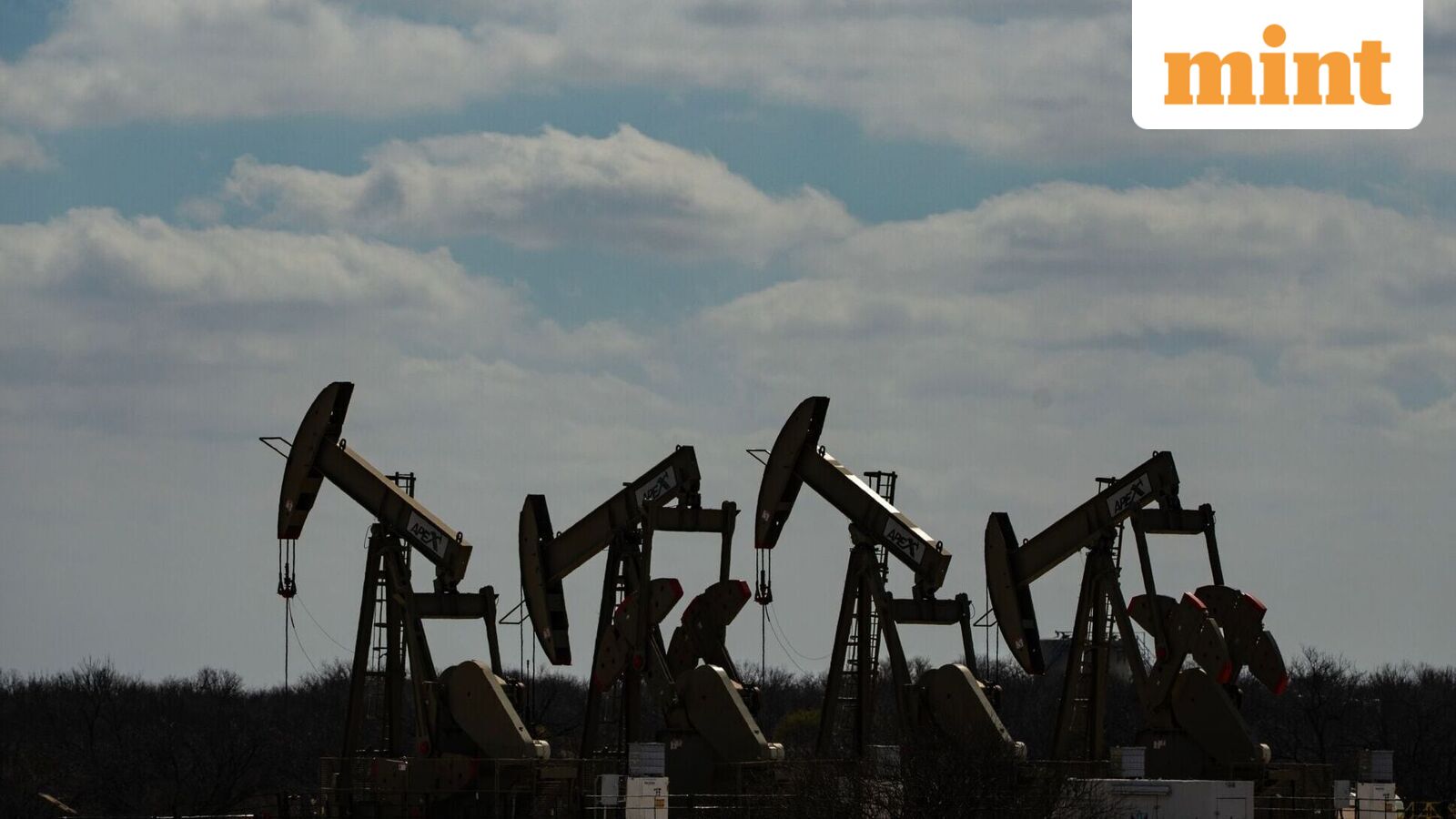
US-Iran war: Crude oil prices climbed on Monday, 27 April, after attempts to revive peace negotiations over the Iran conflict stalled, while the Strait of Hormuz remained largely blocked, prolonging Middle East disruptions that have unsettled global markets.
Brent crude surged as much as 2.5% to $107.97 per barrel, and West Texas Intermediate rose towards $97, before paring some gains after Axios reported that Tehran has presented a new proposal to the US to reopen the strait.
Back home, crude oil prices on the Multi Commodity Exchange (MCX) also witnessed a similar upward movement, gaining as much as 2.5% to ₹9,049 per barrel.
What’s driving crude oil prices today?
Over the weekend, US President Donald Trump called off a planned visit by his senior envoys to Pakistan, which has been acting as a mediator, while Iran reiterated it would not engage in talks under threats.
Although a ceasefire has largely been in effect since early April, a blockade of the Strait of Hormuz by both the US and Iran has reduced daily shipping traffic through the crucial route to almost zero. This disruption has severely impacted supplies of crude oil, fuel, natural gas, and fertilisers, fueling fears of an inflation surge.
According to Axios, as quoted by Bloomberg, Iran—via Pakistani intermediaries—has proposed a deal to the US to reopen the strait and end the conflict, with nuclear negotiations deferred to a later stage. According to the Axios report, Trump is set to meet his top national security and foreign policy advisers on Monday to review the deadlock.
On Saturday, Trump instructed his envoys, Jared Kushner and Steve Witkoff, to cancel their Pakistan visit, later stating that Iran “offered a lot, but not enough.” Meanwhile, Masoud Pezeshkian asserted that Iran would not participate in “imposed negotiations under threats or blockade.”
Now in its ninth week, the conflict has pushed up energy prices, caused shortages of essentials like liquefied petroleum gas in India, and forced airlines to reduce flights. The International Energy Agency has described the situation as the largest supply shock on record.
Crude oil prices near-term outlook
Global brokerage firm Goldman Sachs, as quoted by Reuters, has increased its oil price outlook for the fourth quarter, projecting Brent crude at $90 per barrel and US West Texas Intermediate (WTI) at $83, citing reduced output from the Middle East.
“The economic risks are larger than our crude base case alone suggests because of the net upside risks to oil prices, unusually high refined product prices, product shortages risks, and the unprecedented scale of the shock,” the brokerage firm said.
Meanwhile, Kaynat Chainwala, AVP – Commodity Research, Kotak Securities, believes that current tensions sustain upward pressure, potentially pushing WTI toward the $100–$105/bbl level and MCX prices to ₹9400–9900/bbl; any credible confirmation that the Strait is reopening would likely trigger a sharp correction.
“Such a de-escalation would quickly unwind risk premiums, potentially driving WTI Crude toward $80–$85/bbl and triggering a sell-off on the MCX toward the Rs. 7500–8000/bbl range,” Chainwala said.
(With inputs from agencies)
Disclaimer: This story is for educational purposes only. The views and recommendations above are those of individual analysts or broking companies, not Mint. We advise investors to check with certified experts before making any investment decisions.
About The Author