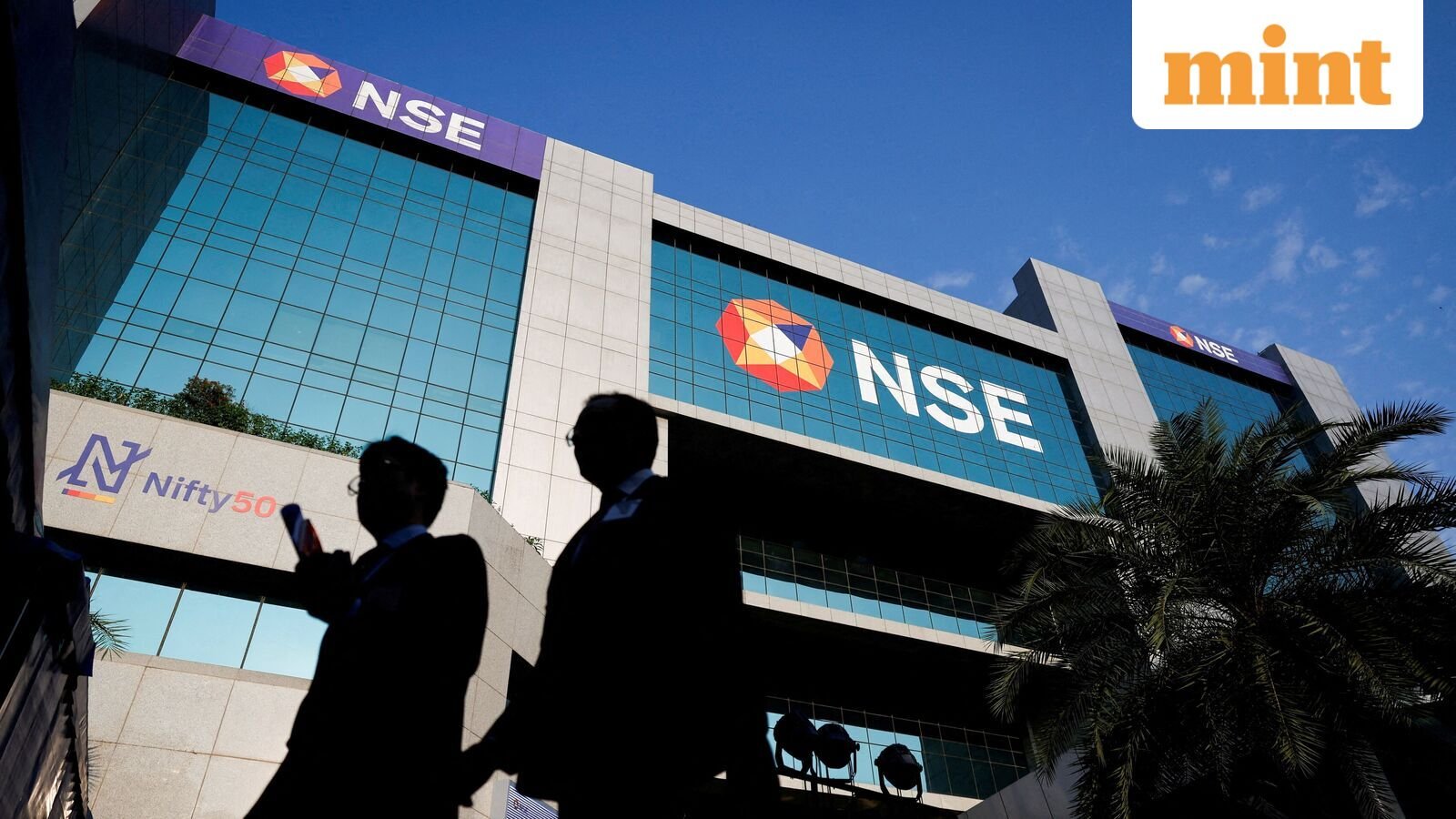
The Securities and Exchange Board of India (Sebi) has agreed in-principle to accept the National Stock Exchange of India’s settlement terms in the co-location and dark fibre matters, ending a near-decade-long battle that restrained the country’s largest stock exchange from a stock market listing.
The market regulator wrote to the exchange on 30 July agreeing to a ₹1,491.211 crore settlement, the exchange said in a statement on its website. Sebi has demanded ₹714.74 crore from NSE, in addition to a deposit of ₹776.47 crore made by the exchange to Sebi, which would be adjusted towards the total settlement amount. The NSE board approved the settlement payment on Thursday.
The settlement brings to an end a long-drawn legal battle between India’s market regulator and its largest stock exchange. It also clears the road for NSE’s public listing, which was derailed by a series of regulatory and legal disputes dating back to 2015.
In 2015, allegations emerged that certain brokers had received preferential access to its co-location facility, triggering one of India’s most significant market-regulation investigations.
The exchange launched its co-location service in 2009, allowing members to place their servers within NSE’s premises for speed. Six years later, a whistleblower alleged that some brokers had secured an unfair advantage through early login arrangements.
An expert committee appointed by the Sebi found that NSE had breached fair-access norms and had dismissed an initial complaint without adequately examining whether exchange employees had colluded in the alleged misconduct.
The committee directed NSE’s board to carry out an independent review, including a forensic investigation by an external agency. Subsequent probes by Sebi, forensic auditors and other investigative agencies concluded that certain brokers had benefited from preferential access through co-location, early login and dark fibre arrangements.
Sebi later widened its investigation to examine allegations that entities other than internet service providers had been allowed to lay fibre-optic cables within NSE’s premises, giving select brokers an additional speed advantage through dedicated communication links known as dark fibre.
Dark fibre refers to privately leased fibre-optic cables that provide a direct communication link between a broker’s trading systems and the exchange’s co-location infrastructure, reducing transmission delays.
The regulatory fallout was substantial. Between 2017 and 2018, Sebi issued multiple show-cause notices to NSE and several former officials covering the co-location, dark fibre and governance issues. In April 2019, a Sebi whole-time member ordered the exchange to disgorge more than ₹624 crore, along with interest, imposed a six-month restriction on accessing the securities market, and issued a series of non-monetary directions.
NSE challenged the orders before the Securities Appellate Tribunal (SAT), which overturned the disgorgement order while upholding the non-monetary directions. The tribunal also directed the exchange to deposit ₹100 crore into the Investor Education and Protection Fund. The dark fibre proceedings followed a similar path.
NSE’s governance also came under the regulatory spotlight over the appointment of former consultant Anand Subramanian, who was allegedly promoted through the organization to the role of group chief operating officer.
The exchange filed its draft red herring prospectus in June for an initial public offering comprising an offer for sale of up to 149 million equity shares. Based on indicative grey market prices of around ₹2,000 a share, the issue could raise about ₹29,780 crore (more than $3 billion) and value NSE at over ₹5 trillion.
At that size, the offering would surpass the ₹27,859-crore initial public offering of Hyundai Motor India Ltd and the ₹20,557-crore listing of Life Insurance Corp. of India to become the largest IPO in India’s history.
State Bank of India, the biggest selling shareholder, plans to offload up to 24.75 million shares, followed by Morgan Stanley’s MS Strategic (Mauritius) Ltd with up to 16 million shares and Canada Pension Plan Investment Board (CPPIB) with up to 11.87 million shares.
Other selling shareholders include Temasek-owned Aranda Investments (Mauritius) Pte Ltd, Bank of Baroda, Stock Holding Corporation of India, GIC Re, The New India Assurance Co., National Insurance Co. and United India Insurance Co.
The offering is being managed by a syndicate of 20 investment banks, with Kotak Mahindra Capital and Morgan Stanley India serving as book-running lead managers.
About The Author