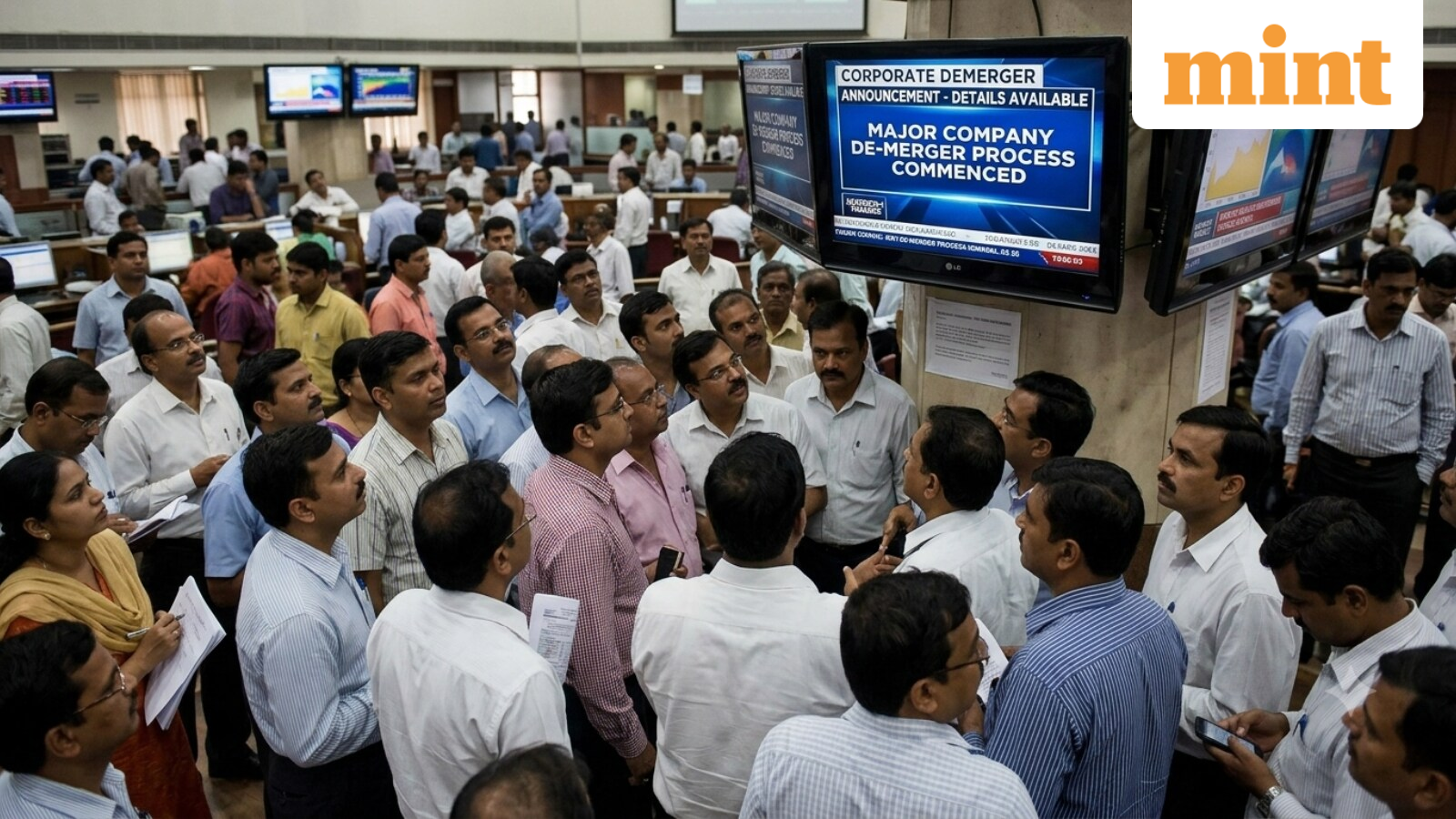
Several investors and traders were perplexed after witnessing an over 79% fall in India Glycols’ shares during intraday trade on Wednesday, 2 September. However, many of them quickly realised there was no reason to panic, as the steep fall in the stock price reflected the post-demerger prices, which the company had already announced.
On 17 July 2026, India Glycols received approval from the NCLT for the scheme of arrangement under which the company was to be demerged into three entities.
India Glycols officially demerged into three separate entities on Tuesday, September 1, 2026. Following this, the company’s shares dropped to an intraday low of ₹229 on the BSE on Wednesday. On Tuesday, the stock ended 3.07% lower at ₹1,112.90.
Shares of a company decline after a demerger, as the original listed company no longer includes the business that has been separated.
For example, if a company is demerged into four entities, each representing 25% of the earlier company’s value, the original company’s share price would theoretically adjust downward by roughly that amount. This is often referred to as a price adjustment rather than a genuine loss of shareholder wealth.
India Glycols demerger
On 1 September, the original entity, India Glycols, demerged into three separate entities — India Glycols Limited, IGL Spirits Limited, and Ennature Bio Pharma Limited.
India Glycols will house the chemicals, glycols, bio-glycols, new speciality products and industrial gases businesses.
IGL Spirits will own the spirits business, including IMFL, country liquor and bio-fuel businesses.
Ennature Bio Pharma will house the bio-pharma and bio-polymers businesses.
While India Glycols is already listed on the BSE and the NSE, the management of IGL Spirits and Ennature Bio Pharma will apply to the BSE and the NSE for the listing of their shares.
Benefits of the demerger
A company decides to demerge its businesses to reduce complexity and narrow management’s focus to a particular business, since different sectors require different strategies from a mature business.
Due to reduced complexity, the management can plan sharper strategies and raise and deploy capital independently.
Demergers may also unlock value for investors, as they may find businesses more valuable as separate companies.
“The demerger will result in the creation of three separate companies, each with a clear business focus. Each company will have a dedicated focus, enabling improved management oversight and more efficient allocation of resources towards growth. Each company will be able to manage its capital, investments and resources based on its specific business requirements, thereby enabling more efficient utilisation of capital,” said India Glycols.
Shareholding pattern
According to shareholding pattern data on the BSE, Kashipur Holdings is the biggest promoter of the company. It held 49.77% stake in India Glycols by the end of the June quarter of FY27.
Foreign portfolio investors held 2.24% stake, while domestic institutions held 5.22% stake by the end of the June quarter.
What investors got after the demerger
According to the company’s exchange filing, each shareholder of India Glycols on the record date of 2 September will receive one equity share of IGL Spirits Limited for every one equity share held in India Glycols Limited, and one equity share of Ennature Bio Pharma Limited for every three equity shares held in India Glycols Limited.
As a result, a shareholder holding 300 India Glycols shares on 2 September will receive 300 equity shares of IGL Spirits Limited and 100 equity shares of Ennature Bio Pharma Limited, resulting in a total of 700 shares across the three entities, including the 300 equity shares held in India Glycols Limited.
Read all market-related news here
Read more stories by Nishant Kumar
Disclaimer: This article is for educational purposes only and does not constitute investment advice. The views and recommendations expressed are those of individual analysts or broking firms, not Mint. We advise investors to consult with certified experts before making any investment decisions, as market conditions can change rapidly and circumstances may vary.
About The Author