When Art Hebbeler answered the phone for a job interview a few months ago, he wasn’t expecting anything out of the ordinary.
The voice on the other side sounded like an automated caller he assumed would put him through to the recruiter. Instead, Hebbeler says, it belonged to an AI bot who interviewed him.
“You’ve got to be kidding me,” the 65-year-old IT program director thought.
Roughly two-thirds of 1,200 U.S. job seekers said they’ve had an AI interview, according to an April Greenhouse survey. But many aren’t fans.
Some job seekers are pushing back against AI interviews in hiring — refusing them, withdrawing as candidates, or even blacklisting employers from future consideration. Nearly 4 in 10 U.S. job seekers have withdrawn from a hiring process over an AI interview, the Greenhouse survey said.
Some job seekers are pushing back against AI interviews in hiring, even if it makes it harder to find work in an already-challenging market.
Christina Locopo | CNBC Make It
While 70% of hiring managers in a separate Greenhouse report last year said AI helps them make faster and better hiring decisions with fewer recruiter resources, and one in two recruiters said AI had improved hiring overall, only 8% of candidates believe AI makes hiring fairer.
On social media, people poke fun at AI interviewers’ uncanny affect or jokingly troll the bots. Some post seemingly real AI interviews they’ve had, malfunctions included, to vent.
Job seekers’ resistance to AI in hiring is particularly telling in this job market. Though the U.S. unexpectedly added 162,000 jobs in August, hiring has been sluggish for months in a low-hire, low-fire economy. Candidates turning down AI interviews know doing so could further hurt their chances.
“We have AI tools talking to AI tools, not people talking to people,” says job seeker Art Hebbeler.
Art Hebbeler
In Hebbeler’s case, it hasn’t been easy with ageism working against him, he says: He’s submitted over 600 applications since January.
“I would be very reluctant to take another AI interview,” Hebbeler says, “but unfortunately I think there’s going to be more.”
‘It was not ready for prime time’
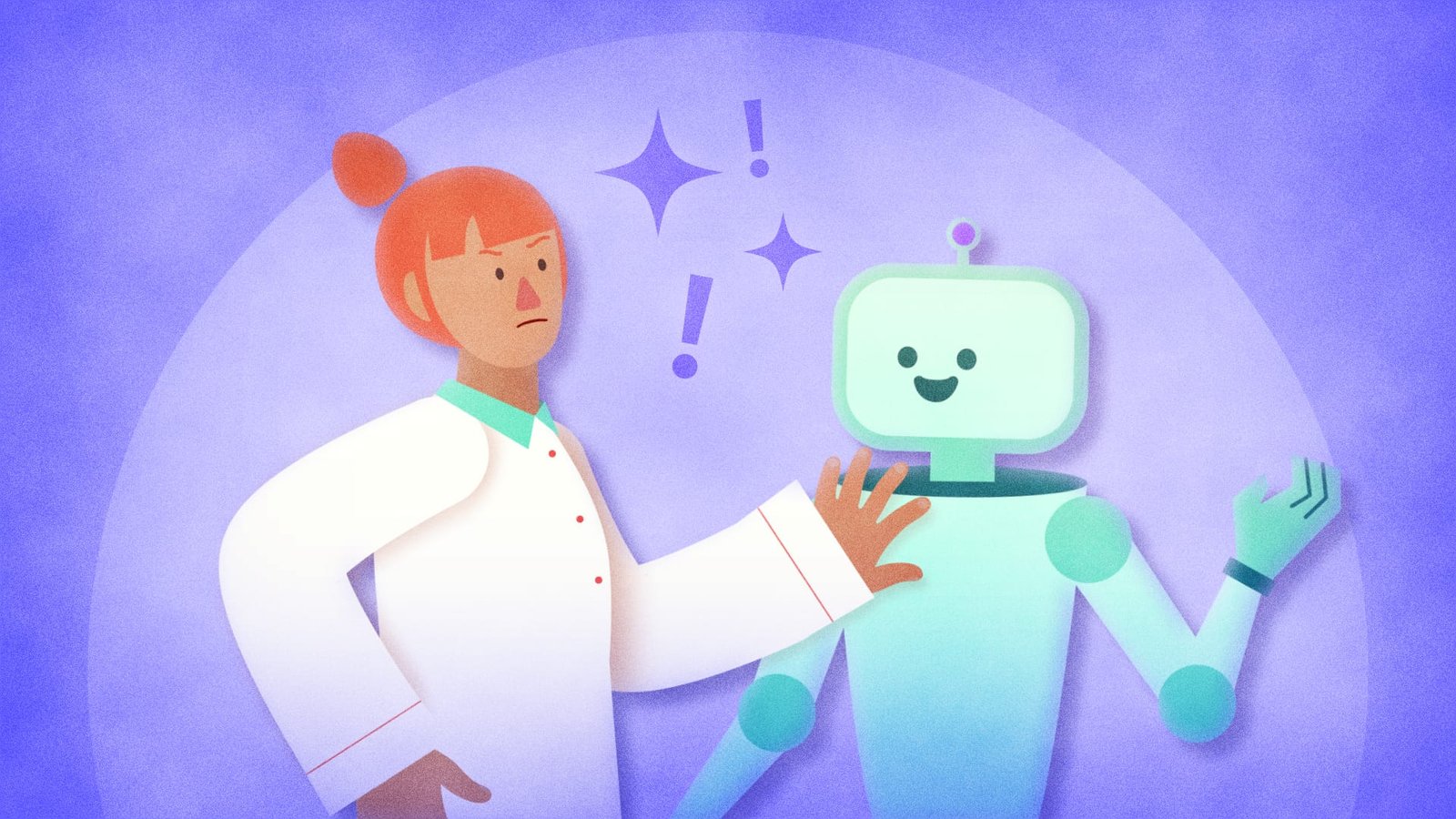
Job seekers who spoke with CNBC Make It said AI interviews can feel cold, impersonal or downright insulting. These calls can also feel stilted without cues like body language or other real-time human feedback. Where a person can ask follow-ups in response to a candidate’s answer, an AI interviewer might just stick to prepared questions.
For a separate interview this year, Hebbeler believed an AI assistant would call him to verify his identity or work history before he could speak with a recruiter.
It did, but before long the bot started asking questions akin to a first-round interview: What was his skillset, and how did it suit the role? Even as a “happy little voice” assured him a person would later view the recording, he felt he was “helping to train the AI tool,” he says.
The software kept repeating the same question and even interjected when he took a breath. “It was not ready for prime time,” Hebbeler says. He hung up early.
Some job seekers say AI interviews can feel impersonal, stilted, and downright insulting.
Christina Locopo | CNBC Make it
Aaron Holmes was initially open to AI interviews in his search for live broadcasting jobs, which he says has spanned a year and counting. “This should be interesting, I’ll give it a try,” the 41-year-old Seattle resident thought.
His optimism was short-lived. There was no natural cadence, and his questions went unanswered. The AI interviewer sounded “not quite human, but with a human voice,” he says. “It left a really bad taste in my mouth.”
‘I couldn’t be treated like a human being’
Besides technical issues, using AI interviewers at all raises alarm bells for some candidates.
“If you’re shortcutting the human touch now, what happens when I’m working for you?” Hebbeler says.
Tammy Wright of Riverview, Florida, says she had her own bad experience with AI interviews a few years ago. The instructional designer has been job-searching since 2022.
Wright has a condition called nystagmus that makes her eyes move involuntarily, she says. The AI software didn’t understand this; it would repeatedly interrupt to tell her to look straight ahead.
Wright couldn’t properly answer questions as a result, she says. “That was probably the lowest point in my search,” she adds. “It was just demoralizing that I couldn’t be treated like a human being.”
AI interviews have also raised concerns about discrimination and bias against job seekers based on factors like age, race, or disability.
Alisa Stern | CNBC Make it
Some eye-tracking software claims to help weed out candidates who may be looking off-screen at written scripts or answers generated in real time using AI. Others associate direct eye contact with engagement or authenticity and may evaluate candidates based on it.
The practice is controversial. The American Civil Liberties Union says predictive hiring tools that rely on analyzing facial, audio or physical interactions with a computer “increase the risk that individuals will be automatically rejected or scored lower on the basis of disabilities,race, andother protected characteristics.”
Eye contact, among other characteristics visible in an interview, can differ widely based on cultural norms, disabilities or other factors. In 2021, HireVue said it stopped “visual analysis” of candidates, which it said has “far less correlation to job performance than other elements of our algorithmic assessment.”
Many employers screen candidates using algorithms from the same third-party vendors. A working paper in May found “large-scale evidence of racial disparities” resulting when many employers use the same hiring algorithms, with Black and Asian candidates particularly likely to be adversely affected in hiring. The working paper also found reliance on the same few hiring algorithms could lead to applicants who are rejected from one employer also being rejected everywhere.
While complaints move through the courts, AI interviews show no signs of stopping.
Alisa Stern, Christina Locopo | CNBC Make it
Complaints against HireVue and Workday allege AI-powered hiring tools demonstrate bias against some applicants based on factors like age, race and disability. Both companies have denied the claims.
HireVue CEO Jeremy Friedman previously told HR Dive the company is “continuously engaged in research, including sensitive and important work around race, ability, and other protected statuses” and provides “reasonable accommodations to all candidates.” A Workday spokesperson previously told Reuters the company rigorously tests “to confirm our tools do not harm protected groups.”
But while complaints move through the courts, AI interviews aren’t slowing down. Two-thirds of recruiters plan to up their use of AI for pre-screening interviews this year, according to a January LinkedIn survey of over 6,500 HR professionals.
It’s the hot new technology, Hebbeler says, “and everybody wants to play with the new toy.”
Why recruiters feel pressured to use AI interviews
Candidates aren’t the only ones frowning upon AI interviews, says career and leadership coach Phoebe Gavin.
“A lot of recruiters also feel very skeptical of these tools,” she says, but “there is this pressure of, ‘How can I get this done faster?'” Some recruiters are assessed in part on how quickly they fill positions, she says, and hiring managers may be itching to onboard someone to ease their workloads.
Two in three recruiters say it has gotten harder to find qualified talent over the last year, and the number of U.S. applicants per opening has doubled since 2022, according to the LinkedIn report. Besides aiming for time and cost savings, many recruiters hoped AI could surface better insights across a larger talent pool and find candidates with skills they wouldn’t have found before, the report noted.
Gavin steers clients away from using AI to evaluate candidates but recommends they disclose upfront if they plan to anyway.
“Companies are very, very bad at remembering they’re being evaluated, too,” she says.
‘It’s going to be a hard no’
Future AI interviews aren’t in the cards for Wright, Holmes, or Hebbeler.
“I’m not doing it,” Wright says. “Human resources is there for a reason.”
Holmes is sympathetic to employers juggling countless applications. Still, “as much as I would like to get another job,” he says, “it’s going to be a hard no.”
As for Hebbeler, he’s made note of companies that he’s learned require an AI interview and won’t apply to them. “We have AI tools talking to AI tools,” he says, “not people talking to people.”
About The Author