Unlock the Editor’s Digest for free
Roula Khalaf, Editor of the FT, selects her favourite stories in this weekly newsletter.
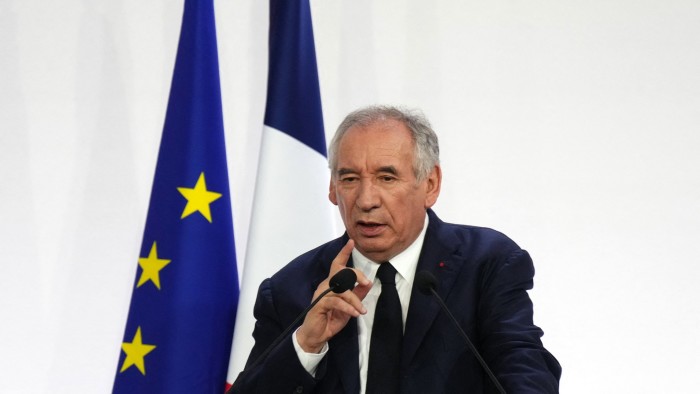
France’s Prime Minister François Bayrou will ask parliament to back his strategy for cutting the country’s public deficit in a surprise vote on September 8, putting his premiership on the line as the opposition hardens its criticism.
Bayrou said he would put a confidence vote to lawmakers during an extraordinary session of parliament to force them to take a position on what he said were “urgent and indispensable” measures to repair France’s degraded public finances.
“If no agreement is possible, then I consider that action is impossible and unattainable,” Bayrou said during a news conference on Monday.
“If you have a majority, the government is confirmed. If you don’t have a majority, the government falls,” he explained, believing that the “biggest” risk would have been to do nothing.
The fragile centrist alliance that supports Bayrou does not have a majority in the national assembly, meaning the prime minister risks losing the confidence vote.
In a bid to curb the deficit, which ballooned to 5.8 per cent of GDP last year, Bayrou last month outlined €44bn in tax rises and spending cuts for 2026 that include scrapping two days of national holiday, freezing rises to pensions and social welfare benefits for a year, and requiring a “solidarity contribution”, as yet undefined, from the wealthy.
Leftist and far-right opposition parties then slammed the plan and threatened to topple the government over what they called an austerity budget that would hit poor people, workers and retirees.
Even before this high-stakes gamble, Bayrou was expected to use a constitutional clause to override lawmakers to pass the budget later in the autumn. That in turn would have opened up the government to a no-confidence vote in which the swing votes would come from Marine Le Pen’s far-right Rassemblement National and the Socialists.
Bayou has now accelerated what seems to be a repeat of the fate of his predecessor, Michel Barnier, who was ousted last year following a no-confidence vote over similar attempts to push through spending cuts.
“Is there, or not, a national emergency to deal with our public finances and escape the curse of indebtedness that concerns all of us?” Bayrou asked rhetorically on Monday. It was essential, he added, “to show the French that we can overcome our antagonisms to agree on a diagnosis”.
Seeking to drive home the point about fragile public finances, he said interest costs would rise from €60bn in 2024 to €66bn in 2025.
“The weight of debt will this year become the nation’s most significant budget,” he said, adding that debt repayment costs would surpass the spending allocated to defence and education.
About The Author