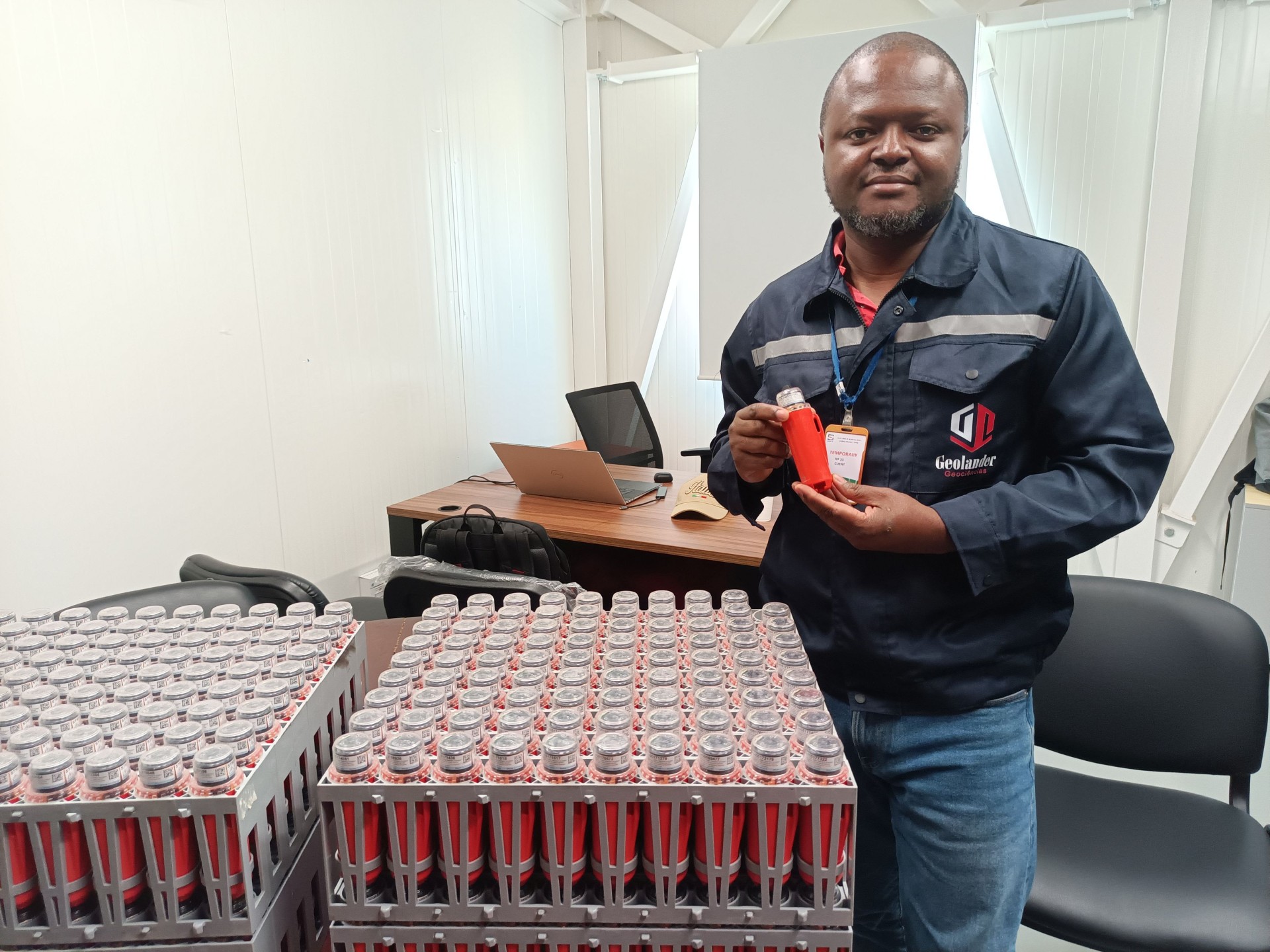
(WO) – Geolander has initiated a high-density nodal seismic survey in Angola to support subsurface evaluation for carbon capture and storage (CCS) projects.
The onshore campaign will use autonomous nodal technology from STRYDE to acquire closely spaced seismic data, enabling detailed imaging of reservoir structures, caprock integrity and fault systems. The data is expected to play a key role in assessing CO₂ storage potential and reducing uncertainty in site selection.
High-density nodal acquisition allows for improved resolution of subsurface features compared to conventional surveys, supporting more accurate characterization of complex geological settings. This is particularly important for CCS projects, where containment integrity and long-term storage performance are critical.
The deployment marks STRYDE’s first use in Angola and reflects increasing demand for advanced seismic techniques to support both exploration and energy transition applications.
As CCS activity expands globally, operators are placing greater emphasis on high-resolution subsurface data to inform development decisions and ensure safe and effective carbon storage.
About The Author