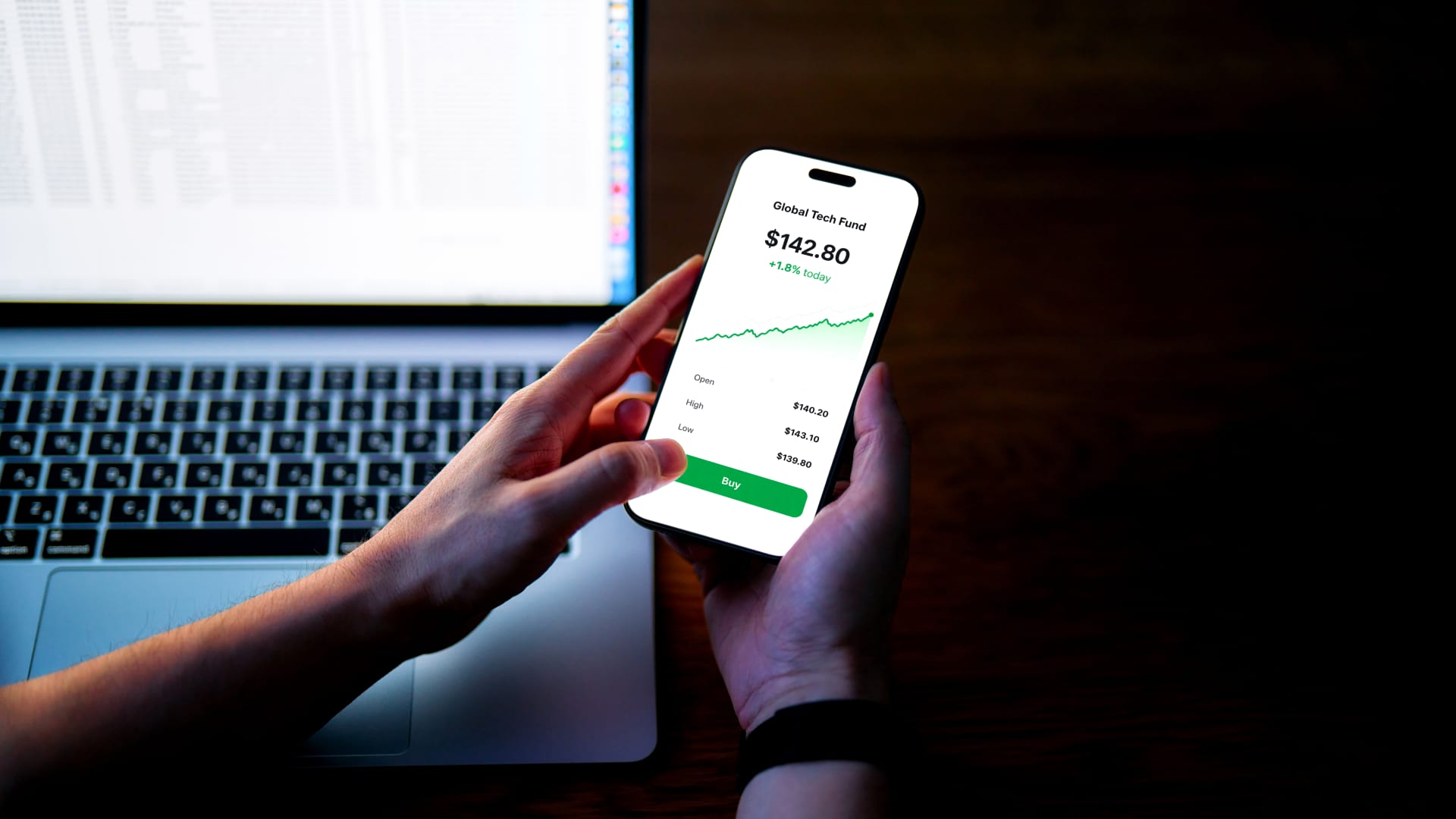
A brokerage account enables you to buy and sell stocks, bonds, ETFs, mutual funds and other securities.
Like a checking or savings account, a brokerage account allows you to deposit and withdraw money. However, your account value changes based on the performance of your investments, rather than on the interest rate paid by a bank. So, a brokerage account carries a lot more risk: Your investments can decline and, in extreme cases, lose most or all of their value.
Brokers essentially act as middlemen between investors and the financial markets. They hold the funds used to purchase securities and execute trades on your behalf. Many brokers offer full-service investment planning and financial advice, as well as self-directed trading platforms and robo-advisors that automatically manage investment portfolios based on your goals, risk tolerance, and time horizon.
Find out about the different kinds of brokerage accounts, how to open one and more.
How to open a brokerage account
What is a brokerage account?
A brokerage account is a financial product that allows you to buy and sell securities, such as stocks, bonds, mutual funds and exchange-traded funds (ETFs). Investors may open a brokerage account to diversify their portfolio, build long-term wealth or earn income through dividends and investment growth.
Unlike traditional bank deposit accounts, brokerage accounts are not guaranteed by the FDIC. The Securities Investor Protection Corporation (SIPC) helps protect investors if a brokerage firm fails, but SIPC protection does not cover investment losses caused by market declines.
Unlike your 401(k) or IRA, you can access the money in a brokerage account anytime and there is no investment limit or income cap. But if you sell an investment at a profit, you’ll generally owe taxes on the capital gains.
Today, most trades take place online, and there are many different kinds of brokerage accounts.
Types of brokerage accounts
1. Individual taxable brokerage account. A standard investment account for buying assets such as stocks, bonds, and mutual funds. It is funded with after-tax money and has no annual contribution limits or withdrawal penalties. However, dividends, interest, and capital gains may be subject to taxes.
Best for: Personal investing, saving for goals like a home, travel or building wealth.
2. Margin account: You borrow money from your broker to purchase securities, using assets in your account as collateral. Interest is charged on borrowed funds, and if the value of your investments drops low enough, the broker may issue a “margin call,” requiring you to deposit cash or additional securities.
Best for: Experienced investors who understand the risks.
3. Retirement brokerage account: These accounts, which include traditional and Roth IRAs, are designed for retirement savings and offer tax advantages.
Best for: Long-term retirement investing.
4. Joint brokerage account: These are owned by two or more people (typically spouses), who can both access and manage the account.
Best for: Married couples or family members investing together.
5. Custodial brokerage account: A custodial account is opened for a minor by an adult who manages the account until the child reaches the age of majority determined by state law. Assets in a custodial account may be considered the child’s, even though a parent or other adult serves as the custodian. That can impact access to federal financial aid for college.
Best for: Saving for a child, teaching kids about investing.
Types of brokerage account management
Most top brokerage firms offer a variety of options that let you be more or less involved in your investments, depending on your experience and comfort level.
1.Self-directed brokerage account: Investors manage their securities themselves with a self-directed account, so they have the lowest fees and most customization.
Best for: Experienced investors who want to be hands-on.
Charles Schwab allows investors to buy fractional shares ( or “slices”) from 30 S&P 500 companies, for as little as $5 each. Investors receive market commentary and earnings reports from leading financial outlets like Reuters and Morningstar.
Charles Schwab
-
Minimum deposit and balance
Minimum deposit and balance requirements may vary depending on the investment vehicle selected. No account minimum for active investing through Schwab One®Brokerage Account. Automated investing through Schwab Intelligent Portfolios® requires a $5,000 minimum deposit
-
Fees
Fees may vary depending on the investment vehicle selected. Schwab One®Brokerage Account has no account fees, $0 commission fees for stock and ETF trades, $0 transaction fees for over 4,000 mutual funds and a $0.65 fee per options contract
-
Investment vehicles
Robo-advisor: Schwab Intelligent Portfolios® IRA: Charles Schwab Traditional, Roth, Rollover, Inherited and Custodial IRAs; plus, a Personal Choice Retirement Account® (PCRA) Brokerage and trading: Schwab One® Brokerage Account, Schwab Global Account™, Schwab Organization Account and Schwab Trading Powered by Ameritrade™
-
Investment options
Stocks, bonds, mutual funds, CDs and ETFs
-
Educational resources
Schwab offers courses, educational articles, videos, and webinars for investors at every level, plus advanced screeners, research tools, and market insights through the Schwab Center for Financial Research.
Pros
- $0 minimum deposit for active investing
- No commission fees for stock and ETF trades; no transaction fees for over 4,000 mutual funds
- thinkorswim® trading platform offers advanced charting, strategy testing and multi-device access
- Robo-advisor Schwab Intelligent Portfolios® available with no advisory fee or commissions
- Access to on-demand advice from Schwab investment professionals
- Nearly 400 brick-and-mortar branches across the U.S. for in-person support
Cons
- $5,000 minimum required for Schwab Intelligent Portfolios® robo-advisor
- $0.65 fee per options contract
- Tax-loss harvesting only available on balances of $50,000 or more within Intelligent Portfolios®
- High cash allocation requirement in Intelligent Portfolios® may limit returns compared to competitors
2. Robo-advisor account: Computer algorithms build and manage a diversified portfolio based on your goals, risk tolerance and time horizon. Because they’re highly automated, robo-advisors are great for beginners — they usually have much lower fees but limited customization options.
Best for: Hands-off investors.
Betterment is our top pick for a robo-advisor for beginner investors, with algorithms that automatically adjust and rebalance portfolios and tools like tax-loss harvesting. There’s no minimum balance requirement and the tax impact preview tool lets you see how much you might owe before withdrawing funds.
Betterment
-
Minimum deposit and balance
Minimum deposit and balance requirements may vary depending on the investment vehicle selected. For example, Betterment doesn’t require clients to maintain a minimum investment account balance, but there is an ACH deposit minimum of $10. Premium Investing requires a $100,000 minimum balance.
-
Fees
Fees may vary depending on the investment vehicle selected, account balances, etc. Base price is $5/month for investing accounts; automatically switches to 0.25% annually once you reach $24,000 in total balance or set up $200/month in recurring deposits. Premium plan is 0.65% annually.
-
Investment vehicles
-
Investment options
Stocks, bonds, ETFs and cash
-
Educational resources
Betterment’s resources hub offers expert-written guides on investing basics, retirement planning, and personal finance, designed to help investors at every level make more informed decisions.
Terms apply. Does not apply to crypto asset portfolios.
Pros
- No trade or transfer fees
- Automated investing with portfolios built around your financial goals, timeline and risk tolerance
- Assign specific goals to each portfolio and invest using different strategies
- Quick and easy account setup with the ability to sync external retirement accounts
- Advanced features include automatic rebalancing, tax-loss harvesting and socially responsible investing
- Premium plan users ($100,000 minimum) get unlimited access to certified financial planners (CFPs)
Cons
- $5/month fee for investing accounts (switches to 0.25% annually once you hit $200/month in recurring deposits or $24,000 in total balance)
- Premium plan requires a $100,000 minimum balance
3. Managed brokerage account: A human advisor helps manage your portfolio. Managed accounts offer professional guidance and a strategy tailored to an investor’s goals, but they come with much higher fees.
Best for: Investors seeking personalized advice.
Fidelity Wealth Management provides investors with tax-savvy strategies and a dedicated advisor who is salaried, not commission-based. There is a high minimum investment requirement, however, up to $500,000 or more in some cases.
Fidelity Investments
-
Minimum deposit and balance
Minimum deposit and balance requirements may vary depending on the investment vehicle selected. No minimum to open a Fidelity Go® account, but minimum $10 balance for robo-advisor to start investing.
-
Fees
Fees may vary depending on the investment vehicle selected. Zero commission fees for stock, ETF, options trades and some mutual funds; zero transaction fees for over 3,400 mutual funds; $0.65 per options contract. Fidelity Go® has no advisory fees for balances under $25,000 (0.35% per year for balances of $25,000 and over, which includes access to unlimited 30-minute coaching calls with a Fidelity advisor and tax-loss harvesting on taxable accounts).
-
Bonus
None currently. Check Fidelity’s promotions page for the latest offers here.
-
Investment vehicles
Robo-advisor: Fidelity Go® IRA: Traditional, Roth and Rollover IRAs Brokerage and trading: Fidelity Investments Trading Other:Fidelity Investments 529 College Savings; Fidelity HSA®
-
Investment options
Stocks, bonds, ETFs, mutual funds, CDs, options and fractional shares
-
Educational resources
Extensive tools and industry-leading, in-depth research from 20-plus independent providers
Pros
- No commission fees for stock, ETF, options trades
- No transaction fees for over 3,400 mutual funds
- Fidelity Go® portfolios use Fidelity Flex® mutual funds with zero expense ratios
- Human advisors manage day-to-day Fidelity Go® portfolio decisions
- Unlimited 30-minute coaching calls with a Fidelity advisor for accounts of $25,000 and over (at no extra cost)
- Tax-loss harvesting available on taxable Fidelity Go® accounts with $25,000 or more
- Abundant educational tools and resources with research from 20-plus independent providers
- 24/7 customer service
- Over 100 brick-and-mortar branches across the U.S. for face-to-face support
Cons
- Fidelity Go® has a 0.35% advisory fee per year for balances of $25,000 and over
- Fidelity Go® invests only in Fidelity Flex® mutual funds (no third-party ETFs or individual securities available)
- No socially responsible or ESG portfolio option through Fidelity Go®
- Some of Fidelity’s mutual funds require reaching specific thresholds
- Reports of platform outages during heavy trading days
How to open a brokerage account, step-by-step
You don’t need much time or money to open and fund a brokerage account. The process shouldn’t take more than 15 minutes and, depending on the broker, you can open your account without funding it right away.
You can have as many brokerage accounts as you want, and there is no cap on how much you can deposit into your taxable brokerage account each year.
Step 1: Choose your brokerage
This will be a long-term relationship, so choose a broker that meets your needs. Consider:
- Available account types (self-directed, managed, robo-advisor)
- Minimum account requirements
- Investment options
- Trading costs
- Retirement account offerings
- Trading platform quality
- Cash sweep interest rate
- Customer service
Step 2: Choose your account type
You may be asked if you want a cash or margin account. With a cash account, you fund your account with your own money. A margin account acts like a loan: the broker lends you money to make trades and you pay interest. If the value of your investments falls below a certain threshold, you may receive a margin call requiring you to deposit additional cash or securities.
Based on how hands-on you want to be and how much professional guidance you’d like, you’ll also need to decide among a self-directed, robo-advisor or managed account.
Step 3: Complete the online application
Once you’ve chosen a brokerage, you’ll fill out an online application. As with any financial account, you’ll need documentation that confirms your identity and a means to fund the brokerage account.
You’ll typically be asked for:
- Personal information
- A government-issued ID
- Social Security Number (or Tax ID)
- Employment information
- Bank account routing and account numbers
- Tax information
- Beneficiary information (if applicable)
Brokerages are required to verify your identity before your account can be activated. You may need to upload a copy of your ID or provide other documentation. You’ll also indicate what kind of account you want.
Step 4: Fund your account
Once your bank account is linked, you can transfer money into your new brokerage account. Some brokers have no minimum deposit, while others require an initial investment.
If the broker has an account minimum, make sure you’re comfortable investing that amount. Setting up recurring automatic contributions is a good way to slowly build your investment fund.
Be sure to check how long transfers take to become available for investing
Step 5: Select your first investments
When your account is sufficiently funded, you’re ready to build your portfolio. Choose investments that align with your financial goals, risk tolerance and time horizon.
Popular investment options include:
- Individual stocks
- Fractional shares
- ETFs
- Mutual funds
- Bonds
- Target-date or diversified index funds
Step 6: Manage your portfolio
Continue investing regularly and review your portfolio periodically to ensure it remains aligned with your goals. How often you should review your portfolio and make adjustments depends on whether you selected a managed or self-directed account or robo-advisor.
Regardless, checking at least once a year is a good rule of thumb. Rebalance your investments when needed, but avoid emotional trading or responding to short-term market swings.
Common brokerage fees
Because they have lower overhead and offer fewer personalized services, online brokers typically charge lower fees than full-service brokerage firms. But it’s important to understand what charges you may face when enrolling.
- Trading commissions: These are fees charged by the brokerage each time you buy or sell a security. Many brokers now offer commission-free trading for U.S. stocks and ETFs, but commissions may still apply to other investments.
- Expense ratios: These are annual fees charged by mutual funds and ETFs to cover operating and management expenses. They’re expressed as a percentage of your investment and deducted automatically.
- Options contract fees: Fees charged for each options contract you buy or sell. Although many brokerages offer commission-free options trading, they typically still charge a per-contract fee on each options trade.
- Margin interest: If you borrow money from your brokerage to purchase investments, this is interest you pay. Rates vary by broker and loan amount.
- Account transfer (ACATS) fee: Many brokerages charge when you move assets to another firm.
- Wire transfer fees: Some brokerages offer free incoming wires but charge for outgoing transfers.
- Account maintenance fees: Some brokerages charge to maintain your account, although many online brokers have eliminated these fees.
- Inactivity fee: Though less common today, some brokers charge a fee if you don’t trade or use your brokerage account for a specified period.
Pros and cons of opening a brokerage account
Like any financial product, a brokerage account has benefits and drawbacks.
Pros
- Diversified investments have historically provided higher long-term returns than savings accounts.
- You can diversify your financial portfolio with stocks, index funds, bonds and other securities
- You can choose what and when to buy and sell, based on your goals, risk tolerance and timeline.
- Unlike retirement accounts, standard taxable brokerage accounts don’t have contribution limits.
- You can withdraw money whenever you want
Cons
- Unlike savings accounts, your investments can suffer losses
- If you are investing on margin, your broker may require you to deposit more cash or securities
- Fear or excitement can push you to buy or sell based on short-term market changes
How to choose the right brokerage
No single brokerage firm will meet every investor’s needs, so it’s important to evaluate your priorities before opening an account. Consider these key factors when comparing brokers:
- Low fees: Avoid high commissions and fees and other costs that could reduce your investment returns.
- Easy-to-use platform: A well-designed site or mobile app will make managing investments simpler and encourage you to be more hands-on.
- Robust educational resources: Helpful articles, tutorials, calculators and other tools can help turn a new investor into a veteran.
- Diverse investment selection: Choose a brokerage that offers the types of investments you’re interested in, such as stocks, bonds, ETFs, mutual funds, futures, REITs, options or crypto
- Strong security features: Make sure there are adequate protections to safeguard your account and personal information. Look for a brokerage that is protected by the Securities Investor Protection Corporation.
- Reliable customer service: Support via phone, email and chat should be available when you have questions, not just during trading hours.
Many brokerage firms don’t require a minimum deposit to open an account but there may be a minimum purchase requirement, such as a required dollar amount for certain index funds. If this is a concern, consider choosing a brokerage that offers fractional shares, which allow you to invest smaller amounts.
FAQs
How much money do I need to open a brokerage account?
The amount needed to open a brokerage account varies widely by broker and account type. Many online brokers have no minimum deposit requirement, allowing you time to fund your account and buy securities later. For some investors, though, establishing a consistent investing habit is more important than waiting until they have a large amount of money to invest.
Some firms do require an initial deposit, especially for managed and margin accounts. There is also typically a minimum deposit and balance requirement to qualify for a brokerage account’s welcome bonus.
Can I have multiple brokerage accounts?
Yes, there is no limit on the number of traditional taxable brokerage accounts you can have. Many investors use more than one account for different purposes, including retirement, saving for a home or dividend income. However, having multiple accounts can also make your finances harder to track.
For retirement accounts such as IRAs, there are annual contribution limits. Opening two Roth IRAs, for example, doesn’t allow you to contribute twice the annual limit.
Is a brokerage account taxed?
Yes, investment earnings in a taxable brokerage account are generally taxable, although taxes usually apply when you sell an investment, receive income from it or otherwise trigger a taxable event. If you sell a security for more than you paid, you may owe capital gains taxes on the profits.
Interest earned from investments, such as bonds, is generally taxable, as are dividend payments from stocks, ETFs, or mutual funds. The rules vary, so consult a tax professional for advice specific to your situation.
Why trust CNBC Select?
At CNBC Select, our mission is to provide our readers with high-quality service journalism and comprehensive consumer advice so they can make informed decisions with their money. Every investing article is based on rigorous reporting by our team of expert writers and editors with extensive knowledge of investing products. While CNBC Select earns a commission from affiliate partners on many offers and links, we create all our content without input from our commercial team or any outside third parties, and we pride ourselves on our journalistic standards and ethics.
Subscribe to the CNBC Select Newsletter!
The CNBC Select Recommends newsletter delivers practical money tips each week along with expert-picked financial product recommendations. Sign up here.
* Investments are not FDIC insured or bank-guaranteed and may lose value
Editorial Note: Opinions, analyses, reviews or recommendations expressed in this article are those of the Select editorial staff’s alone, and have not been reviewed, approved or otherwise endorsed by any third party.
About The Author