How Warsh can give Trump rate cuts, keep Fed independent, and make the market happy
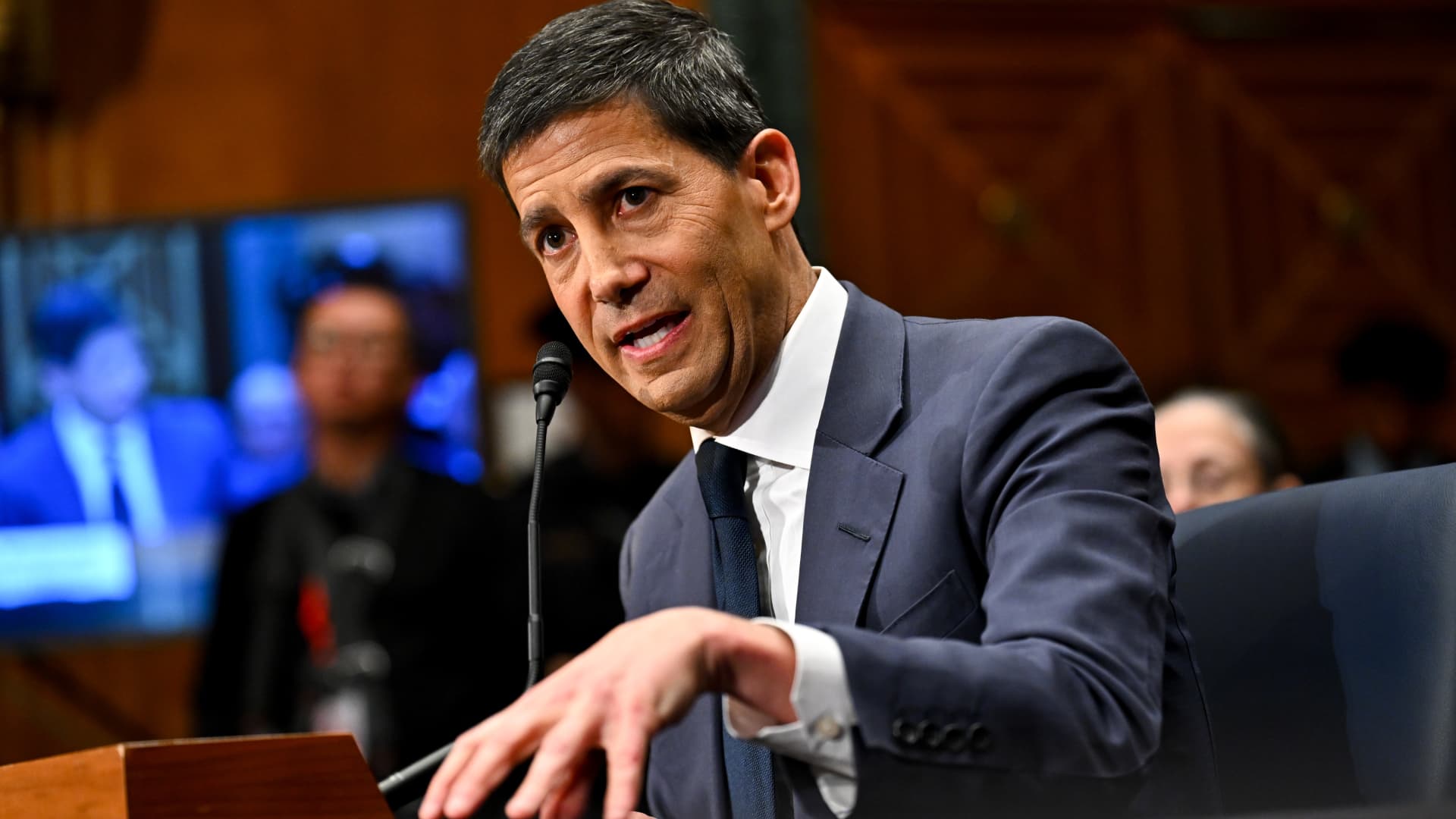
The confirmation hearing for President Donald Trump ‘s nominee to be the next Federal Reserve chairman once again sparked heated debate over central bank independence. Senators on the Banking Committee on Tuesday grilled Kevin Warsh about how independent the Fed can be when the president openly demands lower interest rates. Just hours before the hearing, Trump said on CNBC’s ” Squawk Box ” he would be disappointed if Warsh didn’t cut rates “right away” after being confirmed and taking the helm. The two questions that the market cares about most: Will the economic data support a rate cut? If not, will Warsh cut anyway and risk the Fed’s ability to act free of political interference — and, in turn, investors’ views as to the investability of U.S. financial markets? The cornerstone of the Fed has always been its independence to deliver, as it sees fit, on its dual mandate of maximizing employment and fostering stable prices. Warsh, who served as a Fed governor from 2006 to 2011, said during Tuesday’s hearing that the practice would not change under his watch. “I’m honored the president nominated me for the position, and I’ll be an independent actor if confirmed as chairman of the Federal Reserve.” He added that all presidents generally favor lower rates as they are supportive of the economy. The only difference with this president, he said, is that Trump says it out loud. Warsh stressed, however, “The president never asked me to predetermine, commit, fix, [or] decide on any interest rate decision in any of our discussions. Nor would I ever agree to do so.” Gauging the level of Fed independence is somewhat subjective because views on the future course of rates can vary greatly. Both before and following the Warsh hearing, the CME FedWatch tool gave nearly 70% odds on no rate cuts this year. That’s up from 54% on Monday. If confirmed, Warsh would take over the Fed in May, when from current central bank chief Jerome Powell ‘s term ends. Trump has criticized Powell for not cutting rates more aggressively — and off and on, has threatened to fire Powell, who was Trump’s pick for Fed chairman during his first administration. The current Trump Justice Department is investigating Powell over costs related to the ongoing renovations of two Fed buildings in Washington. Powell said the probe was retaliation for not doing the president’s bidding. Does that mean that an immediate rate cut under Warsh would put the market’s view of his independence at risk — or, is there indeed a path to lower rates? On the employment side of the Fed’s dual mandate, there is arguably room for a rate cut. Sure, the economy is resilient, especially looking at last month’s strong jobs report. However, when zooming out, the revisions to a middling January and a horrendous February, job creation was 7,000 positions lower than previously thought. The unemployment rate has been holding in the mid-4% range; however, it has certainly been rising since early 2023. With artificial intelligence ramping up, there are concerns that labor demand will wane versus historical trends. Indeed, Senate Banking Chairman Tim Scott , (R) South Carolina, alluded to the impact of AI during his line of questioning, and this is a topic that Warsh has called out as supportive of rate cuts. That puts the inflation mandate squarely in focus as the likely determining factor on rates. The Powell central bank has set its inflation goal at 2%. While running hotter than that in most price indexes, even when stripping out volatile food and energy costs, Warsh wants to change the way inflation is tracked. “I think that means a regime change in the conduct of policy. I think that means a different, new inflation framework,” the Fed nominee said, arguing that there needs to be more focus on the underlying trends and less so on one-off events. The greatest impact on inflation is the price of oil. The Fed does look to strip out the direct impact of oil by focusing on the core personal consumption expenditures (PCE) price index, which excludes food and energy due to their inherent volatility. However, crude prices represent an input cost for almost all goods and services — be it a direct input in the manufacturing process, or a logistics cost. That’s why we think that any consideration of rates does tie back into the war with Iran and where it goes from here. Should the war go on much longer, then it will prove difficult for Warsh to cut, barring a total slowdown in the economy that results in a material uptick in unemployment. However, should ongoing peace negotiations prove effective, ahead of Wednesday’s expiration of the U.S.-Iran ceasefire, and the war winds down soon, we think the focus for investors will turn back to AI and the job market. During his hearing, Warsh said that “interest rates need to be forward-looking,” highlighting that monetary policy can take anywhere from six to 12 months to make its way into the broader economy. It’s clear he understands the importance of thinking more about where the puck is going, rather than where it is or where it’s been. With that as a backdrop, we think rate cuts will prove to make perfect sense. Arguably, it’s this view on AI’s impact on the job market and the importance of thinking ahead that will bias Warsh to cutting rates when able, far more than pressure from the president. That brings us to another important consideration: a confirmation hearing is nothing more than an intense job interview. Warsh may well have said something to garner favor with Trump in hopes of being nominated. Once installed, Warsh would have far more to lose should it turn out that he was being anything but data dependent than he does by acting independently of the president’s wishes. Not only would that likely put his job at risk, but it would also destroy his reputation and legacy, two things that arguably matter much more than any job, to a man worth north of $135 million . That net worth, along with being married to Jane Lauder, the Estee Lauder heiress who is estimated to be worth somewhere in the area of $1.9 billion, according to Forbes, also speaks to a greater interest in maintaining Fed independence — and, in turn, stronger U.S. financial health, than avoiding retribution from Trump. “Fed independence means everything to me,” Warsh said at the hearing. Also encouraging, Warsh made quite clear that he understands that letting inflation rise unchecked is far more costly over the long run than higher rates. “Once you let inflation take hold in the economy, it’s more expensive and harder to bring it down, and so the fatal policy error going back four or five years is still a legacy that we’re dealing with,” Warsh said. However, should it be determined that higher rates are warranted, we do think Warsh understands that sometimes, you just have to take the medicine, even if it hurts, or comes with some not-so-nice words from Trump. Bottom line During Tuesday’s hearing, we think Warsh did a solid job in arguing that he will maintain independence not only because it’s what the market wants to hear but because it’s what’s best for the Federal Reserve and the United States broadly. At the end of the day, should he be confirmed, we believe that Warsh will indeed be data-dependent. It’s for that reason that we remain bullish on the market broadly and are holding on to our position in Home Depot . During Tuesday’s Morning Meeting, Jim Cramner said, “Warsh is going to save the housing market.” You don’t do that by destroying years of Fed independence overnight; you do it by being data dependent and fulfilling the Fed’s dual mandate. Should the war with Iran wrap up relatively quickly, the labor market is likely to come back into greater focus — and with it, the impact of AI. When it does, we think Warsh will cut rates, not because Trump demands it, but because the data, along with a bit of forward thinking, will warrant it. (See here for a full list of the stocks in Jim Cramer’s Charitable Trust.) As a subscriber to the CNBC Investing Club with Jim Cramer, you will receive a trade alert before Jim makes a trade. Jim waits 45 minutes after sending a trade alert before buying or selling a stock in his charitable trust’s portfolio. If Jim has talked about a stock on CNBC TV, he waits 72 hours after issuing the trade alert before executing the trade. THE ABOVE INVESTING CLUB INFORMATION IS SUBJECT TO OUR TERMS AND CONDITIONS AND PRIVACY POLICY , TOGETHER WITH OUR DISCLAIMER . NO FIDUCIARY OBLIGATION OR DUTY EXISTS, OR IS CREATED, BY VIRTUE OF YOUR RECEIPT OF ANY INFORMATION PROVIDED IN CONNECTION WITH THE INVESTING CLUB. NO SPECIFIC OUTCOME OR PROFIT IS GUARANTEED.