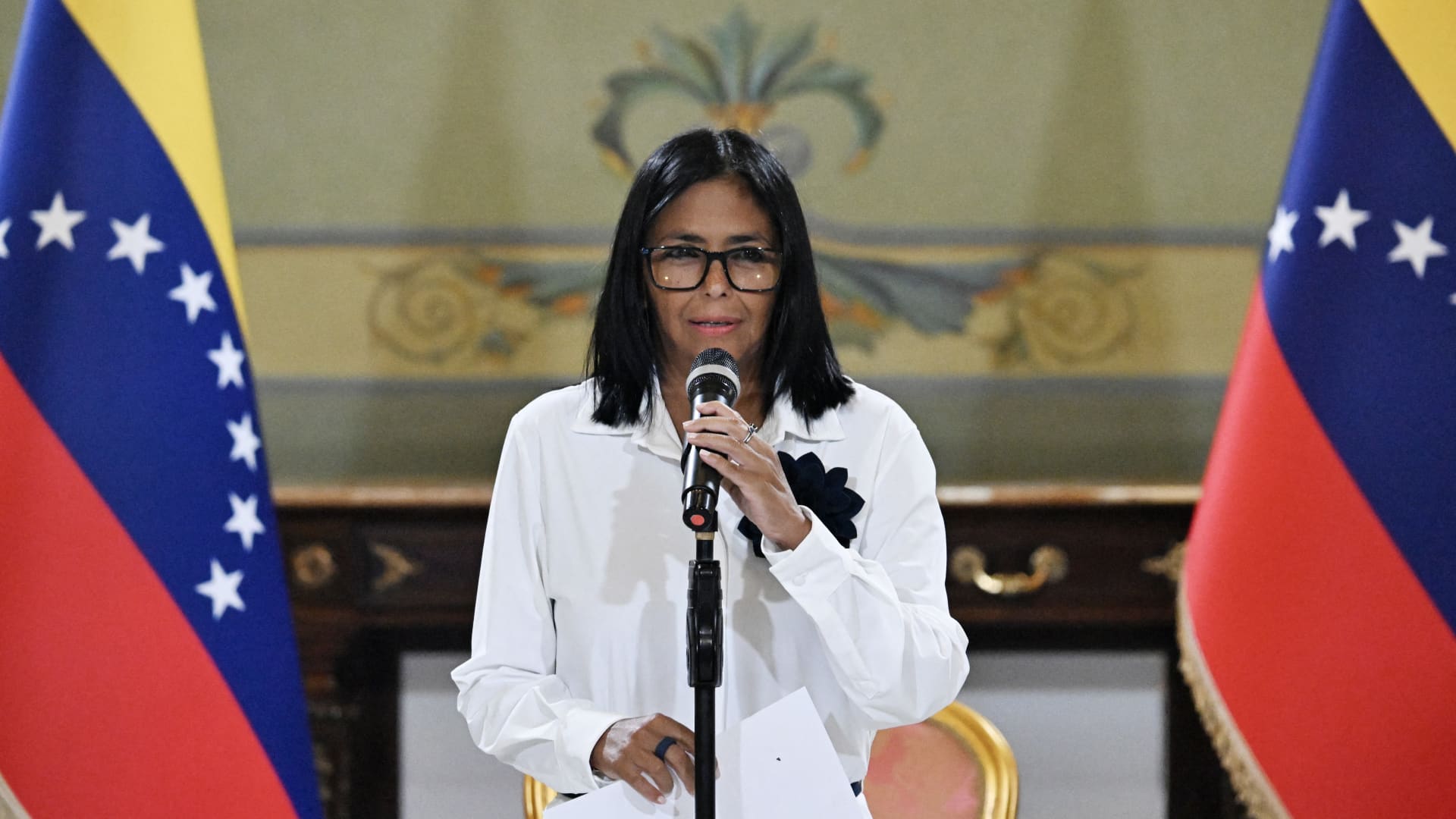
Venezuela’s interim President Delcy Rodriguez speaks during a press conference after a signing of an agreement ceremony between Chevron Venezuela and the national government at the Miraflores Palace in Caracas on April 13, 2026. Venezuela’s interim president, Delcy Rodriguez, praised on April 13 the progress made in the oil sector regarding foreign investment as part of the signing of agreements with the U.S. giant Chevron to increase crude oil production. (Photo by Juan BARRETO / AFP via Getty Images)
Juan Barreto | Afp | Getty Images
The International Monetary Fundand theWorldBankon Thursdayeach said they hadresumeddealingswithVenezuela, which had been pausedsince 2019 dueto government recognition issues.
The move paves the way for a fullIMFassessment ofVenezuela’s economy for the first time in some 20 years and could eventually unlock billions of dollars in funding via frozen special drawing rights.
IMFManaging Director Kristalina Georgieva saidin a statement that the Fund,guided by the views of a majority of its members,wasnow dealing withVenezuela’s governmentunder the administration of the South American nation’s interim President Delcy Rodríguez.
TheWorldBankGroup also issued a statement announcing it was resuming dealings withVenezuela’s government under Rodríguez. Its last loan, the statement said, was in 2005.
NeitherVenezuela’s information ministry nor its centralbankimmediately responded to requests for comment.
The resumption of a formal relationship comes after U.S. President Donald Trump’s administration in Januaryousted President Nicolas Maduroin a raid on Caracas. Since then, Washington has been working with Rodríguez and is looking to expand the U.S. presence inVenezuela’s oil and mining sectors.
Debt restructuring and short-term funding hopes
JPMorgan has estimated thatVenezuela’s special drawing rights, assets that are available to countries with engagement with theIMF, are worth $5 billion.
Investors have bet big onVenezuela’s bonds in hopes that the change in government can enable a debt restructuring. Analysts estimate thatVenezuelahas about$60 billion of defaulted bondsoutstanding, but total external debt is pegged at roughly $150 billion to $170 billion.
TheIMFlast month said it was beginning to re-engage withVenezuela, starting by collecting basic data and assessing the economy after years of gaps. But a full sovereign restructuring is typically underpinned by a newIMFlending program – and the data that comes with it regarding what level of debt is sustainable for a country.
About The Author