
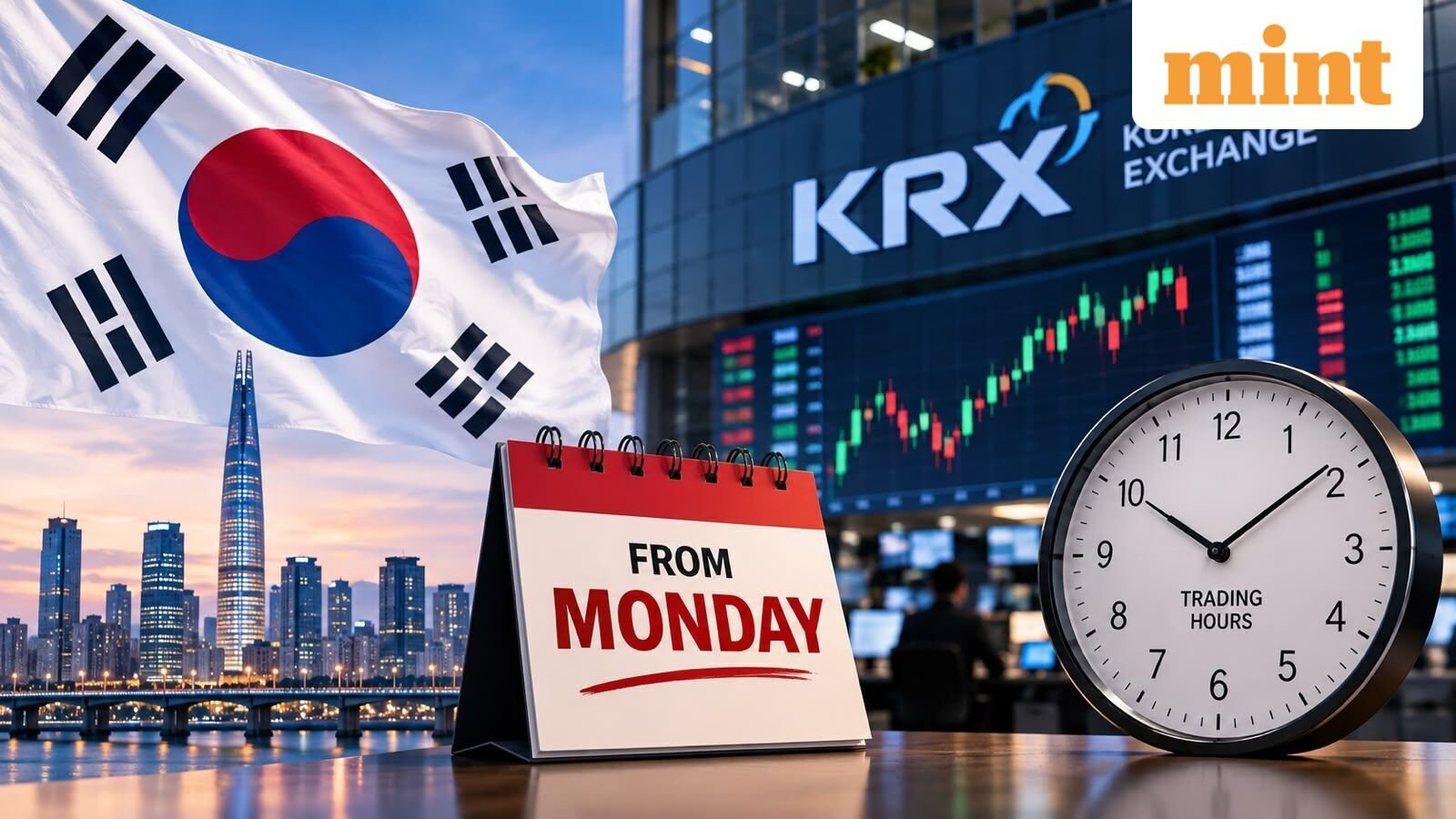
South Korea extends its stock market trading hours starting Monday, 14 September, to make its equity market more accessible to overseas investors and attract greater international capital.
The Korea Exchange (KRX) will extend trading until 8 p.m., compared with the current regular closing time of 3:30 p.m. The extended session will cover around 2,400 stocks listed on the Kospi and Kosdaq.
Kospi index was trading at 6,761.11, down 148.80 points or 2.15% from its previous close of 6,909.91.
The index opened at 6,692.61, indicating a weak start to the session. Despite the latest decline, the Kospi has gained nearly 99% over the past year, highlighting its strong longer-term performance.
Investors can engage in short-selling during the additional trading hours. However, exchange-traded funds (ETFs) will initially remain outside the extended session.
The move forms part of South Korea’s broader efforts to modernise its equity market and bring trading hours closer to those of major global financial centres.
KRX eyes eventual round-the-clock trading
The extended evening session is being viewed as another step towards the Korea Exchange’s longer-term ambition of offering 24-hour stock trading.
The exchange plans to introduce pre-market trading by the end of 2027, further expanding the window available to investors.
Stock market rally drives trading push
South Korea is introducing the changes after a strong rally in its equity market this year, fuelled in part by investor enthusiasm surrounding artificial intelligence.
The Kospi index remains up about 64% in 2026, despite retreating around 22% from its July peak.
Alternative platform sets the precedent
Extended trading is not entirely unfamiliar to South Korean investors. Alternative trading platform Nextrade launched pre-market and evening trading sessions in March 2025 and quickly gained traction.
Within months, the platform had captured nearly a third of overall trading activity, with retail investors accounting for more than 80% of transactions conducted outside regular market hours.
Institutional participation remains key
The bigger challenge for the Korea Exchange will be attracting sufficient institutional liquidity during the extended session.
Foreign institutions could remain cautious about executing large trades in major companies such as Samsung Electronics and SK Hynix until the evening market develops enough buyers and sellers to support sizeable transactions.
Lower liquidity could result in wider bid-ask spreads, higher trading costs and sharper price movements.
Currency hedging poses another challenge
Overseas investors could also face challenges in managing currency exposure. Although South Korea’s foreign exchange market operates around the clock, liquidity can be thinner outside peak trading periods.
This could make currency hedging more expensive for international funds trading Korean equities during extended hours.
Faster reaction to global news
Supporters of longer trading hours argue that the move will provide investors with greater flexibility and allow them to react more quickly to corporate earnings, company announcements and other market-moving developments released after the regular session.
South Korea’s decision comes amid a broader global trend towards longer equity-market trading hours, with major US exchanges including Nasdaq and the New York Stock Exchange also pursuing expanded trading access.
(With inputs from wire agencies)
Disclaimer: This story is for educational purposes only. The views and recommendations above are those of individual analysts or broking companies, not Mint. We advise investors to check with certified experts before making any investment decisions.
About The Author
