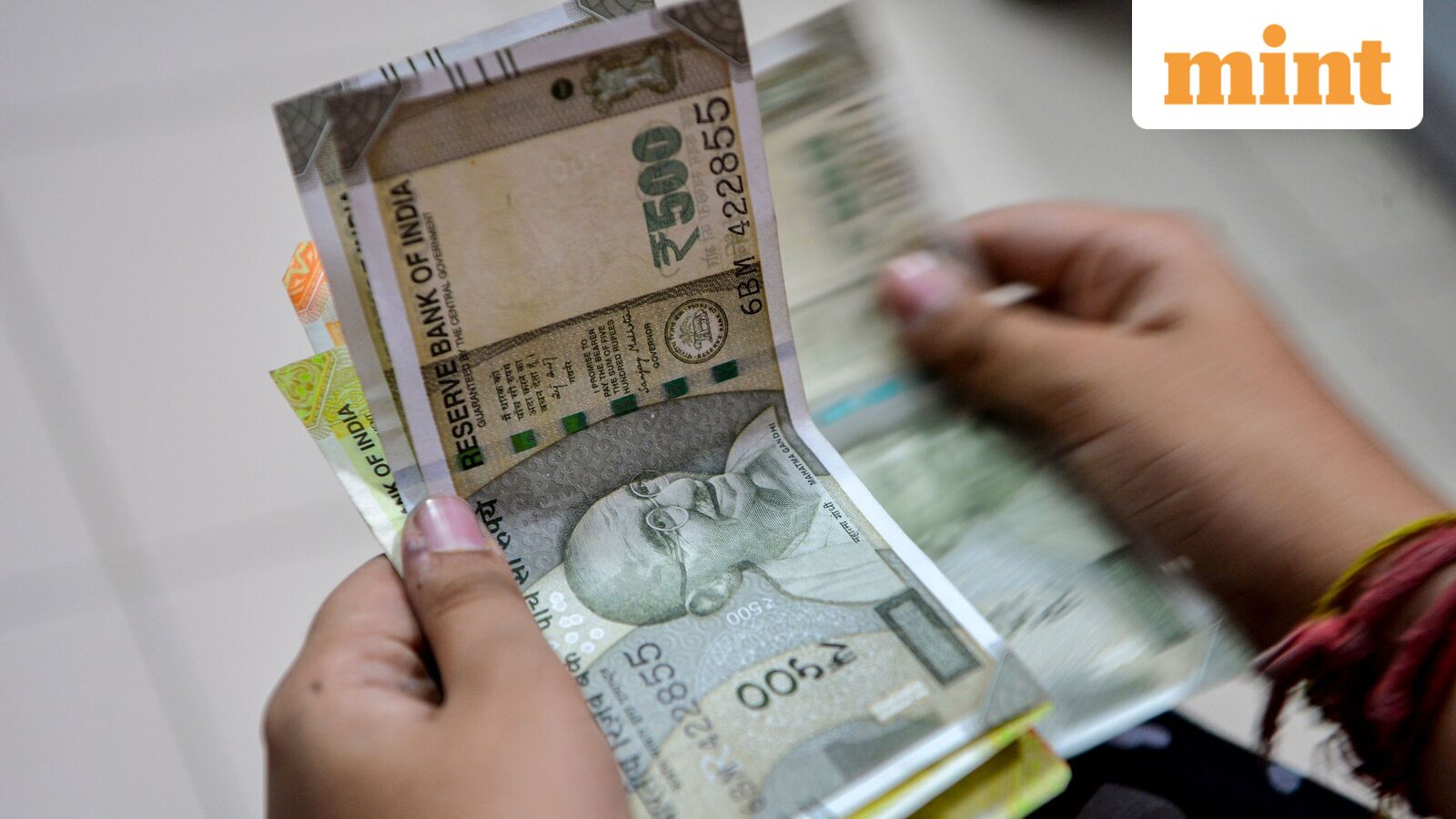
USD vs INR: The Indian rupee fell to a fresh all-time low on Monday, reversing early gains, as fundamentals remained skewed against the currency.
The rupee weakened past the 95 per dollar mark for the first time to 95.20 per dollar, down 0.3% on the day. It had opened over 1% higher after the Reserve Bank of India’s (RBI) decision to tighten limits on banks’ FX positions; however, the relief proved to be short-lived.
So far in March, the domestic unit has declined more than 4% as of Friday, putting it on track for its worst monthly performance in seven years.
What’s driving rupee today?
A Reuters report revealed that the RBI’s move to impose fresh limits on banks’ onshore positions late on Friday prompted lenders to unwind dollar holdings in the domestic market while simultaneously building positions in the non-deliverable forward (NDF) market.
Given the sizeable exposure — estimated at $25 billion to $35 billion — this adjustment pushed the onshore dollar/rupee rate to trade significantly below the NDF rate.
Companies took advantage of the arbitrage opportunity by buying dollars in the onshore market and selling them in the NDF segment, which capped the rupee’s gains and resulted in uneven price movements across markets.
At the same time, strong importer demand from large corporates to hedge near-term liabilities added pressure, causing the rupee to give up its early rally. The rupee jumped more than 1% to 93.60 at the open.
Experts believe that the RBI’s decision comes at a time when the rupee is under considerable strain. They had opined that after the initial leg-up, the rupee would be dictated by fundamentals such as oil prices, FPI flows, and US dollar strength.
Geopolitical shocks of this nature typically trigger a classic risk-off reaction—oil prices surge, the US dollar strengthens, and emerging market currencies like INR weaken.
“From the RBI’s side, the first priority remains volatility management rather than defending a specific level. Continued calibrated intervention in the FX market—both spot and forwards—can smooth disorderly moves. The RBI can also tactically deploy tools like sell-buy swaps to manage dollar liquidity without excessively draining rupee liquidity. Given the recent tightening in banking liquidity due to FX intervention and tax outflows, liquidity infusion via VRR auctions or OMOs becomes crucial to ensure domestic rates don’t spike and deter growth,” said Kunal Sodhani, Head – Treasury at Shinhan Bank.
Can rupee depreciate to 100 per dollar?
The rupee breaching 95 is on the back of a confluence of forces building for months — Brent crude above $105, FPI outflows exceeding $11 billion in March, and a widening current account deficit.
Going ahead, Anindya Banerjee, Head of Commodity and Currency Research, Kotak Securities, said that for the rupee to touch and cross 100, crude oil has to be well above $200 a barrel. But much before those levels are reached, demand destruction will need to intensify.
Banerjee further said that he expects the RBI to actively intervene, with strong action likely if USD/INR moves above 95-96.
He further explained that India is better placed than most—effective diplomacy has secured alternative supply routes and comfortable inventory levels, insulating us from an availability crisis. The challenge remains the price shock, which is an exogenous factor beyond any one country’s control.
“Once the disruption eases, energy prices could correct sharply, and the rupee—backed by India’s strong structural fundamentals—stands to recover just as quickly,” he added.
Meanwhile, Naveen Mathur, Director – Commodities & Currencies, Anand Rathi Share and Stock Brokers, said that a move toward 100 per dollar would require a severe tail-risk event such as crude sustaining above $130, sharp capital flight, and limited RBI firepower, which remains a low-probability, but not impossible, scenario.
“The rupee is likely to remain highly volatile in the near term, with a clear depreciation bias driven by the US–Iran escalation. Brent sustaining above $110-115/bbl and continued FPI outflows (MTD: ₹1,11,377 crore- the highest in 17 months) are already pushing USD/INR toward the 94–95 zone,” Mathur said.
Mathur further noted that RBI intervention and regulatory tightening should cap the extreme downside, keeping the trading range at 92–96 in the near term. However, in a prolonged conflict scenario, with an oil shock and a widening CAD, the rupee could test 97–98, he opined.
(With inputs from Reuters)
Disclaimer: This story is for educational purposes only. The views and recommendations above are those of individual analysts or broking companies, not Mint. We advise investors to check with certified experts before making any investment decisions.
About The Author