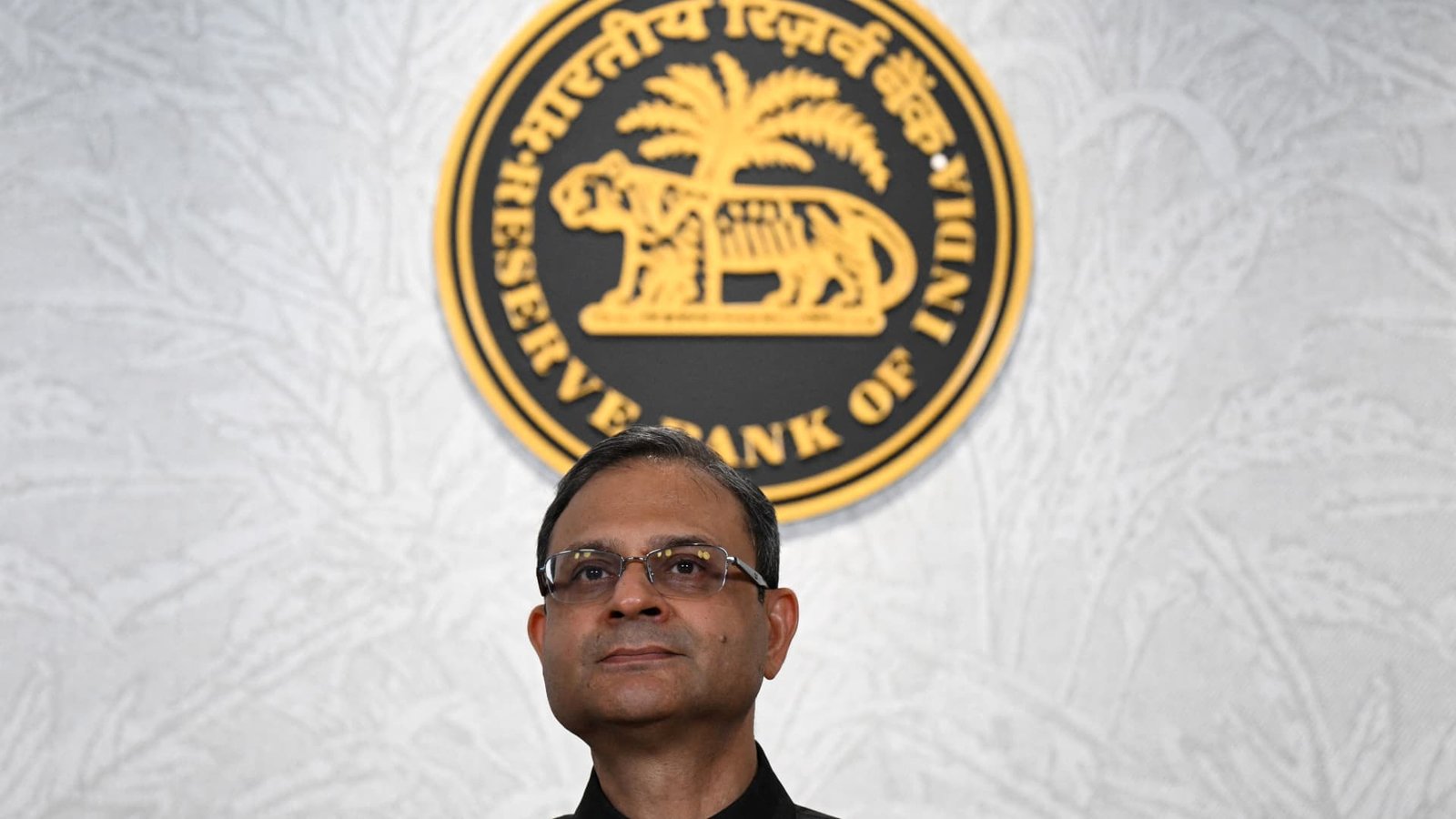
Reserve Bank of India (RBI) Governor Sanjay Malhotra speaks during a press conference after the monetary policy review at RBI headquarters in Mumbai on December 5, 2025. India’s central bank cut interest rates on December 5 as low inflation provided room to help cushion the world’s fastest-growing major economy against US President Donald Trump’s tariff blitz. (Photo by Punit PARANJPE / AFP via Getty Images)
Punit Paranjpe | Afp | Getty Images
India’s central bank on Wednesday held interest rates at 5.25% for a fifth time in a row, even as the country’s retail inflation has crossed the Reserve Bank of India’s medium-term target of 4%.
Economists polled by Reuters had forecasted the policy rate to remain unchanged.
Several Asian countries including Japan, the Philippines, Indonesia, and South Korea have raised interest rates in the past few months to curb inflation as the conflict in the Middle East has driven energy prices higher.
India’s consumer inflation touched an 18-month high of 4.38% in June, as oil prices surged. Since May, the government has partially passed on the fuel price increases to the public, adding to cost pressures.
The Indian central bank, however, has repeatedly emphasized that its focus is on core inflation — which excludes energy and food prices — which was at 3.7% at the end of April, and is expected to climb up to 4.7% in the financial year ending March 2027.
But a prolonged rise in energy prices could lift core inflation as well through higher input, transportation, and operational costs.
Inflationis expected to stay above 5% for eight months starting October, HSBC Global Investment Research said in a report on Monday.
“That’s a level that will be difficult for both the RBI and markets to overlook,” it said, adding that it expects the central bank to raise rates in October and December by 25 basis points each.
India, the world’s fastest-growing major economy, is among the countries mostvulnerable to the supply disruptionscaused by the Iran war. The South Asian country meets nearly 85% of its fuel needs via importsand withStrait of Hormuza key supply route prior to the war.
India is also facing the risk of El Niño this year. Despite the copious downpour that led to flooding across many parts of the country in the past few weeks, India still faces the prospect of a deficient monsoon this year.
India is facing strong macroeconomic headwinds with both its current account and fiscal deficit widening as of the quarter ended June, as per LSEG data. This, along with the persistent capital outflows, has made one of the worst performing Asian currencies.
About The Author