Hello, this is Priyanka Salve, writing to you from Singapore.
Welcome to the latest edition of “Inside India“— your one-stop destination for stories and developments from the world’s fastest-growing large economy.
India’s growing energy requirements are becoming fertile grounds for a contest between the U.S. and Russia, as the two geopolitical rivals seek a bigger share of the world’s third-largest energy market. This week I spoke to energy experts to understand how the Iran war, trade deals and tariffs are reshaping India’s energy sourcing mix.
Any thoughts on today’s newsletter?Share themwith the team.
The big story
India is becoming a prime market for the U.S. and Russia, as the two adversaries seek to gain a larger wallet share of the world’s third-largest energy consumer.
The South Asian country is the world’sthird-largestimporter of crude,fourth-largestbuyer of liquefied natural gas, or LNG, and thesecond-largestimporter of liquefied petroleum gas, or LPG.
While Russia wants India to continue buying its crude, despite mounting pressure of harsher U.S. tariffs, Washington has been pushing New Delhi to buy Venezuelan oil to replace Russian barrels.
Experts told CNBC that replacing Russian crude supplies at a time when supply from the Middle East is constrained would be “challenging” for New Delhi, even as the country ramps up purchases of Venezuelan crude.
“If U.S. and Venezuelan crude are combined, the Americas are becoming more important to India’s crude basket,” Sumit Ritolia, lead research analyst at market intelligence firm Kpler, told CNBC.
Indian refiners cannot replace Russian or Middle Eastern barrels with U.S. crude as it is of a “relatively light” variety, while several Indian refineries are configured to process medium and heavier crude, he said. The “heavier” quality Venezuelan crude solves that problem.
India’s Venezuelan crude imports have risen from zero in March to 383,000 barrels per day so far in August, according to Kpler data. Together with U.S. crude imports, the two sources accounted for about 11% of India’s crude imports over that period.
India’s top energy suppliers
On Monday, Russian President Vladimir Putin said that “Russia is expanding its exports [to India] andis ready tocontinue doing so,” hinting at Moscow’s increasing share of crude supplies to New Delhi. It is now India’s largest crude supplier, accounting for more than 50% of the country’s oil imports in June and July and nearly 43% in August so far, according to Kpler data.
Between April and July, Russian exports to India rose nearly 60% from last year, according to India’s latest trade data. But Moscow isn’t the only one gaining a larger share of India’s energy market.
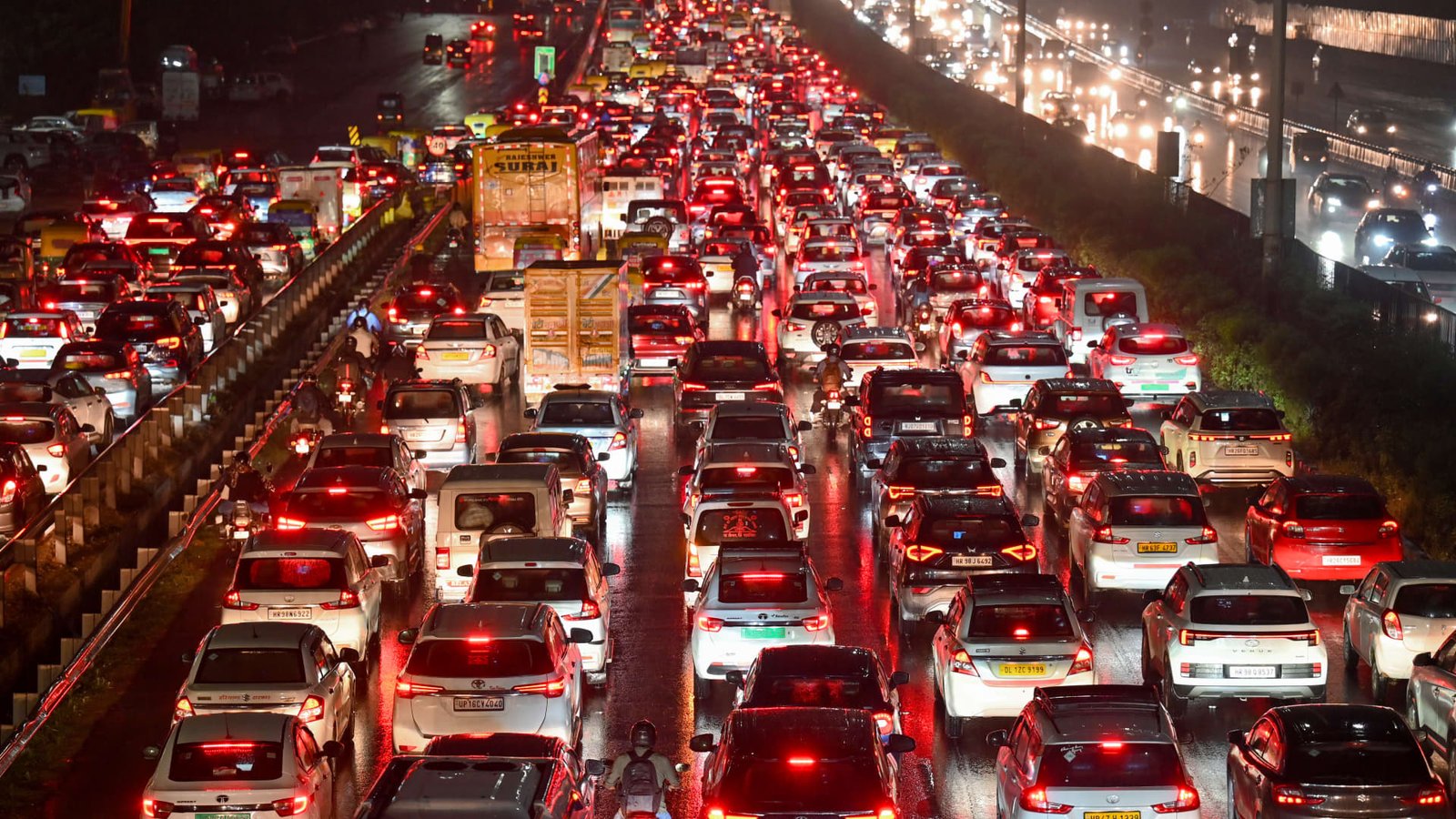
GURUGRAM, INDIA – MARCH 18: Traffic congestion at Delhi-Gurugram expressway during the rain near Signature Tower flyover, on March 18, 2026 in Gurugram, India.
Hindustan Times | Hindustan Times | Getty Images
The U.S. has become India’s top supplier of LPG, which is used as a primary cooking fuel in the country, as well as for LNG, which has industrial applications. In July, over 70% of India’s LPG imports and nearly a third of LNG supplies originated from the U.S, as per Kpler data.
The U.S. energy supplies to India have been “unmatched,” Sergio Gor, the U.S. ambassador to India, said at an event in New Delhi on Saturday, adding that Washington’s LPG and LNG supplies to India had risen over 60% over last year.
“The Middle East — particularly Qatar, the UAE and Saudi Arabia — traditionally dominated India’s LPG imports due to its logistical advantage,” said Pankaj Srivastava, senior vice president of commodity markets-oil at Rystad Energy. The Iran war has scuttled that advantage.
Since the start of the war, the U.S. has emerged as a leading supplier “supported by bilateral energy agreements, higher US production and constraints on Middle Eastern supply,” Srivastava said.
But the U.S. also wants a bigger share of India’s crude basket. Over the last 12 months, it has used both tariff threats and the promise of a lucrative trade deal to build pressure on India to cut back its Russian crude imports.
In August last year, Washington imposed 25% tariff on imports from India as a penalty for buying Russian oil, only to revoke them in February this year.
U.S. President Donald Trump said the U.S. had agreed to cut tariffs against India to 18% after India had “agreed to stop buying Russian Oil, and to buy much more from the United States and, potentially, Venezuela.”
India, however, has not endorsed the details shared by Trump and maintains that ensuring energy security is the sole driver of its energy purchases.
The tariff threat
Steep tariffs could make a comeback as the Russia Sanctions bill that proposes up to a 100% levy on countries buying Russian energy supplies will move to the U.S. House for final approval in September.
The last time India faced 25% punitive tariffs, the country’s imports from Moscow fell more than 13% in the financial year ending March 2026, while U.S. exports to the South Asian country rose nearly 16%.
That development has not been lost on the Russian leadership.
Putin, during his meeting earlier this week with India’s Foreign Minister S. Jaishankar, alluded to the decline in trade between the two countries last year, before adding that “this year it has been steadily rising.”
In August last year, after the U.S. tariffs came into effect, India’s Russia oil purchases gradually declined, falling in February this year to its lowest level in over three years at 1.06 million barrels per day. Barrels from Iraq, whose revenue is reportedly controlled by the U.S., on the other hand, rose during the same period, as per Kpler data.
But experts told CNBC that the latest U.S. tariff proposal is unlikely to lead to any immediate reduction in India’s purchase of Russian oil, simply because global crude supply is too constrained.
We do not expect Russian imports to ease currently,Ritolia of Kpler said, adding that “replacing Russian barrels is technically feasible, but economically and politically fraught.”
Need to know
India draws in $73 billion in 11 weeks, powered by special deposits for non-resident Indians
New Delhi’s bid to attract foreign funds through a special scheme has helped power $73 billion in inflows in the last 11 weeks. The move aimed to shore up the Indian rupee, which remains weak amid a rising energy import bill and an exodus of foreign capital.
Porsche inks $1.5 billion deal for AI deployment with India’s largest IT services firm Tata Consultancy
Porsche hassigned a five-year contractworth 1.25 billion euros ($1.46 billion) for artificial intelligence with India’s largest IT services firm, Tata Consultancy Services. As part of the deal, TCS willacquire Porsche’s IT consultingbusiness, MHP, for 320 million euros.
Singapore’s Temasek is on a hot streak in India as three bets surge after IPOs
Singapore state investor Temasek Holdings is on a hot streak in India, where three of its portfolio companies have gained more than 30% after market debuts this week.
Coming up
Aug. 28: India industrial output for July
Aug. 31: India GDP data for April-June
About The Author