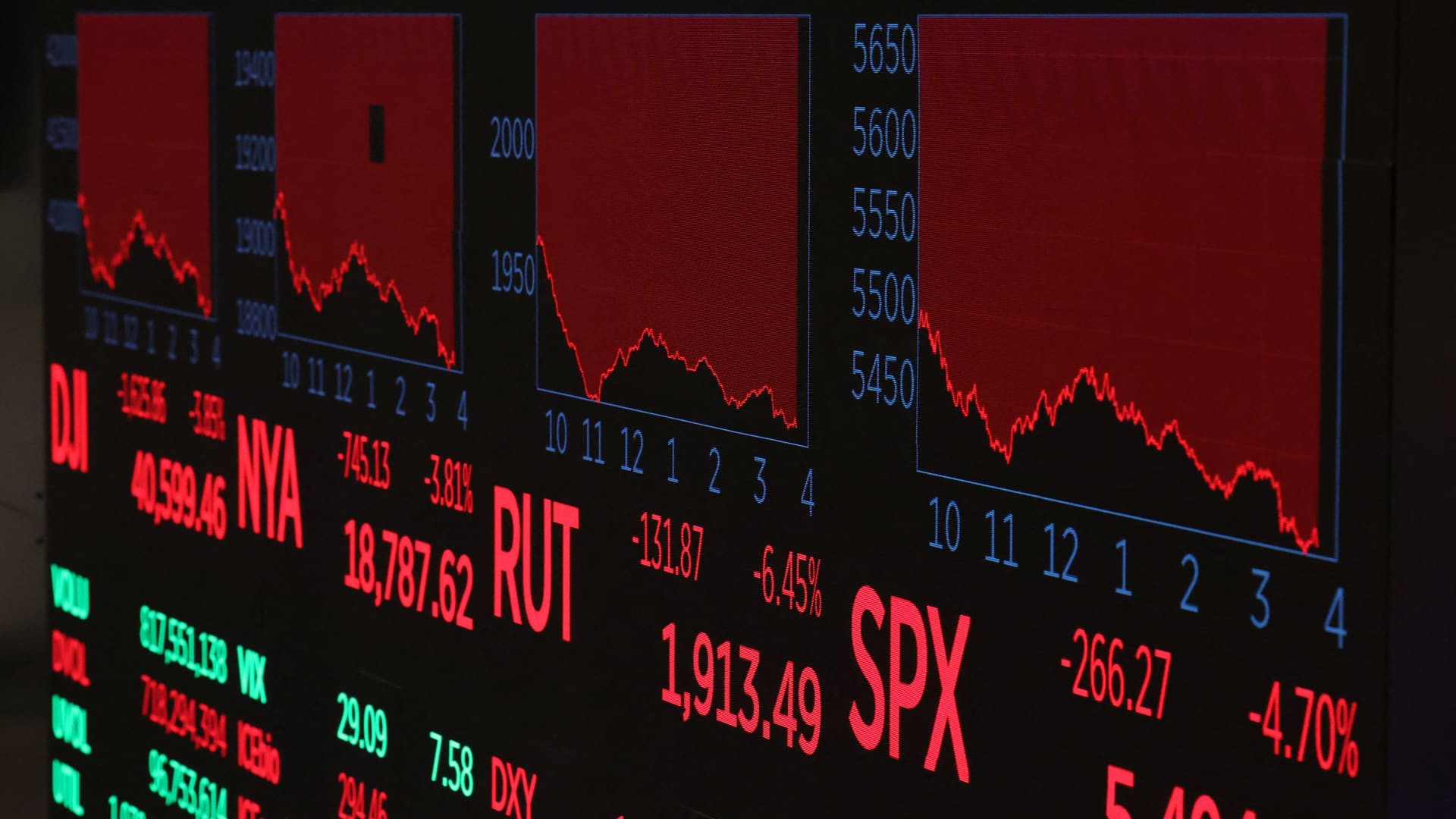
It has been 44 days since the S & P 500 Index traded at an all-time high of 6,144. At noon on Friday April 4, the large-cap index stood 1,025 points lower at 5,119. That’s a decline of almost 17%. Declines of 10% or more qualify as “corrections,” while declines of 20% or more become “bear markets.” After two consecutive years of 20%+ returns for the S & P, a correction is hardly unexpected. There are ample emotion-packed, political discussions about tariffs, so let’s focus on the math, investment discipline and market history. Oakmark’s Bill Nygren, a pro’s pro if there ever was one, appeared on Squawk Box Thursday morning and said, “We try to estimate what a company might be worth five to seven years from now, and then we look for opportunities to buy at a large discount to that. And I think today’s market does give us that kind of opportunity.” ( He listed a few names he likes, available on CNBC.com.) Warren Buffett says, “Americans are funny. They love stocks when they’re expensive and hate them when they’re cheap.” While an 11% retreat in prices may not be the bottom, disciplined investors ignore their emotions and focus on long-term opportunities. Historically, according to Ned Davis Research, buying after a 10%+ decline at the lows has led to positive returns 90% of the time a year later and 87% of the time 24 months later. This isn’t to say that prices won’t go lower. Whenever the administration changes policy, prices will change. Unable to predict D.C.’s priorities, investors become defensive. Dollar cost averaging is a tried-and-true investment discipline because it is dispassionately mechanical. If an investor has cash that is earmarked for stocks, a break of 10% or more should trigger at least a “first bite of the apple.” A decline of 15% for me justifies a second bite, and 20% a third. While the big tech names have been beaten down most severely, there’s nothing wrong with finding other forgotten names with strong balance sheets that are selling at very low price-to-earnings multiples. Buffett has also said that if he didn’t manage his own money, he would simply own an S & P 500 index fund. I give the same S & P 500 index fund advice — especially to smaller and less sophisticated investors. I did a little buying Thursday. The keys to success in any investment are time, quality and how much you pay. Once invested, STAY INVESTED. It’s even OK to second guess yourself and for a while feel foolish. Just don’t do anything with your investments. Time is your friend and the key to success. Maya Angelou said, “Every storm runs out of rain eventually.” Hang in there.