Japan's bond market may be the canary in the coal mine for the AI stock rally
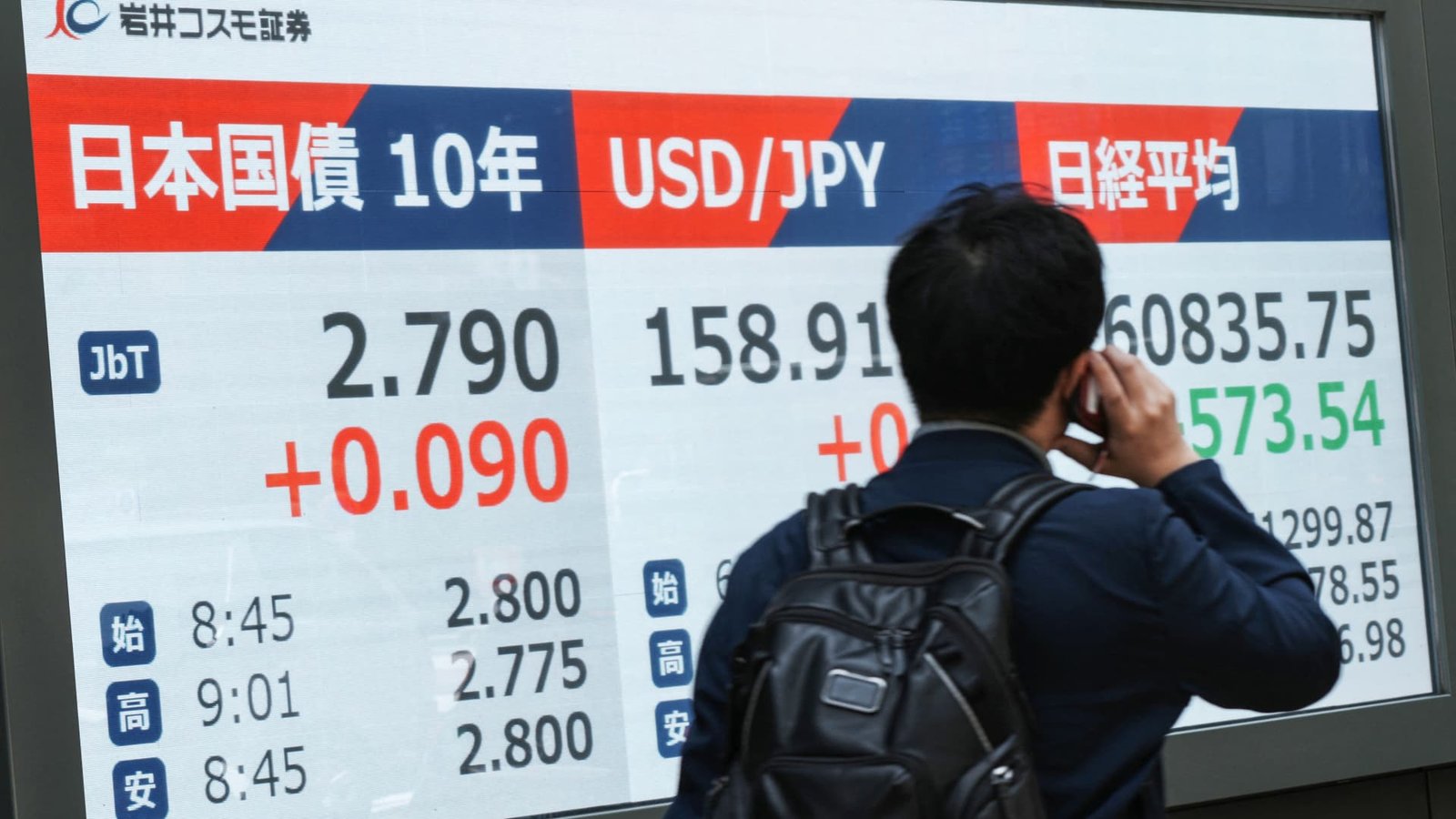
Rising bond yields, some which have reached multidecade highs this week, are in danger of putting this year’s AI-led stock market rally in jeopardy but it is not U.S. Treasurys that are leading the charge. Japan — and to a lesser extent, the U.K. and France — face fiscal challenges comparable to those of the U.S., while also being more exposed to energy-driven inflationary pressures. U.S. investors who wish to evaluate their risk need to be looking to developments abroad for clues to how markets stateside may trend. The yields for Japan’s 30-year bonds and the USD/JPY quotes should be on your screen if you track the markets regularly. Economy, national debt, AI or price sensitivity? One prevailing narrative behind the recent increase in U.S. yields is an improved economic outlook, supported by a surge in capital spending on artificial intelligence. If that were truly the case, the softer labor , inflation , and retail sales data released over the past few weeks should have pushed bond yields lower. Instead, the 30-year Treasury yield hit an intraday 19-year high of 5.33% on Tuesday. A $1.8 trillion year-to-date deficit that has pushed the national debt to almost $40 trillion has tempered demand for U.S. debt while massive corporate issuance from hyperscalers to fund the AI build out is competing with new Treasury issuance. Additionally, “there is a broader trend of the buyer base shifting towards price-sensitive investors. Private investors now hold 73% of the Treasury market, up from roughly half a decade ago,” Anshul Pradhan, head of U.S. rates research at Barclays Capital, wrote in a note. Bessent moves to calm markets Inflation expectations have also driven bond yields higher globally as a resolution in the Middle East appears increasingly distant. Yields and oil prices reached interim bottoms in early August after U.S. Treasury Secretary Scott Bessent told CNBC that a deal to open the Strait of Hormuz was likely imminent. Since then, 30-year Treasury yields rose 11 basis points and JGB yields 23 basis points, before Bessent again temporarily calmed markets following the announcement that the Treasury would more than double its long-term bond repurchases. Higher yields could ultimately derail the AI rally by reducing the value of future earnings , making AI-related capex more expensive to finance, and increasing the cost of leverage for investors. It starts with Japan and moves around the world These worries over yields begin with Japan. Unlike the U.S., Japan needs to import about 90% of its energy requirements. As energy prices rise, so do its fiscal problems. Prime Minister Sanae Takaichi’s plan to cut taxes on food are aimed at boosting consumer spending and growth but could likely add to what is already the highest public debt level in the developed world. Japan’s GDP grew by a slower-than-expected 1.1% in the second quarter compared with analysts’ expectations of 2.0%, according to data released Monday. Instead of falling, Japanese yields rose following the release, sparking fears of stagflation. Yen sales cannot fix the problem in the long term Fiscal policy concerns and a low short-term policy rate (1.0%) relative to other major central banks has weakened the yen to 40-year lows against the U.S. dollar. When the yen weakens it makes imports such as energy and food more costly for Japanese households. To stem the yen’s decline, the Bank of Japan has been buying yen in the currency market but to do so it needs sell U.S. Treasurys. As Japan is the largest foreign holder of Treasurys, such intervention can put upward pressure on U.S. yields. In early August, the U.S. stepped in to coordinate joint intervention in the yen, a move likely aimed at stemming Treasury sales by Japan. Japan can use the Federal Reserve’s standing Foreign and International Monetary Authorities Repo Facility to avoid outright sales. Just like sales of strategic oil reserves, sales of currency reserves are finite and temporary, the clock is ticking for Japan. The latest round of intervention is already starting to lose its impact. USD/JPY fell from around 164 to 155, but has since climbed back to near 158.50. 160 will be key psychological support. Whether the BoJ can defend this level, with or without U.S. support, will be crucial for markets. U.S. – Japan entanglement deepens If the U.S. participates in another round of intervention, the two countries could become even more closely linked, with Washington providing additional currency support and potentially helping Japan secure energy supplies, while Tokyo could face pressure to accelerate rate hikes and provide military support for the Middle East campaign. Quicker rate hikes could be a Catch-22, according to JPMorgan Japan chief economist Ayako Fujita. “If the BoJ accelerates rate hikes to prevent further yen depreciation, the government’s interest expenses would rise more than previously assumed, raising the risk of further increasing fiscal concerns in the JGB market,” she wrote in a recent note. As the two countries become increasingly intertwined, investors need to be more alert to disruptions in Japan’s bond and equity markets, which could quickly ripple across global markets. Europe’s twin yield pressures Similar concerns plague Europe and have also led to rising yields. The region faces its own energy challenges, with EU gas storage only 60.8% full as of Aug. 15 — the lowest level for this point in the year over the past five years. French politicians are caught in gridlock over the 2027 budget as worries over unsustainable deficits swirl. Meanwhile, the U.K. may have a new prime minister, but its fiscal challenges are far from resolved . Here are three things to watch over the next month in global markets: S & P Global Flash Purchasing Managers’ Indexes for the major economies on Friday: If bond yields push higher on weaker-than-expected data, it could confirm stagflationary fears. Japanese consumer price index for July will also be released Friday. The Jackson Hole Economic Policy Symposium, Aug. 27-29: While the schedule has yet to be released, the main event will likely be a speech by Federal Reserve Chair Kevin Warsh on Friday morning, but don’t sleep on some of the potential comments on bond yields from other central bankers in attendance. Last year, Bank of Japan Governor Kazuo Ueda, European Central Bank President Christine Lagarde and Bank of England Governor Andrew Bailey all spoke on the same panel. The Bank of Japan rate decision on Sept. 18: Prediction markets are currently showing an 84% chance of a 25-basis point hike. Comments surrounding the potential for future hikes are what will likely move the needle. The BoJ decision will be a further data point that can be combined with the Fed’s decision on Sept. 16 to provide a more wholistic view on potential path of global rates. What starts in Japan and Europe may not stay there, as rising yields, fiscal pressures and energy-driven inflation increasingly reinforce one another across global markets. Investors can watch Korea’s Kospi index for signals about where the semiconductor trade is headed, but Japan is likely to provide the earliest warning signs of whether rising global yields ultimately derail the U.S. bull market. THIS CONTENT IS PROVIDED FOR INFORMATIONAL PURPOSES ONLY AND DOES NOT CONSTITUTE FINANCIAL, INVESTMENT, TAX OR LEGAL ADVICE OR A RECOMMENDATION TO BUY ANY SECURITY OR OTHER FINANCIAL ASSET. THE CONTENT IS GENERAL IN NATURE AND DOES NOT REFLECT ANY INDIVIDUAL’S UNIQUE PERSONAL CIRCUMSTANCES. THE ABOVE CONTENT MIGHT NOT BE SUITABLE FOR YOUR PARTICULAR CIRCUMSTANCES. BEFORE MAKING ANY FINANCIAL DECISIONS, YOU SHOULD STRONGLY CONSIDER SEEKING ADVICE FROM YOUR OWN FINANCIAL OR INVESTMENT ADVISOR.