JPMorgan thinks Kospi's torrid AI rally could have another 25% or more to run
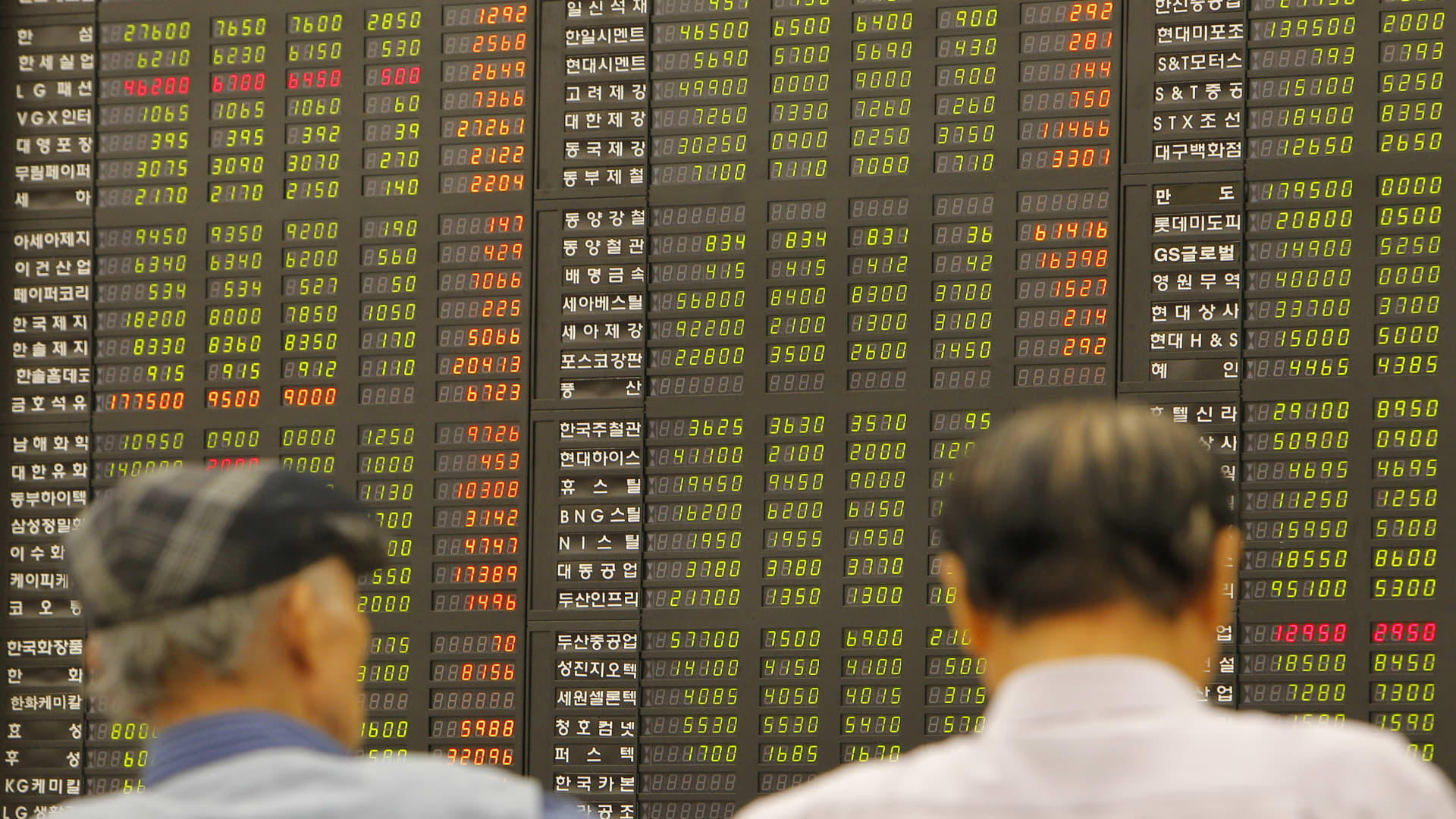
Investment banks are scrambling to raise targets for South Korea’s benchmark index as a blistering artificial-intelligence rally powered by semiconductor giants shows little sign of slowing, with JPMorgan now projecting the Kospi could climb another 25% or more. The bank on Monday raised its bull-case target for the Kospi to 10,000 from 9,000, implying gains of more than 25% from current levels, as surging demand tied to AI infrastructure continues to turbocharge South Korea’s semiconductor giants. This comes as the country’s benchmark index hit another record high, leading gains in the region even amid rising oil prices and escalating tensions between the U.S. and Iran. The Kospi has made over 70 new all-time-highs in the past year, JPMorgan said. The gauge is already up a stunning 80%-plus this year, following a 76% advance in 2025. “Korea remains our most preferred market in the region and we raise our base/bull/bear case Kospi targets to 9,000/10,000/6,000,” JPMorgan strategists led by Mixo Das wrote in a note. .KS11 1Y mountain Kospi’s gains in the past year Similarly on Friday, Goldman Sachs lifted its 12-month base target for the index to 9,000 from 8,000, while Citi raised its target to 8,500 from 7,000. The bullish calls come as global investors pour into South Korea’s chip champions like Samsung Electronics Co. Ltd. and SK hynix Inc. — which because of their size also have huge weightings in the index — helping propel the Kospi ever upward amid a “higher for longer” memory upcycle fueled by surging AI infrastructure demand. JPMorgan said memory stocks now account for about half the Kospi’s weight and have driven around 70% of the benchmark’s gains this year. The bank expects pricing upside to persist as AI-led demand continues to outstrip supply, inventories remain tight and high-bandwidth memory supply stays locked up under long-term agreements. Goldman Sachs, meanwhile, said its new target was underpinned by expectations of 300% earnings per share growth for 2026, which the bank highlighted is the strongest for any market in Asia with the exception of the 1999 recovery from the region’s financial crisis. Even excluding Samsung and SK Hynix, Goldman said consensus earnings growth for the broader market should be around 42%, suggesting the rally has widened beyond memory stocks into industrials, chemicals and financials. JPMorgan cautioned that markets appeared technically stretched after the sharp rally and that bouts of consolidation were likely. Still, the bank argued investors should not “pre-emptively anticipate a cycle-end,” citing continued earnings upgrades, governance reforms and resilient demand for AI infrastructure. Also, Das said South Korea’s equity market is becoming increasingly concentrated around the AI trade, mirroring a broader global phenomenon. “Korea and Taiwan equity markets have always been more a reflection of global demand, given the vast majority of listed equities are exporters rather than domestic demand,” Das told CNBC. “This remains the case; it is simply that global demand has become very concentrated in AI at present.” “There is certainly significant crowding in the AI thematic across global equities,” he added. “Depending on how broadly you measure AI exposure, 40%–45% of the S & P 500 is AI-related, with similar levels for Asia ex-Japan and Japan, and considerably more for Korea and Taiwan.” The enthusiasm has also triggered a wave of retail participation. Peter Kim, global strategist at KB Financial Group, said Korea’s rally was increasingly being turbocharged by ETF inflows from both domestic and overseas retail investors. “The polarization of the bull market is unprecedented,” Kim wrote, noting the two companies accounted for roughly three-fifths of the Kospi’s gains this year. Kim highlighted that Korean retail investors, historically known for speculative single-stock trading, are now increasingly piling into ETFs tied to the semiconductor sector and the broader Kospi benchmark. That shift, he argued, could structurally reshape South Korea’s equity market by channeling more flows into index heavyweights. Citi also argued the semiconductor cycle was increasingly spilling over into the real economy. The bank raised its South Korean growth forecasts, and said semiconductor exports were expected to surge 132% this year, driven by global AI capital expenditure. “South Korea is one of the major beneficiaries of global AI capex cycle,” Citi analysts wrote.