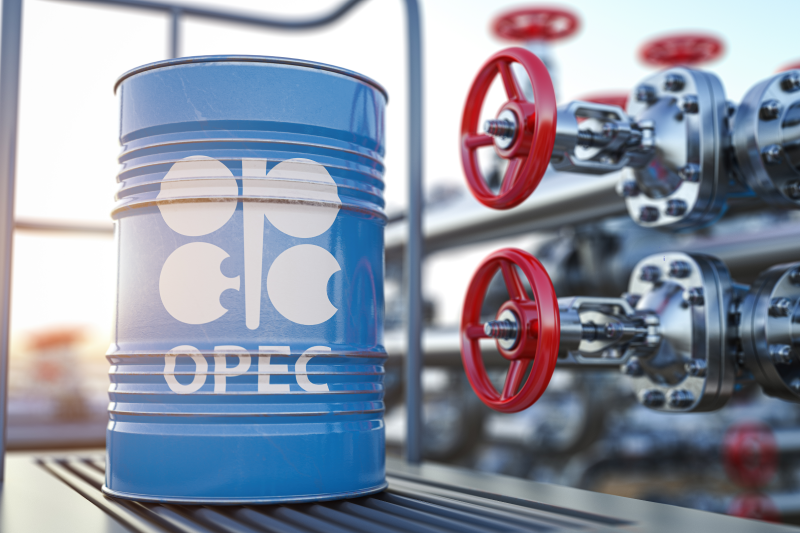
(Bloomberg) – Kazakhstan said it can’t cut oil production and even hopes to increase output beyond planned levels later this year, deepening a stand-off with OPEC+ before the group meets this weekend.
Energy Minister Yerlan Akkenzhenov told reporters in Astana on Thursday that the country can’t enforce curbs on international partners, or dial back at state-run fields, despite its commitments to the cartel. It has notified the Organization of the Petroleum Exporting Countries of its position directly, Interfax reported.
Kazakhstan has clashedwith OPEC+ for months over flouting its production quota, and the latest defiance comes just days before the alliance — led by Saudi Arabia — considers policy for July. Another supply increase is coming but the volume is still under consideration, Deputy Energy Minister Alibek Zhamauov said, according to Interfax.
“There will be a hike, but whether it will be 400, 500, 600, we don’t know — that will be announced on Saturday,” Zhamauov said on Thursday, according to the news agency.
Key OPEC+ nations led by the Saudis have roiled oil markets in recent months by announcing super-sized hikes of 411,000 barrels a day in May and June — triple the initial volume scheduled. Last week they began preliminary discussions onanother surge for July, to be finalized at a video-conference on Saturday.
Some delegates have said the surprise increases, which briefly dragged crude prices to a four-year low below $60 a barrel last month, were intended to discipline persistent quota cheats such as Kazakhstan and Iraq. But as Astana digs in its heels, that explanation is losing credibility.
The possibility of Kazakhstan quitting the alliance — as some other members have done in recent years — remains a “tricky question,” but not the most likely outcome, according to Energy Aspects Ltd.
“Kazakhstan remains a member of OPEC+, and therefore it has obligations, and I think this is an ongoing conversation between countries,” the consultant’s director of research Amrita Sen said in an interview with Bloomberg television.
“Ultimately there will have to be a solution to this compliance problem,” which could come under the guise of maintenance at oil fields in the months ahead, she said.
Kazakhstan’s oil output is more than 70% controlled by three large international consortiums and “the republic has no right to enforce production cuts” on their fields, Akkenzhenov said. Nor can it “practically” cut output at other old fields operated by state-run KazMunayGas National Co. JSC, he added.
See also: Kazakhstan considers options to meet OPEC+ production cut obligations
Kazakhstan pumped 1.823 million barrels a day in April, exceeding its agreed limit by roughly 400,000 bpd, according to data from OPEC’s secretariat. Its exports are setto remain near record levels in June, according to people with knowledge of the shipments.
While the Central Asian country has held meetings with international oil firms to discuss improving compliance with its OPEC+ quota, Chevron Corp. and Eni SpA have said they haven’t been asked to rein in operations.
“We have already told OPEC that we are not going to cut output and will be producing according to our capacity,” Zhamauov said. Nor does Astana intend to update an earlier plan — which it has largely ignored — on how to compensate for previous over-production.
The nation plans to produce 96 million tons of oil this year, but Akkenzhenov said he hopes to be able to surpass this figure. “Let’s wait until September” to be able to confirm that, he said.
Astana’s resilience has spurred speculation that Saudi Arabia’s supply increases have another motive, such as providing a concession to President Donald Trump or recouping its lost share of world oil markets.
Crude futures are trading near $65 a barrel in London, below the levels many alliance members need for state budgets. Agreeing an increase of 400,000 bpd or more in July would strengthen the argument that Riyadh is targeting market share.
About The Author