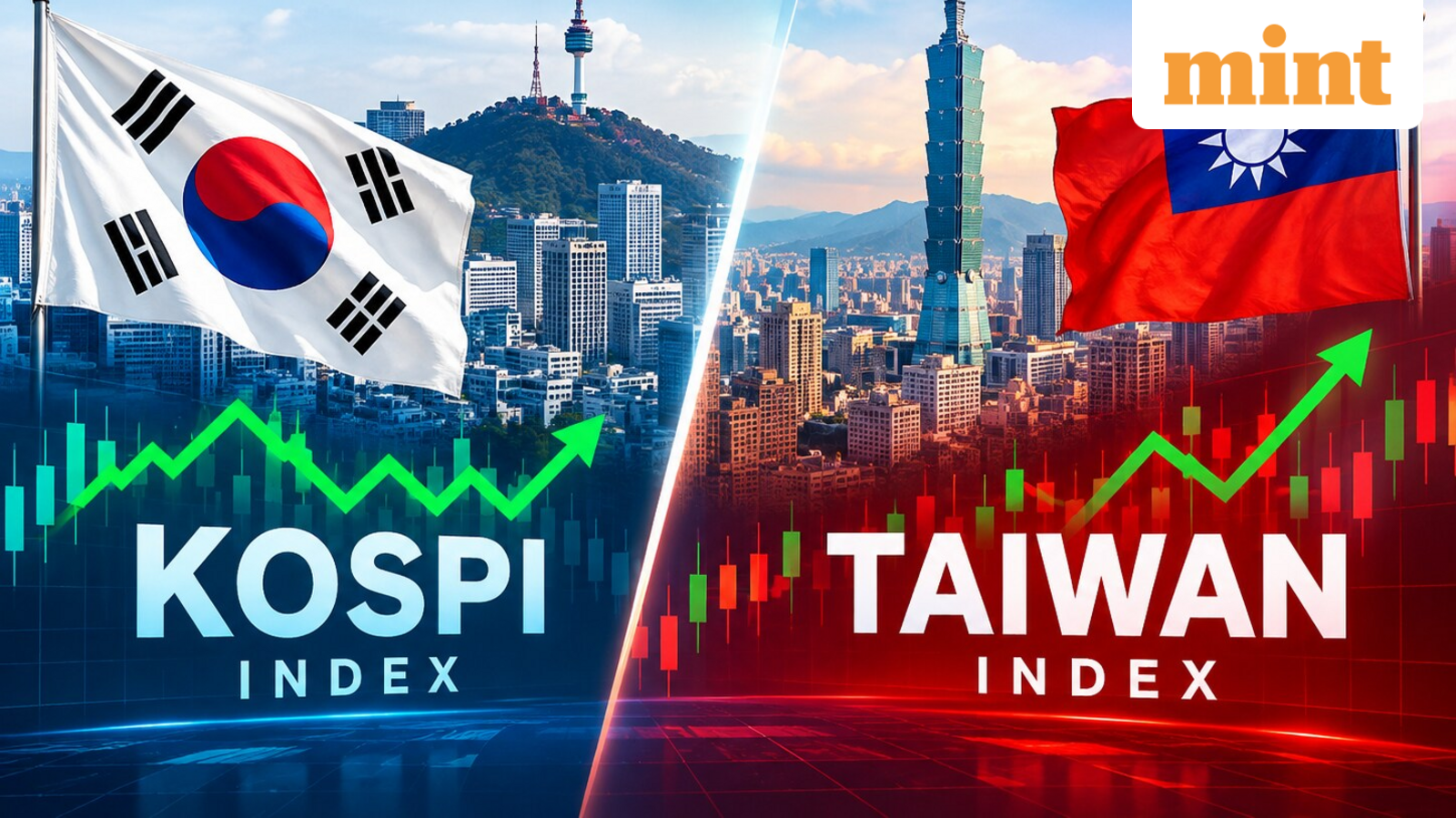
Kospi Index vs Taiwan Index: South Korea’s Korea Composite Stock Price Index (Kospi) and Taiwan’s TSEC Weighted Index, also known as TAIEX, showcased mixed performance after the US Federal Reserve rate hike. Kospi Index ended marginally lower, but TAIEX gained nearly a percentage on Thursday, September 17.
The Federal Open Market Committee (FOMC) voted unanimously to raise the benchmark federal funds by a quarter percentage point to a range of 3.75% to 4%. The US Fed rate hike, in three years, was in line with the market expectations. Key rationale behind the rate hike decision were to tackle sticky inflation which is intensifying due to global energy supply crisis because of the West Asia crisis.
The Kospi Index opened higher at 6,779.02 points on Thursday, September 17, but failed to hold on to gains in the second half of the trading session. As per the index data, the Kospi touched an intraday high of 6,795.53 points and an intraday low of 6,697.85 points. The index closed 0.04% lower at 6715.41.
Taiwan’s TAIEX opened higher at 45,936 points today, and touched an intraday high of 46874.84. The index corrected in the second half, but it managed to end 0.96% higher at 46,288.
Key drivers behind Taiwan Index performance
The upbeat performance of Taiwan Index was driven by bullish trend in bellwether tech firms like Taiwan Semiconductor Manufacturing Company (TSMC). The semiconductor firm commands nearly 40% of the index’s weight. The firm is seeing heightened investors’ attention amid strong global chip demand because of rampant AI innovations. Investors also assessed the impact of US Fed rate hike announcement.
Key drivers behind Kospi performance
The impact of US Fed rate hike appeared to weigh on Kospi Composite Index. Foreign institutional selling and stronger US Dollar currency weighted on investors sentiment and led to marginal decline of the Asian stock market. The index gave up its intraday gains and ended lower amid heavy foreign fund outflows.
US Fed rate hike
The US Federal Reserve’s 25 basis points (bps) hike is the first such instance since 2023. The recent projections also hint at another rate hike in the second half of 2026. The US FOMC voted unanimously to raise benchmark federal funds to a range of 3.75% and 4%.
The stock market had priced for a better than 90% chance of a 25 bps hike from US Fed. “Most policymakers now see the federal funds rate at 4.1% by the end of 2026, implying one further 25 basis point hike this year, with the median holding flat through 2027 — a path of one more move followed by an extended pause rather than a sustained tightening cycle. Warsh pushed back on the idea that lowering inflation requires economic pain, saying he does not believe the Fed needs “to do harm to the labor markets to achieve our objective,” but gave no signal on timing,” stated Ashish Rajodiya, Head – Commodities, PL Capital.
About The Author