Linde's post-earnings slide is a buying opportunity. Here's why
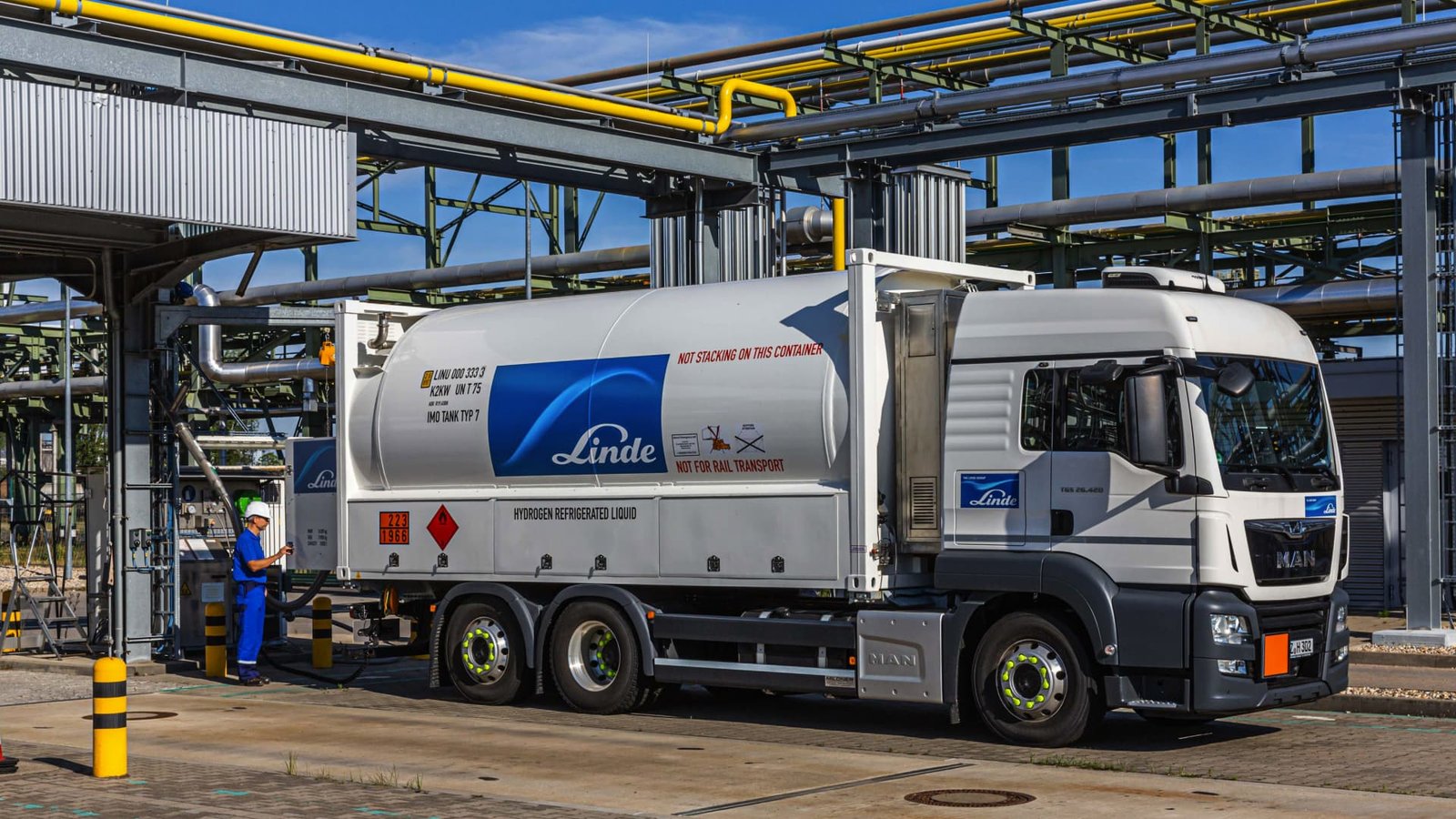
Shares of industrial gas giant Linde dropped Friday despite reporting better-than-expected profits and sales. Linde remains a quiet beneficiary of the artificial intelligence boom, but problems facing part of its healthcare business are drowning out those benefits in the final trading session of the week. Our faith in Linde is unshaken, so Friday’s pullback looks more like a buying opportunity than a reason to head for the exits. Revenue in the second quarter ended June 30 rose 9.3% to $9.29 billion, surpassing the $8.99 billion consensus, according to LSEG. Adjusted earnings per share (EPS) totaled $4.50, beating the LSEG consensus by 2 cents and rising 10% year over year. LIN YTD mountain Linde’s year-to-date stock performance. Linde shares slid more than 5.5% Friday, on pace for its worst day since the market’s tariff sell-off in April 2025. The stock entered Friday’s session down about 7% from its record close of $546.64 on July 2. Despite its recent pullback, Linde is still up 19% year to date, outperforming both the S & P 500′ s 8.7% gain and a 14% advance for the index’s materials sector . Bottom line This isn’t the cleanest quarter that Linde has reported in our five years owning the stock. But it’s plenty good enough to keep us invested and singing the company’s praises as a reliable operator with consistent earnings growth in any economic environment. We certainly won’t fight anyone who wants to sell the stock and give other investors a better price. “You buy the stock” on this decline, Jim Cramer said on CNBC on Friday. “It’s one of the greatest stories of our time. It is.” Linde can deliver sales growth without selling more gases thanks to price increases and a more attractive mix of products sold. The best thing is when both price/mix and volumes are improving, which is what we saw in the second quarter. Volume and price/mix were both up 2% in the June quarter. In the prior two quarters, volume was up 1% while price/mix grew 2%. So, volume growth is accelerating — a good sign. Why we own it The industrial gas supplier and engineering firm has a stellar track record of consistent earnings growth. Its exposure to a wide range of industries, such as health care and electronics, and geographies — paired with excellent executive leadership and disciplined capital management — has been a recipe for steady success that should continue. Competitors: Air Liquide and Air Products and Chemicals Most recent buy : Dec. 18, 2024 Initiated : Feb. 18, 2021 A clear bright spot and driver of volume growth in the quarter was Linde’s electronics business, which grew sales 18% year over year thanks to booming semiconductor manufacturing amid the AI buildout. That’s the fastest growth rate for Linde’s electronics end market since the fourth quarter of 2022, when the company benefited from a few new semiconductor fabrication plants coming online. The highly complex process of chip manufacturing requires a variety of gases, including nitrogen and argon. With the amount of gases required, Linde typically builds plants near the chip fabrication facility, enabling the supply to come via pipeline instead of being hauled in on trucks. On that note, Linde said Friday it planned to spend $1 billion to expand an on-site supply complex in Phoenix to support its semiconductor customer’s own manufacturing expansion. While the customer is not explicitly named in Friday’s press release, Linde is known to supply gases to Taiwan Semiconductor Manufacturing Co.’s Arizona fab site. TSMC in mid-July committed an additional $100 billion to its Arizona factory. Linde also said Friday its Taiwanese joint venture will spend $800 million to support new chip fabs and packaging facilities being built by “the same customer” in Taiwan. These new supply agreements and related investments are encouraging signs for the long-term growth of Linde’s electronics business. “Overall, I expect electronics to remain our largest backlog contributor and one of the fastest growing markets for the foreseeable future,” CEO Sanjiv Lamba said on Friday’s earnings call. Linde’s gas supply backlog ended Q2 at $8.1 billion, up $1 billion from the first quarter. Linde also has $3 billion worth of backlog for its engineering business, which designs and builds process plants for third-party customers. The combined high-quality backlog of $11.1 billion is up from $9.9 billion last quarter. Another bright spot was Linde’s manufacturing end market, which is home to its business serving commercial space customers such as Elon Musk’s SpaceX . Linde also supplies gases to NASA, including for this year’s Artemis II mission . Manufacturing saw volume growth in both the Asia-Pacific and Americas regions, though Lamba said the U.S. is “still the primary driver with both aerospace and construction activity related to data centers.” Aerospace, in particular, accounted for more than a third of the quarter’s manufacturing growth. Linde is upping its capital expenditure outlook this year, partially to support the commercial space customers. If two of Linde’s most exciting end markets — electronics and aerospace — continue to do well, what’s driving the selling in response to the quarter? Light third-quarter earnings guidance could be part of the reason, but Linde’s reputation for conservatism is well known. The same logic applies to Linde not raising the high end of its full-year EPS outlook despite improving volumes. CFO Matthew White said on the call that Linde wasn’t ready to bake in those improvements into its guide just yet. It’s hard to fault them, especially considering the still-unresolved Iran war is a risk for the global economy. Linde is seeing some countries depending on hydrocarbons from the Middle East pull back on industrial activity, such as India and Australia. In case the situation worsens before it gets better, we understand not wanting to get too optimistic. In our minds, the biggest reason for the selling is challenges facing Linde’s home health business, known as Lincare , which provides home oxygen, sleep apnea and nebulizer therapies, among other services such as blood-clot testing. Cost pressures facing Lincare hurt the company’s adjusted operating margins, which came in at a worse-than-expected 29.5% in the quarter (as the chart below shows). That also represented a year-over-year decline. Excluding the drag from the homecare business, White said, “margins would have increased.” While that’s a somewhat encouraging caveat, we cannot ignore the fact that Lincare has problems with labor cost inflation and insurance reimbursement changes. A miss is a miss. However, what makes Linde such a longtime Club favorite is that its management team is disciplined and doesn’t sit idle when things aren’t going well. They don’t claim it’s sunny when we can see rain outside our windows. Indeed, Lamba wasted no time addressing the homecare business in his prepared remarks on Friday’s call. “We’re not satisfied with our margin performance this quarter,” he said, before noting the Lincare problems. “Even though we have been actively pruning this portfolio, it simply has not been enough to overcome the continued headwinds led by higher cost inflation and policy changes,” said Lamba, who has been CEO since March 2022. “We have a series of actions underway, and I fully expect sequential improvement into the third quarter. At the same time, we continue to evaluate the strategic fit of this U.S. homecare business within Linde, both in part and as a whole, while remaining focused on improving its performance and ensuring it earns its place in the portfolio. … I remain confident in our long-term expansion story.” This is exactly what you want to hear as a long-term investor. They’re working to fix it, including installing a new management team and seeking out productivity improvements. But, at the same time, they’re evaluating their options to determine whether exiting the business entirely is a better option. We’ll keep a close eye on Lincare going forward, but we have faith in Lamba and White to do the best thing for investors. At the same time, its biggest growth drivers, especially the AI boom, are continuing apace. And if the Middle East conflict stabilizes, that’s good for Linde too. We’re reiterating our buy-equivalent 1 rating and price target of $550. Guidance For the ongoing third quarter, Linde expects adjusted EPS in the range of $4.45 to $4.55, implying 6% to 8% growth. The midpoint of $4.50 is a bit light versus the $4.54 consensus, but it’s worth repeating that this is a management team with a track record of conservatism. The midpoint of the guide assumes no economic improvement, meaning there’s upside to be had if improvement takes place. The low end of Linde’s full-year earnings outlook was revised up to $17.70 per share, while the high end stayed unchanged at $17.90. This results in a midpoint of $17.80, up 5 cents from the guide offered on May 1. Entering Friday, consensus on Wall Street stood at $17.91, so the new guide is a touch light versus current expectations, similar to last quarter. Linde also said it expects to spend between $5.5 billion and $6 billion on capital expenditures this year — that’s up $500 million on the low end. New projects in the backlog and the space business are driving the increase. (Jim Cramer’s Charitable Trust is long LIN. See here for a full list of the stocks.) As a subscriber to the CNBC Investing Club with Jim Cramer, you will receive a trade alert before Jim makes a trade. Jim waits 45 minutes after sending a trade alert before buying or selling a stock in his charitable trust’s portfolio. If Jim has talked about a stock on CNBC TV, he waits 72 hours after issuing the trade alert before executing the trade. THE ABOVE INVESTING CLUB INFORMATION IS SUBJECT TO OUR TERMS AND CONDITIONS AND PRIVACY POLICY , TOGETHER WITH OUR DISCLAIMER . NO FIDUCIARY OBLIGATION OR DUTY EXISTS, OR IS CREATED, BY VIRTUE OF YOUR RECEIPT OF ANY INFORMATION PROVIDED IN CONNECTION WITH THE INVESTING CLUB. NO SPECIFIC OUTCOME OR PROFIT IS GUARANTEED.