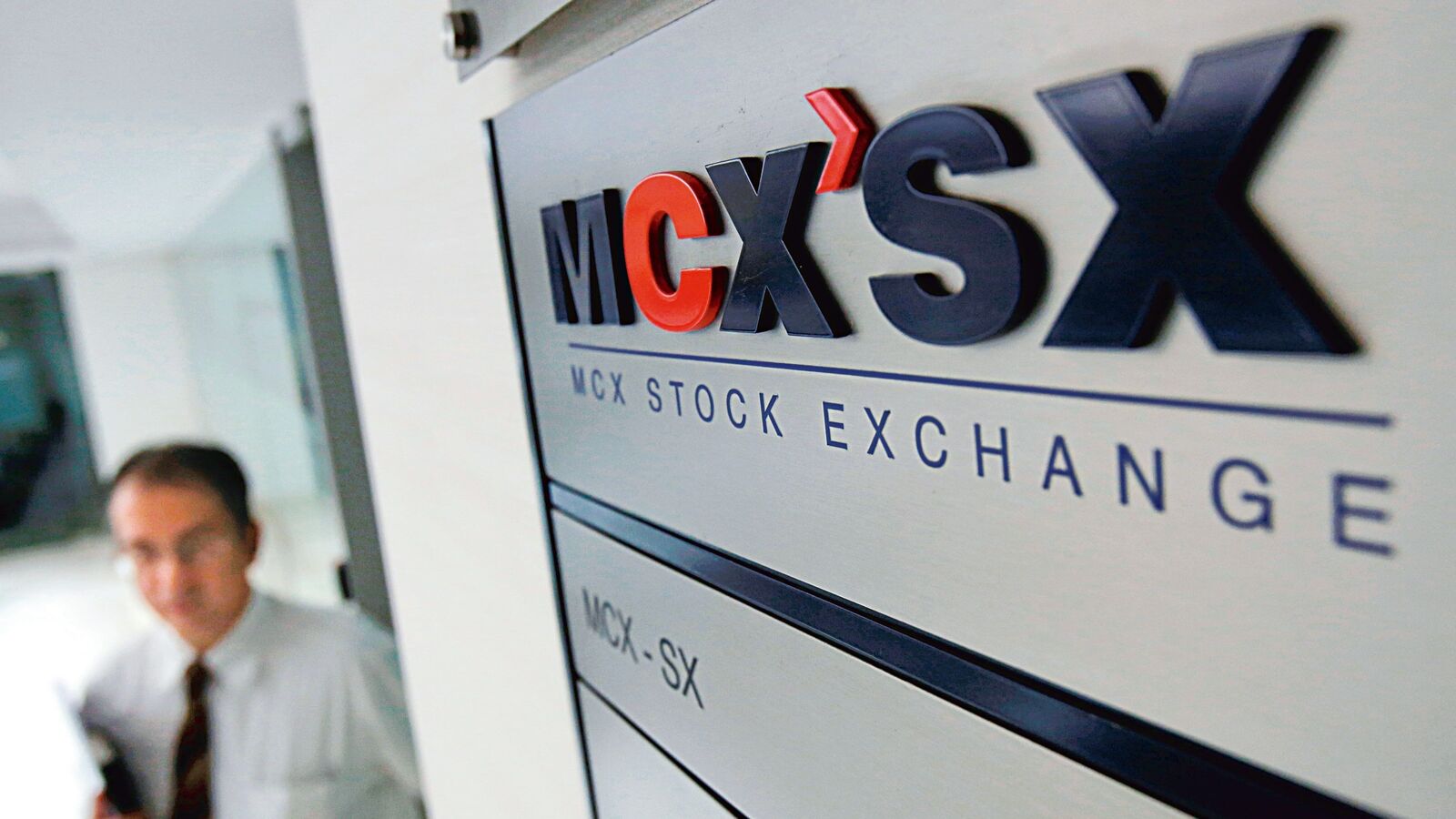
Tuesday’s technical glitch affecting the Multi Commodity Exchange of India (MCX), the country’s largest commodity derivatives bourse, coincided with the expiry of silver monthly options contracts, sending traders with open positions on the contracts into a tizzy.
Even after trading resumed at 1:25 pm, over four hours behind the scheduled opening of 9 am, certain traders reported difficulty in executing orders.
“Trading has commenced but we are facing some difficulty, with some orders not going through,” said a broking official, requesting anonymity as he is not authorised to speak on the subject.
The matter was compounded as it coincided with the expiry of silver options contracts.
This is because any client who sold or bought a call or put option and wanted to close their outstanding positions could do so because of the halt in trading. This exposed them to a price risk if they choose to cut their losses or book profits.
MCX trading commences at 9 am and runs through 11:30 pm IST, with the second session from around 5 pm, coinciding with the opening of overseas bourses like Comex in silver and gold and Nymex for crude.
Since MCX offers silver options that devolve into futures upon expiry, clients have a choice to either square off their positions before expiry at 11:30 pm or allow the option to devolve into a futures position.
“The matter is all the more vexing as silver, like gold, corrected from its highs around Diwali,” said a broker seeking anonymity.
Silver of 99.9% purity opened down 3.12% at ₹1.43 lakh a kilo on the spot market in morning trade, per the India Bullion and Jewellers Association (IBJA), whose precious metals rates are used by the Reserve Bank of India to redeem sovereign gold bonds.
On the commodity exchange, silver call options of the ₹1.5 lakh strike price closed with open positions of over 2 tonnes on Monday, per MCX data. As the exchange gives only single-sided outstanding or open positions—a measure of money flowing into a market—sellers would have had open positions of 2 tonnes.
Similarly, on silver put of strike price ₹1.4 lakh, the open position was 1.39 tonnes.
Either buyer or seller would be left in suspense until the trading begins on the expiry day for silver options.
“There was more work in silver because of the shortage earlier this month, which took prices to a life high of ₹1.78 lakh,” said the broker quoted earlier.
Prices have since tumbled almost 20% to ₹1.43 lakh, per IBJA data.
According to Uttam Bagri, managing director of BCB Brokerage Pvt. Ltd, this could compel traders to seek alternative contracts available on other exchanges like the National Stock Exchange of India Ltd or BSE Ltd, which also offer commodity derivatives segment in addition to equities trading.
“If any exchange does not deliver quality services to its trading members/clients, then market forces will make the business shift to competing exchanges,” said Bagri.
Recurring outages
MCX’s backup services, or its disaster recovery site, also did not get activated when the exchange’s systems failed to start. Tata Consultancy Services Ltd replaced 63 Moons Technologies Ltd as MCX’s software vendor in October 2023.
This is not the first time MCX has faced a disruption. Similar outages were reported in July and in February last year. Such recurring outages may indicate a lapse in following the Securities and Exchange Board of India’s technology and compliance rules, market experts said.
“Sebi has well-drafted guidelines and obligations for all exchanges and clearing corporations. If these guidelines were properly followed, there would be no glitches. It appears that Sebi’s norms are being bypassed,” said Vijay Sardana, Supreme Court advocate and a techno-legal expert.
“The MCX board may not have critically reviewed compliance, and the exchange management may lack the technical competence to evaluate what its vendor is providing to the exchange,” Sardana added. “Frequent breakdowns point to systemic management and corporate governance failures. Sebi must initiate a forensic audit to assess the readiness of the disaster recovery systems and make the findings public.”
Bagri of BCB Brokerage explained that exchanges are highly complex systems with multiple interconnected software and hardware components, and any malfunction of any component can have unexpected consequences and possible disruption.
When failures occur, trading is usually shifted to the backup system—designed to be nearly as powerful as the main platform—until the issue is resolved, Bagri added.
MCX had earlier on Tuesday said trading would commence at 10.30 am. In an update on its website later, MCX said: “Special session will start at 01:20 PM to 01:24 PM and normal trading at 01:25 PM.”
About The Author