Meta is having a ChatGPT moment with Muse. What is it and what makes it so special
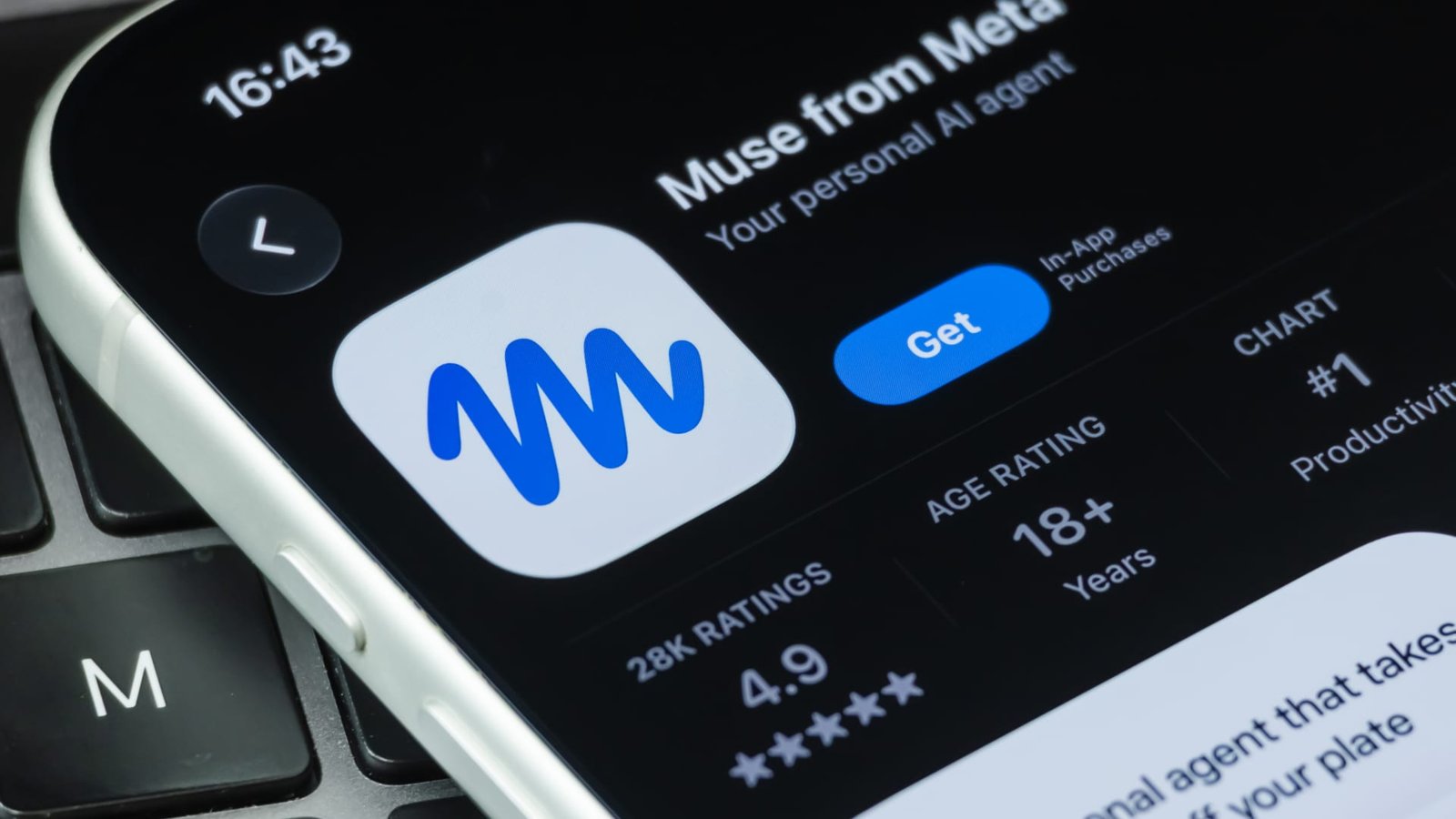
Meta Platforms CEO Mark Zuckerberg is set to take the stage Wednesday evening at the company’s annual developers conference, with the tech world and Wall Street abuzz about Muse. Muse is Meta’s new personal AI agent, running on the company’s proprietary Muse Spark AI model. Since its release earlier this month, the Muse agent has rocketed to the top of the app charts, and Meta stock has surged by more than 20%. The love-at-first-sight aspect of Muse mirrors the kind of reception OpenAI’s ChatGPT got when it introduced generative AI to a worldwide audience in late 2022. Going into Zuckerberg’s Meta Connect address, we’re incredibly excited to see what comes next for Muse. What is Meta doing to make it even more capable? How will the company more deeply integrate Muse into its existing ecosystem to strengthen its core Family of Apps business and enhance its line of smart glasses? And perhaps, the biggest question for investors is: Will Muse lead to additional monetization opportunities in the future? Following the company’s roughly $18 billion settlement to address the youth social media addiction case brought by state attorneys general, analysts speculated that it was a clearing event that would unleash new AI product launches . Muse certainly fits the bill. Ahead of the keynote, many analysts have raised their price targets on Meta stock, which has soared more than 20% since the Muse agent was launched earlier this month. The latest PT hike came from KeyBanc, which went to $900 per share from $780, which implies another 20% upside to current levels. The main takeaway from KeyBanc analysts is that consumer AI is now on the upswing and Meta is well positioned to monetize its massive AI investments to drive further revenue and earnings growth. That, in turn, would support a higher valuation. Meta trades at an historically undemanding forward price-to-earnings ratio of 22.6 — only slightly above the S & P 500 ‘s forward multiple of 19.5 times. META YTD mountain Meta Platforms YTD To say we’ve been impressed with Muse would be an understatement. There are both free and paid tiers for Muse. Within an hour of using it, my personal thought was more or less that they nailed it; they pulled off agentic AI for the masses. My reasoning: the user interface is natural and intuitive, and Meta’s proprietary Muse Spark model underlying the agent is extremely capable – and most of all, the free tier is pretty much on par with the paid tiers; it just comes with a lower token allowance. Others tend to require paid subscriptions to unlock additional tools and agentic capabilities. It’s not that agents from other providers aren’t capable; they certainly are, and I have used several of them to complete many tasks successfully. But with Muse, it felt different. I felt like I was spending less time refining my prompts and more time building a workflow, auditing it, and hardening it to the point where I am now getting several Muse-generated reports daily, delivered directly to my email inbox. Each report pulls a variety of primary sources and vetted data feeds. Moreover, the agent’s memory helps me call back to prior analysis anytime a new update may require revision in thinking. Why is Muse seemingly better at understanding the context of my asks? To be honest, it could just be my experience, or maybe it’s because I’ve unknowingly gotten better at prompts — and it just so happens that Muse got the best version of me and my amateur AI prompting skills. However, if I had to speculate – and indeed my job requires me to do so, within reason — I would argue that it’s because Muse actually is better at understanding user context. Dare I say many others agree, based on how Meta stock has reacted and the Muse agent’s meteoric rise to the top of the app charts. An AI model can only be as good as its training data. If that’s the case, then the potential of what a company can offer is somewhat limited by the data it has access to. Alphabet has your emails, Google your searches, YouTube history, Google Workspace projects, and so on. Amazon has your shopping history and Prime preferences, Alexa prompts, etc. Meta, however, has one thing that few, if any, others have, and that’s a window into your life. Before Muse, Meta was mostly harnessing AI to feed contextual content to users and better target and create advertising, which makes up the bulk of the company’s revenue stream. Meta’s Edge Meta, thanks to Facebook and Instagram in particular, understands how human beings interact with one another online. Every comment you leave is, in essence, a prompt. You may not be prompting an AI, but you are looking for a reaction. Think about it. How many times have you commented on something just to get a response, be it positive or negative? There is crucial information in that — not only in the initial comment or “prompt” but in the subsequent responses as well. How others react to your comments and, in turn, how you react to them all provides for an incredible, proprietary, and absolutely massive database on which to train AI models. Additionally, Meta, via its various Family of Apps platforms, sees how users interact across many forms of media, from text to images and both short- and long-form video content, and more. It understands how you interact in public groups, private ones, amongst friends, and with strangers with whom you may disagree or share an interest. Tying all of these interactions to initial posts also helps to provide context for the conversation. All of that helps Muse better understand how humans speak through a keyboard, how they word things to get certain responses. From this data, Muse can learn how one view may be expressed in many ways, or our seemingly similar comments may differ materially at their core. Sure, SpaceX’ s xAI has X (formerly Twitter), and there are others with social media feeds working on AI models. However, we think it’s hard to argue that any company on the planet has the type of social media, online human-to-human interaction data that Meta does. That may well be why Muse has taken the AI world by storm and why Meta may be best positioned of all to create an agentic AI that feels as natural to interact with as talking to a friend online. Ahead of Zuckerberg’s 7 p.m. ET keynote, we thought it was a perfect time to make sure members understand what agentic AI is and how it differs from the generative AI tools many are now familiar with. What is Agentic AI? Generative AI is what most of us have become familiar with since the launch of ChatGPT. Not only was ChatGPT accessible on the internet, with a free and easy sign-up, it also used a prompt box — much like everybody was accustomed to after years of using search engines. ChatGPT went viral and ushered in the current AI revolution, which has led to a whole host of other generative AI models, including Alphabet ‘s Google Gemini, Microsoft Copilot, and Anthropic’s Claude, to name a few. With generative AI, you ask a question or “prompt” the large language model underlying the technology. The model then draws on patterns learned during training to infer and generate a response, whether the output is text, video, or some other medium. Think of generative AI as a question-and-answer machine. One prompt typically results in one answer. That’s not to say that the answer can’t build off earlier parts of the conversation — but for the most part, each new response relies on a user prompt to carry the process along. Generative AI is considered reactive. It’s a great piece of technology for generating new content, such as text, pictures, and more, or helping with edits and analysis of existing source material. However, the reactive nature of generative AI means that it’s not very autonomous and less suited for multistep tasks, such as finding, booking, and confirming a reservation for dinner. Think of the model underlying generative AI as a brain without a body. You could give the brain a prompt, have it process the information, and provide feedback. It may even recognize the need to leverage external tools. However, without a surrounding software layer overlaying the AI model, it would still lack the ability to use those tools due to a lack of access and authorization. It is not set up to take the next step without user input. While a brain without a body, sitting in a jar and able to provide a one-time response to prompts, can certainly be incredibly useful, if your goal is to leverage AI for proactive, autonomous tasks that can take in your prompt, analyze the context, retain that memory through multiple steps, and be set to loop until the task is complete without additional user input, generative AI comes up wanting. That is where agentic AI comes in. It takes the AI model “brain” and links it with the aforementioned software layer — often referred to as a “harness” or “scaffolding” in tech industry speak, or, in layman’s terms, what we might think of as the body. This allows the “agent,” which consists of brain and body, to use approved tools and connected services to complete tasks. To better understand the difference, consider the process needed to book a dinner reservation using generative AI versus agentic AI, like Muse. Here is the generative AI exercise, generated via an actual interaction with ChatGPT in Chat mode (not Work mode, which is OpenAI’s answer to an agent layered on ChatGPT, and to be fair, many chatbot competitors also have agents): The steps required: (1) a prompt, (2) a decision on which restaurant to choose; (3) a decision to call or link out to OpenTable; (4) make the phone call or choose the OpenTable link, which requires a sign-in, choosing the party size and time again, and then clicking to book. (You can also directly book on OpenTable as a guest, which requires a phone number, getting a verification text and putting that code into a verification box, putting in a name and email, and finally clicking complete reservation.) Here is the process using Muse — again, generated via an actual interaction with the AI agent: The steps required: (1) a prompt, which is the same as what was used in the ChatGPT example, and (2) a decision on which restaurant to choose. That was it. Muse then booked the reservation. All that happened autonomously because the contact information was already stored in Muse from earlier chats, in the agent’s memory, and an OpenTable connector was already set up when initially signing up with Muse. Bottom line Agentic AI has arrived. While the race is still ongoing and we surely don’t expect any other company to accept the Muse hype without a fight, Meta has clearly established itself as a frontrunner to provide it to the consumer masses. Much like ChatGPT delivered generative AI to the masses. The market appears to have come to this realization and rewarded Meta shares accordingly. We’re excited to see what else the company has on its AI roadmap at the Connect conference, which begins Wednesday and runs through Thursday. The more Meta can show us on how it plans to further monetize its AI investments, the more comfortable the Street will surely be in awarding the stock a higher valuation. (Jim Cramer’s Charitable Trust is long META, GOOGL, MSFT. See here for a full list of the stocks.) As a subscriber to the CNBC Investing Club with Jim Cramer, you will receive a trade alert before Jim makes a trade. Jim waits 45 minutes after sending a trade alert before buying or selling a stock in his charitable trust’s portfolio. If Jim has talked about a stock on CNBC TV, he waits 72 hours after issuing the trade alert before executing the trade. THE ABOVE INVESTING CLUB INFORMATION IS SUBJECT TO OUR TERMS AND CONDITIONS AND PRIVACY POLICY , TOGETHER WITH OUR DISCLAIMER . NO FIDUCIARY OBLIGATION OR DUTY EXISTS, OR IS CREATED, BY VIRTUE OF YOUR RECEIPT OF ANY INFORMATION PROVIDED IN CONNECTION WITH THE INVESTING CLUB. NO SPECIFIC OUTCOME OR PROFIT IS GUARANTEED.