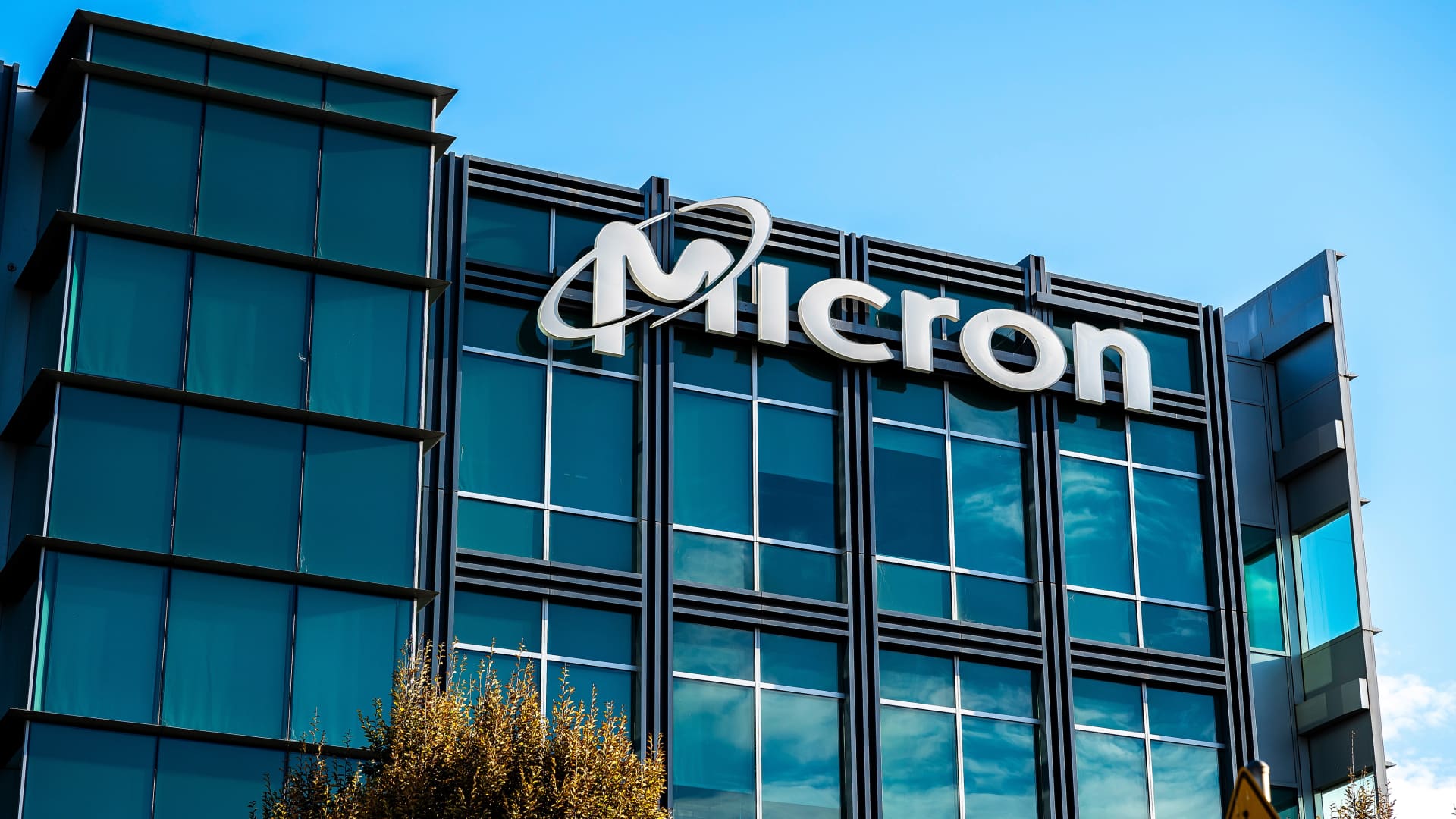
Micron offices in San Jose, California, on Nov. 30, 2023.
David Paul Morris | Bloomberg | Getty Images
U.S. memory chipmakerMicronTechnologyhas told U.S. customers it plans to impose a surcharge on some products from Wednesday to account for U.S. President Donald Trump‘snew tariffs, four sources familiar with the matter told Reuters.
Micron’s overseas manufacturing sites are largely based in Asia, including China, Taiwan, Japan, Malaysia and Singapore.
The company notified its customers in a letter that while Trump’s announcement last week exempted semiconductors, which account for part ofMicron’s portfolio, the tariffs applied to memory modules and solid-state drives (SSDs), the sources said.
Those products, used to store data in various products from cars to laptops and data center servers, would now be subject to a surcharge, they said.
Microndid not immediately respond to a request for comment.
The notice to customersechoes commentsthe company made on March 21 on a post-earnings call, when its executives said it intended to pass along costs to customers in areas where tariffs had an impact.
It also comes shortly afterMicronin late March notified customers of price rises due to an increase in “un-forecasted demand” for its products.
Trump’sannouncementlast week jolted economies around the world, triggeringretaliatory leviesfrom China and sparking fears of aglobal trade warandrecession.
It has also forced companies globally to assess whether they should absorb the tariffs or shift them on to customers.
U.S. customs agents began collecting Trump’s unilateral 10% tariff on all imports from many countries on Saturday. Higher “reciprocal” tariff rates of 11% to 50% on individual countries are due to take effect on Wednesday at 12:01 a.m. ET.
An executive at an Asian NAND module manufacturer said they were taking a similar approach toMicronto tell U.S. customers they had to figure out the tariffs themselves.
“If they don’t want to bear the taxes, we cannot ship the products. We cannot be held accountable for the decisions made by your government,” the person said, declining to be named as they were not permitted to speak to the media.
“With this kind of tax rate, no company can generously say, ‘I’ll take on the burden’.”
About The Author